2026 Guide to Mixing Yard Waste and Construction Debris
2026 Guide to Mixing Yard Waste and Construction Debris
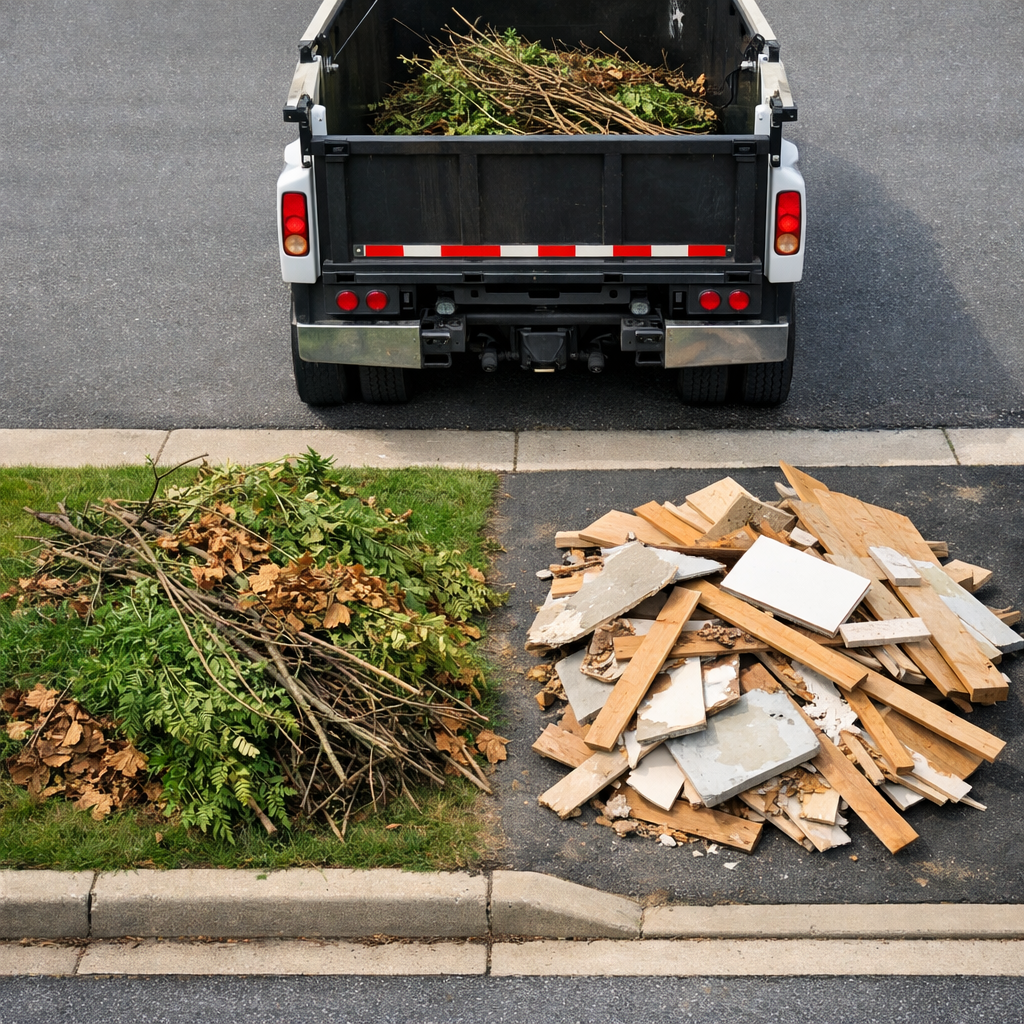
Most operators should not mix yard debris with construction and demolition (C&D) waste in a single rental bin. Yard waste is plant-derived material—leaves, grass, brush, and branches—destined for composting or mulching. When it’s mixed with non-organics, painted or treated wood, or plastics, the compost stream is contaminated and often rejected, triggering landfill fees and lost diversion. There are limited exceptions: some haulers allow a defined clean-wood plus yard stream when explicitly approved. This guide lays out when mixing is allowed, how to plan separation streams, and how to right-size containers and routes so you avoid fines, protect driveways, and meet portfolio diversion targets. Throughout, Recycler Routing Guide emphasizes separation-first planning, right-sized containers, and efficient routing to avoid fees and missed diversion.
Can you mix yard debris with other waste in a rental bin
Short answer: generally no. Keep yard debris (organics) separate from mixed C&D and municipal solid waste to protect compost quality and comply with facility rules. Exceptions exist only when your hauler or compost facility explicitly accepts a clean wood plus organics stream, and only for untreated wood. Never place painted, pressure-treated, or otherwise treated wood in organics; they can contain metals and preservatives that contaminate compost and may trigger hazardous protocols. Recycler Routing Guide recommends treating organics as a dedicated stream unless a written exception applies.
To protect loads and reduce contamination:
- Use clearly labeled containers, keep bins covered/tarped, and stage away from stormwater paths to avoid runoff and windblown plastics contaminating organics, following industry best practices. See placement and labeling guidance (Recycler Routing Guide) and best practices for container placement and labeling (RefuseFab).
- Where allowed, rent a dedicated green-waste bin and a separate bin for C&D to prevent cross-contamination. See route and sizing guidance (Recycler Routing Guide) and dumpster sizing and debris management tips (Bin There Dump That).
- Anchor decisions in diversion and cost outcomes: C&D is more than twice the mass of municipal solid waste nationally, and clean separation increases recovery and reduces disposal costs. See EPA on C&D materials (EPA).
Plan the scope and estimate volumes
Start with a quick waste audit to right-size containers and avoid costly mixing under pressure. Estimate volumes by category: yard debris, clean wood, concrete/brick, metals, cardboard, and mixed debris. Reserve bins early—especially during peak leaf/grass seasons and demolition phases—to avoid delays that lead to rushed, noncompliant mixes. See route-first audit and sizing guidance (Recycler Routing Guide) and dumpster sizing and debris management tips (Bin There Dump That).
Waste audit definition: A waste audit is a structured estimate of material types and quantities expected from a project. It informs dumpster sizing, separation streams, and hauling cadence, helping reduce disposal fees, prevent contamination, and increase recycling/composting. It also provides baseline data for diversion reporting and cost optimization.
Suggested estimation table (example template):
| Material type | Estimated cubic yards | Target container type | Diversion outlet | Swing volume (± yd³) |
|---|---|---|---|---|
| Yard debris | 8 | Green-waste bin (6–10 yd³) | Composter/mulch producer | +4 (storm/leaf drop) |
| Clean, untreated wood | 6 | Wood-only roll-off | Clean wood recycler/buyer | +2 |
| Concrete/brick | 10 | Inert-heavy roll-off | Crusher run/aggregate | 0 |
| Metals | 2 | Metal-only bin/cage | Scrap metal recycler | +1 |
| Cardboard | 1 | Front-load 2–4 yd³ | Cardboard recycler | 0 |
| Mixed C&D | 12 | Mixed C&D roll-off | MRF/transfer station | +3 |
Define separation streams and contamination rules
Default streams that work across most job sites:
- Organics (yard waste)
- Clean wood (untreated lumber, pallets without paint/chemicals)
- Metals
- Concrete/brick/asphalt
- Cardboard
- Mixed/general C&D (only for residuals when single-stream separation is impractical)
Label simply and visibly on all sides: “Yard Waste Only,” “Wood Only,” “Metal Only,” “Mixed Debris.” Clear signals and separate staging reduce mistakes and improve recovery. See signage guidance (Recycler Routing Guide) and best practices for container placement and labeling (RefuseFab).
Contaminants to keep out of yard bins:
- Painted, stained, or pressure-treated wood
- Plastics, bags, artificial turf
- Soil or rocks where prohibited by your compost outlet
- Metals, fasteners, wire
- Drywall/gypsum, insulation
- Liquids and food waste not accepted by the program
- Hazardous items (paints, oils, solvents, batteries)
Downstream value matters: C&D materials are commodities that can displace virgin extraction and cut embodied emissions when reused or recycled. See EPA on C&D materials (EPA).
Choose the right dumpster sizes and container mix
Match bin sizes to the job and site constraints to reduce hauls and contamination risk:
- Small bins (6–10 yd³): routine yard maintenance, pruning, and minor cleanups.
- Medium (12–20 yd³): moderate cleanouts and light renovation debris.
- Large roll-offs (25–40+ yd³): major renovations, roof tear-offs, bulky C&D.
Example pairings for yard plus renovation projects:
- Light refresh: 6–10 yd³ green-waste bin + 12–20 yd³ mixed C&D roll-off.
- Heavy demo with landscaping: 10 yd³ green-waste bin + 30 yd³ C&D roll-off + inert roll-off for concrete/brick.
Specialized containers (drywall-only, soil/inert, green-waste) make on-site sorting intuitive and reduce contamination. In tight footprints, pair one large roll-off with smaller front-load or rear-load bins staged near work zones to minimize “last-20-feet” cross-throw. See route-first sizing guidance (Recycler Routing Guide), dumpster sizing and debris management tips (Bin There Dump That) and best practices for container placement and labeling (RefuseFab).
Protect driveways and set optimal bin placement
- Place bins on high, stable ground, away from stormwater flow paths or drains; keep lids closed or tarps secured to prevent windblown contamination and soggy overweight loads. See placement guidance (Recycler Routing Guide) and best practices for container placement and labeling (RefuseFab).
- Use driveway protection under roll-offs (plywood runners, rubber mats) to distribute weight and prevent scuffs or paver damage. Confirm the truck’s approach and swap path before delivery.
- Simple placement diagram checklist:
- Maintain a clear, straight approach for the truck; avoid tight turns at gates.
- Verify overhead clearance for lifting rails and tarp systems; keep away from power lines and low branches.
- Leave buffer space from structures/fences for door swing and safe loading (typically several feet; confirm with your hauler).
- Keep at least one pedestrian-safe path around the container and mark edges with cones or paint where traffic is present.
Train crews and post clear signage
- Hold a kickoff training and periodic toolbox talks focused on what goes where, the top contaminants to avoid, and who to call with questions; refresh ahead of high-volume weekends and storm cleanups. See crew training guidance (Recycler Routing Guide) and best practices for container placement and labeling (RefuseFab).
- Use pictorial signage with allowed/not allowed lists at each bin; provide bilingual versions where needed.
- Issue a quick-reference lanyard card and post a QR code at the site map linking to the separation plan and vendor contacts.
Isolate hazardous materials and restricted items
Common hazardous or restricted items include paints, solvents, adhesives, oils, batteries, and certain chemicals. Keep these out of organics and recyclables and arrange specialized handling with manifests. Hazardous materials in C&D are substances that pose health or environmental risks (for example, some paints, solvents, and treated wood). They require special handling, storage, and documentation to prevent contamination and legal exposure. See WBDG Construction Waste Management (WBDG).
Set up a dedicated, covered staging area with secondary containment, train one point person for logkeeping, and schedule periodic pickups with signed manifests.
Set up swap planning and service cadence
- Establish haul thresholds (for example, call swaps when bins are ~80% full) and align swap windows with generation peaks—mowing/leaf days for organics and demo milestones for C&D.
- Pre-book rentals and swaps before peak seasons or critical phases to avoid delays and mix-ups. See routing and cadence planning guidance (Recycler Routing Guide) and dumpster sizing and debris management tips (Bin There Dump That).
- Use a calendarized cadence for yard waste during leaf/grass seasons and surge capacity for storms. For multi-property portfolios, cluster service days by geography and sequence hauls to cut mileage and downtime.
Contract recyclers and identify local donation and recycling outlets
- Contract with MRFs and recyclers that accept your separated streams and request scale tickets and diversion reports by load. See EPA on C&D materials (EPA).
- Reuse and donation examples: working appliances, doors, cabinets, and windows; aggregates and concrete can be crushed and reused as road base or structural fill. See RDN Construction Waste Best Practices Guide (Regional District of Nanaimo).
- Build a local partner map: composters and mulch producers, clean wood buyers, construction material exchanges, reuse centers, and metal yards.
Track weights, diversion, and costs for optimization
Maintain scale tickets, manifests, and diversion logs by stream and site. Convert to diversion percentage, cost per haul, and cost per ton to benchmark performance and spot improvement opportunities. Strong documentation supports municipal reporting and circular-economy goals, especially in jurisdictions expanding organics and C&D diversion and relying on transfer stations, barge, or rail for long-haul movement. Use a standard log or worksheet; resources like Recycler Routing Guide can help you structure consistent metrics across sites. See NYC’s 2026 Solid Waste Management Plan draft (City of New York Department of Sanitation).
Diversion rate definition: The diversion rate is the percentage of total material kept out of landfill through recycling, composting, or reuse. It is calculated as diverted weight divided by total generated weight. Tracking diversion highlights cost savings, environmental benefits, and compliance performance.
Evaluate hub and spoke versus on site compaction
A quick comparison to guide route design and capital planning:
- Hub-and-spoke: Collect at multiple sites, consolidate at a hub, and process centrally. Pros: potential lower per-ton processing, consistent quality control. Cons: requires disciplined labeling and reliable transfer. Best for: portfolios with multiple small streams and limited on-site space.
- On-site compaction: Compactors reduce haul frequency for dense, relatively clean streams (cardboard, MSW). Pros: fewer pulls, lower transport cost. Cons: less suitable for organics due to moisture/odor and contamination risk.
Local infrastructure matters: some cities depend on transfer stations and barge/rail transloading, which can influence feasible service windows and facility selection. See NYC’s 2026 Solid Waste Management Plan draft (City of New York Department of Sanitation).
Cost control tips and common penalties to avoid
- Cost levers: right-size dumpsters, avoid overfilling, pre-sort high-value materials (metals, clean wood), and keep yard waste clean and dry to avoid overweight and rejection fees. See WBDG Construction Waste Management (WBDG).
- Penalties to avoid: contamination fees for organics, hazardous items in mixed loads, overweight charges, and improper placement that affects stormwater. Keep bins covered/tarped and staged away from runoff paths to prevent compost contamination. See placement and labeling guidance (Recycler Routing Guide) and best practices for container placement and labeling (RefuseFab).
- Risk context: regions with constrained disposal capacity and long-haul dependencies tend to see rising disposal costs over time—another reason to prioritize clean separation and diversion. See NYC’s 2026 Solid Waste Management Plan draft (City of New York Department of Sanitation).
When mixing is allowed and when it is not
- Generally not allowed: mixing yard waste with C&D or municipal solid waste leads to compost contamination and facility bans. Always verify program rules and keep hazardous or treated wood out of organics at all times.
- Potentially allowed with conditions: some programs accept a defined clean, untreated wood chips plus yard waste stream; others allow processor-side sorting for mixed C&D (not for compost). Obtain acceptance criteria and contamination thresholds in writing from your hauler or processor.
- Decision flow:
- Identify each material.
- Check your acceptance list for yard, clean wood, and C&D.
- If uncertain, separate by default.
- Escalate to your vendor and local code authority for written guidance.
Frequently asked questions
Can I mix yard waste with construction debris in one dumpster
In most cases, no—keep yard debris separate to protect compost quality. Recycler Routing Guide details when hauler-approved clean-wood plus yard blends are allowed and how to stage dedicated bins.
What happens if my yard waste load is contaminated
Contaminated yard loads are often rejected or downgraded to landfill disposal, triggering extra hauling and contamination fees. For step-by-step guidance on preventing this, see Recycler Routing Guide.
How should I separate wood types like clean lumber, painted wood, and treated timber
Place clean, untreated lumber in a “clean wood” stream; keep painted or treated wood out of organics and follow your C&D sorting rules. For a concise summary you can post on site, see Recycler Routing Guide.
What bin size should I choose for a yard and renovation project combo
Pair a 6–10 yd³ bin for yard debris with a 12–20 yd³ or 25+ yd³ roll-off for renovation debris, depending on project size. For quick pairings by project size, see Recycler Routing Guide.
Are there exceptions that allow small amounts of mixing in rural areas
Some rural programs may allow limited mixing or provide processor-side sorting, but rules vary widely. When uncertain, separate by default and confirm acceptance criteria with your local hauler or facility; Recycler Routing Guide outlines this approach.