2026 Guide to Short-Term Dumpster Rentals: Day Rates and Availability
2026 Guide to Short-Term Dumpster Rentals: Day Rates and Availability
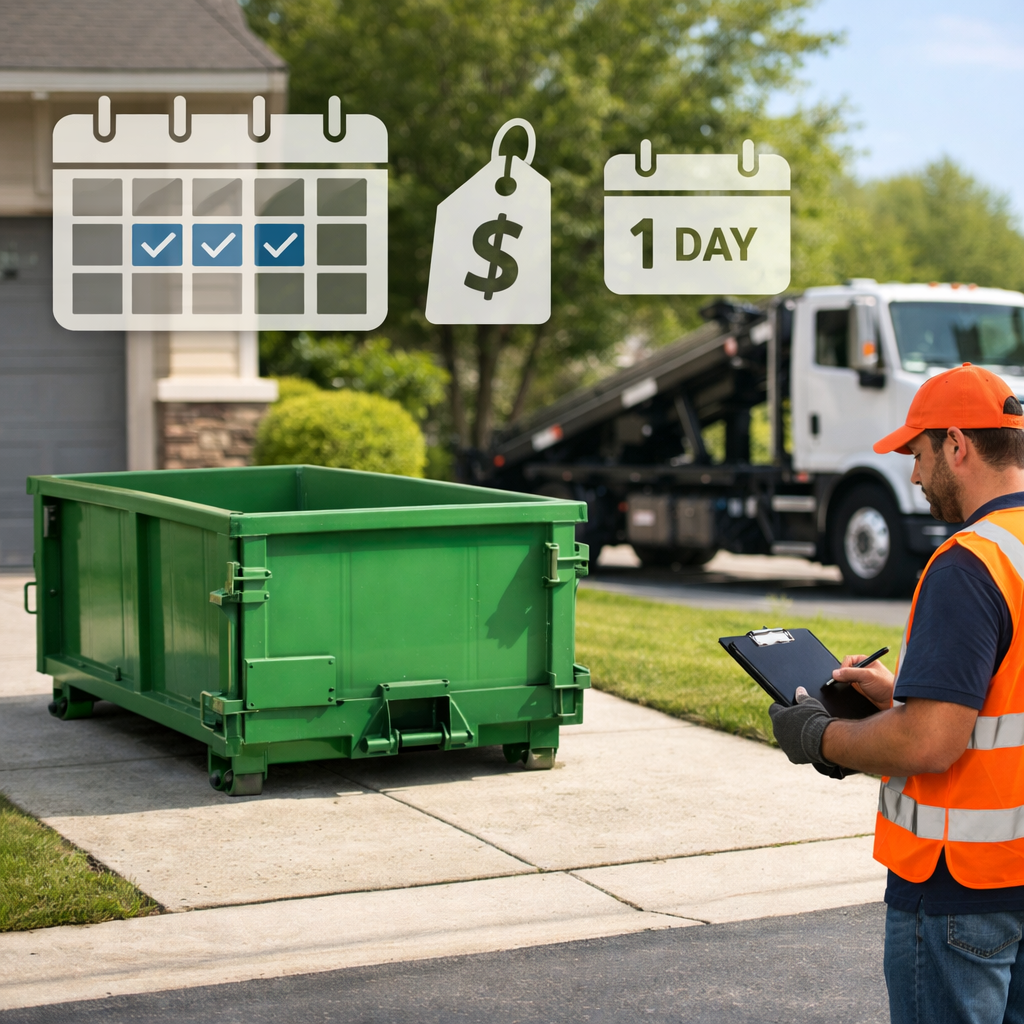
Short-term dumpster rentals are built for speed: a bin arrives in the morning, your crew loads it, and it’s gone by day’s end. Yes, you can rent a dumpster for just one day in many markets. Expect a daily line item of roughly $40–$100, with the total driven by size, included weight, and delivery/pickup logistics shaped by local demand. Day-rate dumpsters often bundle a capped weight allowance and scheduled pickup, but fees vary by provider. Seasonality and location (urban cores, rural distances, post-storm spikes) can tighten availability and nudge prices up, so book early and confirm what’s included. For rush jobs, see the Recycler Routing Guide same-day providers page for fast options.
Can I rent a dumpster for one day
Yes—one-day dumpster rentals are widely offered. The daily rate commonly falls between $40 and $100, but your all-in price depends on the bin size, weight allowance, and delivery/pickup terms outlined by the hauler, with regional price pressure shaping the final bill (see Angi’s national dumpster cost guide). A day-rate dumpster rental is a short-term service—usually 24 hours or less—priced per calendar day with a bundled weight cap, standard delivery and pickup windows, and defined overage or service fees if limits are exceeded (see this dumpster pricing models explainer). Availability and price shift with seasonality and location; peak construction months, disaster cleanups, and rural hauls can constrain inventory and add surcharges, especially for tight windows (see these dumpster rental price trends). Need speed? Check the Recycler Routing Guide same-day providers page for vetted, fast-response carriers.
How day rates work
- Typical price benchmarks:
- Daily: $40–$100
- Weekly: $350–$550
- Monthly: $500–$1,200
- Homeowners often spend about $385 per job across durations (Angi’s national dumpster cost guide).
- Pricing models you’ll encounter: flat-rate, variable/weight-based, and hybrid (dumpster pricing models explainer).
- What makes up your total: base rate, delivery, pickup, disposal/landfill, and surcharges (e.g., overweight, distance, contamination).
Definition (flat-rate pricing, 45 words): A single bundled charge typically covering delivery, pickup, and a stated weight allowance. It simplifies budgeting and is common for short-term, one-day dumpster rentals. While predictability is high, the upfront price can be higher than weight-based options if your debris is light (dumpster pricing models explainer).
Definition (weight-based pricing, 46 words): A lower upfront rental fee with disposal charged per ton at the landfill scale. It can be cheaper for light, predictable loads. Costs rise quickly if debris runs heavier than expected or includes dense materials, as overage is billed after pickup and can surprise budgets (dumpster pricing models explainer).
Comparison at a glance:
| Pricing model | Budget predictability | Best use cases | Overage risk |
|---|---|---|---|
| Flat-rate | High | One-day jobs with mixed debris and tight budgets | Low to moderate (only if you exceed the allowance) |
| Weight-based | Medium to low | Light, known debris; minimal tonnage | High if debris is heavier than planned |
| Hybrid | Medium | Projects needing balanced allowance plus scale billing | Moderate (depends on thresholds and fees) |
How a one-day rental flows:
- Choose size and debris type. 2) Request a quote with included weight and fees. 3) Lock delivery and pickup windows. 4) Receive the container. 5) Load to fill line, minding weight. 6) Pickup and scale (if applicable). 7) Final billing with any surcharges (dumpster pricing models explainer).
Choose the right container size
Right-sizing controls both your daily dumpster price and weight risk. Smaller dumpsters often include about 1 ton, while larger units commonly include 2–3 tons before overage applies (Budget Dumpster pricing page). Dense materials like brick or concrete may require filling only halfway to stay under safe hauling weights and avoid overage (Budget Dumpster pricing page).
Quick selector:
- 10-yard: Small cleanouts, landscaping, or heavy debris; watch weight limits closely.
- 20-yard: Mid-size remodels; balanced capacity with a manageable footprint.
- 30-yard: Bulky waste or multi-room cleanouts; ensure ample space and site access.
Use the smallest size that fits your volume and weight profile to minimize cost and avoid per-ton surprises.
Confirm pricing model and included fees
Ask directly whether your quote is flat-rate, weight-based, or hybrid—and if disposal is included or billed after pickup (dumpster pricing models explainer). Confirm these common extras in writing:
- Extension days, dry-run/trip fees, relocation, contamination, and overfill charges
- Overage rates (often $40–$200 per ton depending on market; Angi’s national dumpster cost guide)
- Distance/mileage surcharges for remote locations (many providers assess $0.50–$0.65 per extra mile; dumpster pricing models explainer)
- City permit costs ($20–$150 typical for street placement; Budget Dumpster pricing page)
- Cancellation cutoffs (e.g., day-prior deadlines can trigger fees; Budget Dumpster pricing page)
Check availability and routing reliability
Short windows succeed when logistics are strong. Favor haulers offering digital scheduling with visible availability and clear delivery timelines (2026 dumpster rental planning tips). Look for tech signals such as map-based scheduling, real-time driver locations, live container status, mid-day route adjustments, and yard-level inventory tracking (best dumpster rental software features; six best dumpster rental software solutions). GPS and route optimization tighten ETA accuracy and trim fuel, boosting on-time drop/pick performance for one-day jobs (2026 dumpster rental planning tips). Recycler Routing Guide highlights these capabilities in provider profiles so you can compare options quickly. For urgent drops, see the Recycler Routing Guide same-day providers page to compare carriers with proven dispatch reliability.
Schedule the drop and pickup window
Book the shortest practical window for your one-day task, and pre-authorize an extension or swap to avoid downtime if scope expands (2026 dumpster rental planning tips). Get delivery and pickup windows in writing, including the provider’s ability to reroute mid-day without restarting dispatch workflows (best dumpster rental software features).
Mini scheduling checklist:
- Confirm earliest delivery and latest pickup cutoffs.
- Share a live site contact and access notes with dispatch.
- Set a hold-over day rate if pickup slips into tomorrow.
Prepare site access and permits
If the bin sits on public right-of-way, secure required city permits ($20–$150 typical) and verify curb/sidewalk rules before delivery (Budget Dumpster pricing page). Prevent dry-runs and trip fees by clearing overhead obstructions, marking placement, and ensuring stable ground so the driver can safely set and retrieve the container (dumpster pricing models explainer). Access notes: plan for 60–80 feet of straight approach, ample overhead clearance, and pad protection for asphalt or pavers.
Keep waste streams separate
Definition (contamination fee, 45 words): A surcharge assessed when prohibited or mixed materials are found in your load, triggering extra sorting, higher disposal costs, or landfill rejection. It is commonly applied under variable or hybrid models, and it can affect even short-term, one-day jobs (dumpster pricing models explainer).
Separate C&D from clean concrete, metals, or yard waste to minimize contamination and overage risk—and to meet diversion targets or reporting needs. Dense, single-stream materials (concrete, brick) often warrant smaller or dedicated bins to stay under transport weight thresholds (Budget Dumpster pricing page).
Manage extensions, swaps, and weight risk
Ask for day-rate extension terms upfront and document triggers and cutoff times to avoid surprise fees (Angi’s national dumpster cost guide). Establish a swap protocol—pre-approved exchange of full units—to keep crews moving on tight-turn or peak days (2026 dumpster rental planning tips). Confirm included weight and per-ton overage in writing; track heavy loads and consider partial fills or split streams to stay under limits (dumpster pricing models explainer; Budget Dumpster pricing page).
Avoid hidden fees and service disruptions
Run a fee-audit on every quote:
- Base rate, delivery/pickup, included weight, overage per ton
- Dry-run/trip, relocation, contamination, overfill
- Disposal included/excluded
- Distance surcharges ($0.50–$0.65 per mile typical adders in many markets)
- Cancellation window and cutoffs (Angi’s national dumpster cost guide; dumpster pricing models explainer; Budget Dumpster pricing page)
Note: Rural deliveries can look cheap until mileage from the yard/landfill adds hundreds; verify distance and route assumptions (dumpster rental price trends). Choose providers with customer portals and integrated payments to reduce booking friction and last-minute cancellations (how to start a dumpster rental business)—Recycler Routing Guide flags these features in listings.
When to use a managed waste partner
Use a managed waste partner when juggling multiple short windows, event cleanups, or multi-trade projects—centralized scheduling and live tracking reduce misses across sites (2026 dumpster rental planning tips). Real-time inventory, driver apps, route optimization, and flexible billing (day/week/flat-rate) are now table stakes for predictable short-term availability (best dumpster rental software features; six best dumpster rental software solutions). After each project, review data to refine size/weight assumptions and uncover cost-saving patterns (2026 dumpster rental planning tips). If you don’t have a managed partner, Recycler Routing Guide helps you compare providers that meet these operational basics.
Frequently asked questions
What is a typical one-day dumpster rate in 2026
One-day dumpster rentals typically run $40–$100 for the daily rate, with total cost depending on size, included weight, delivery/pickup, and any surcharges. Always confirm if disposal is included and what overage per ton applies; you can compare inclusions on Recycler Routing Guide.
Can I get same-day or next-day delivery
Yes, many markets support same-day or next-day delivery, especially with providers using real-time scheduling and GPS-enabled dispatch. Availability tightens during peak seasons, so book early where possible and find carriers with open slots on Recycler Routing Guide.
Do I need a permit for a one-day rental
You may need a permit if placing the dumpster on a public street or right-of-way. Costs and rules vary by city; budget a modest fee and confirm requirements before scheduling delivery.
What items are prohibited in short-term rentals
Commonly prohibited items include hazardous waste, liquids, tires, batteries, and certain electronics. Providers also limit heavy materials by weight; review the prohibited list and weight guidance for your debris type on Recycler Routing Guide before booking.
How do flat-rate and weight-based pricing affect a one-day job
Flat-rate simplifies budgeting by bundling delivery, pickup, and a weight allowance. Weight-based can be cheaper for light loads but adds disposal charges per ton if you’re heavier than expected; choose based on debris density and certainty, and see Recycler Routing Guide’s dumpster pricing models explainer.