2026 Yard Waste Dumpster Guide: Sizes, Surfaces, and Safe Placement
2026 Yard Waste Dumpster Guide: Sizes, Surfaces, and Safe Placement
Whether you’re clearing branches after a storm or removing sod for a new patio, you can absolutely rent a driveway-safe dumpster for yard waste. The key is right-sizing the container to your debris, setting it on a stable surface, and coordinating a tight 2–4 hour delivery window so placement is controlled, safe, and on schedule. This logistics-first guide from Recycler Routing Guide helps homeowners, facility teams, and contractors choose the right size, protect driveways and lawns with simple boards or pads, avoid weight overages, and document tonnage with audit-ready records. You’ll also find advice for peak-season scheduling, apples-to-apples flat-rate quotes, and integrating results with ENERGY STAR Portfolio Manager and Re-TRAC Connect—plus local notes for Atlanta placements.
Can I get a driveway safe dumpster for yard waste
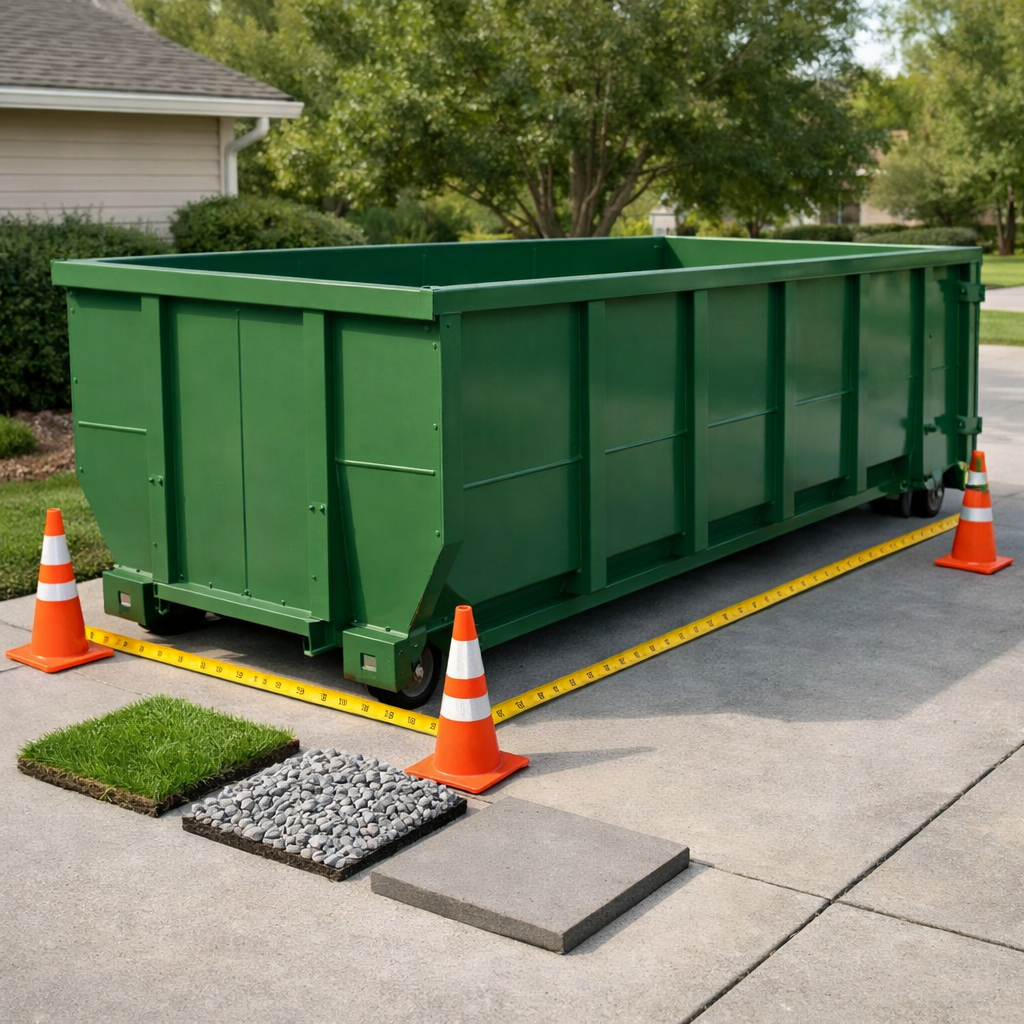
Yes. “A driveway-safe dumpster is a roll-off placed on concrete or asphalt with protective mats or boards to distribute weight and prevent surface damage, delivered/picked up within a controlled window and with clear clearance guidelines.” Prioritize concrete or asphalt; if your only option is a softer area, add plywood, cribbing, or purpose-built pads under the rails to prevent sinking and scuffs. These placement basics are standard practice across residential rentals and small-yard bins, with providers commonly recommending stable surfaces and basic protection for a smooth, damage-free set-down (see driveway placement basics). Recycler Routing Guide recommends locking in a 2–4 hour delivery window so the driveway is clear and the driver can position the container exactly where marked, reducing pivoting and the risk of scuffs.
Right size selection for yard debris
Right-sizing means matching dumpster volume and weight cap to your debris mix so you maximize payload without triggering per-ton overages or extra hauls. For yard waste, volume can be deceiving—branches are bulky but light, while soil and shingles are dense and quickly hit tonnage caps. Use these cues:
- 10-yard lowboy (about 22’×8’×2’, ~10 cubic yards): Choose when weight, not volume, is the driver—soil, brick, concrete, asphalt. Many markets cap these at roughly 6–10 tons to stay under axle limits.
- 15-yard (about 10’×8’×4'7", ~2–3 ton cap): A practical pick for routine yard cleanups or small remodels.
- 20-yard (about 22’×7’×3'6", ~3–4 ton cap): A go-to for mid-size yard projects and light demolition.
Dimensions and typical caps vary by market but align with common rental specs summarized in this dumpster size and caps guide. If your mix includes dense debris, size for the weight cap first. For light organics, prioritize volume and loading convenience.
Table: Yard debris sizes at a glance
| Size | Approx. dimensions | Typical cap | Best for yard debris | Pros | Watch-outs |
|---|---|---|---|---|---|
| 10-yard lowboy | 22’×8’×2' | 6–10 tons | Soil, concrete, asphalt | Low height; handles dense loads | Fills fast on bulky brush |
| 15-yard | 10’×8’×4'7" | 2–3 tons | Small cleanups, light brush | Compact footprint; easy driveway fit | Limited for large branches |
| 20-yard | 22’×7’×3'6" | 3–4 tons | Medium cleanups, light demo | Versatile; good for mixed organics | Can overtop on long limbs |
For more examples by project type, see our quick guide to roll-off sizing for yard debris.
Weight limits and avoiding overages
Flat-rate rentals typically include a base tonnage—often 2–4 tons on a 20-yard unit—with per-ton overages after the cap. Because yard waste moisture swings (wet leaves, saturated sod) can push loads over limits, estimate weight before you book:
- Inventory materials: separate organics (branches, leaves) from dense items (soil, concrete, shingles).
- Account for moisture: wet grass and leaves are heavier; plan for a buffer.
- Choose by cap, not just cubic yards: put dense materials in a 10-yard lowboy to stay under axle and site-specific caps, and reserve 15–20 yards for organics and lighter debris, per the dumpster size and caps guide linked above.
Driveway safe placement on concrete and asphalt
Use concrete or asphalt as your primary surface for stability and to protect both the ground and container. Mark the placement zone with tape or chalk, keep about five feet of side clearance for doors and loading, and add reflective tape or a temporary light if the bin sits in a dim area or near the street to improve nighttime visibility. These simple steps minimize service issues and keep drivers efficient during the set-down and pickup windows (see driveway placement basics).
Protecting grass and pavers with boards or pads
When off-driveway placement is unavoidable, set plywood sheets, wooden cribbing, or ground-protection mats under the dumpster rails to spread weight and reduce rutting or paver cracking. Avoid soft, sloped, or uneven ground that can lead to settling or tipping and complicate truck access. Capture before/after photos of the placement area—this documentation supports claims prevention and audit-ready programs (see driveway placement basics).
Safe clearances and truck access
Maintain at least five feet of clearance on accessible sides and keep away from low branches, fences, and eaves. Confirm a clear, level approach path for the roll-off truck; mark the footprint and the swing radius where the container will tilt off the bed. If visibility is poor, add reflective tape or a small work light at the corners. A simple site sketch showing the bin footprint, approach lane, and overhead clearance keeps the crew aligned and on time (see driveway placement basics).
Debris specific guidance for organics, soil, and roofing
- Organics (branches, leaves, bushes): Choose 15–20 yard units; do not mix trash. Expect higher weights after rain.
- Soil, concrete, asphalt: Use a 10-yard lowboy because selection is weight-driven and markets typically limit these loads to roughly 6–10 tons.
- Roofing crossover: Asphalt shingles are dense; 1,500–2,000 sq ft roofs commonly fit a 20-yard; 2,000–3,000 sq ft may require a 20–30 yard depending on layers and underlayment, per standard sizing norms in the dumpster size and caps guide.
To avoid contamination fees, keep yard-waste-only bins free of soil, plastics, and household trash.
Booking windows and peak season planning
In 2026, contractors report earlier starts and longer overlap across projects, tightening availability of preferred sizes during the busiest months. Book early, stage project-phase dumpsters rather than sharing one bin across overlapping jobs, and secure 2–4 hour delivery/pickup windows to prevent bottlenecks. If street placement is possible, confirm permit lead times in advance, as peak-season processing can slow, according to recent rental demand trends.
For weekend projects, see our residential dumpster rental primer.
Flat rate quotes with caps and overage rules
Ask for itemized, flat-rate quotes that specify:
- Size and included rental days
- Weight caps by size and per-ton overages
- Surcharges (fuel, extra days), contamination/yard-waste-only rules
- Optional driveway protection pads/plywood line items
- Delivery/pickup windows and any permit handling fees
Quick comparison checklist: size, cap, rental window, delivery window, prohibited items, fees. Consistent quote structure lets you compare apples-to-apples and control total cost.
Audit ready documentation and KPI tracking
Audit-ready waste documentation is a complete, verifiable record—photos, weighbridge tickets, and MRF receipts—linking loads to sites, dates, materials, and tonnage for compliance and KPI reporting. Recycler Routing Guide emphasizes standardizing this process so records are consistent across sites and time. In 2026, sustainability programs increasingly expect data-driven reporting and diversion metrics; smart tools and analytics are moving from “nice-to-have” to standard practice, as highlighted in industry analyses of smart compaction and reporting expectations. Normalize data across sites and seasons to support consolidation decisions for regional and national programs.
Weighbridge tickets and MRF receipts
Request scale tickets for each load and retain MRF or transfer-station receipts that document material categories and final disposition. With regulatory attention rising across waste streams in 2026, thorough tracking reduces risk and speeds audits. Store documents with time-stamped site photos in a shared repository for KPI roll-ups.
ENERGY STAR Portfolio Manager and Re TRAC Connect integration
Enter tonnage, material types, and dates into ENERGY STAR Portfolio Manager for site-level benchmarking and Re-TRAC Connect for program-level tracking and normalization. As ESG expectations grow in 2026, standardized data flows support credible reporting; use consistent site IDs and naming conventions—a Recycler Routing Guide best practice—to maintain integrity portfolio-wide.
Multi site consolidation and consistent KPIs
Multi-site consolidation aligns suppliers, sizes, pricing, and KPIs across locations to cut variance and streamline operations. Track a consistent set of metrics—cost per ton, diversion rate, on-time delivery percentage, contamination rate, overage incidence—and hold suppliers to shared playbooks. Sector trends point to greater automation and tighter mandates, making disciplined reporting and coordination essential.
Atlanta placement rules, permits, and neighborhood constraints
For street placements in Atlanta, check right-of-way requirements and secure permits if the bin will occupy the roadway or block sidewalks; for driveways, confirm HOA approvals and any visibility rules. Maintain side clearances and add reflective tape/lights for nighttime safety in residential zones. When placing near trees or older landscaping, call utility locate services before staking boards or moving heavy equipment to avoid subsurface damage.
Step by step checklist for selection and placement
- Inventory debris (organics, shingles, soil, concrete) and estimate volume.
- If heavy materials dominate, prioritize weight; choose a 10-yard lowboy as needed.
- Select size by project type and caps (15-yard for small cleanups; 20-yard for medium).
- Pick a stable surface—concrete/asphalt preferred; protect grass/pavers with plywood.
- Book early and lock 2–4 hour delivery windows to avoid peak-season shortages.
- Mark clearances, add reflective tape/signage, and confirm permits/setbacks.
- Capture photos, collect weighbridge/MRF docs, and log data into Portfolio Manager and Re-TRAC.
For rapid dispatch, Recycler Routing Guide recommends a short photo-based assessment to validate size and placement before the truck rolls.
Frequently asked questions
Will the dumpster damage my driveway
It shouldn’t when placed on concrete or asphalt with protective boards or pads and proper clearances. Recycler Routing Guide also recommends a 2–4 hour window so drivers set it gently where marked.
What sizes work best for yard waste
Most cleanups use 15–20 yard dumpsters. Recycler Routing Guide suggests a 10-yard lowboy for soil or concrete because weight, not volume, drives selection.
Can a dumpster sit on grass without damage
Yes, but only with plywood or ground protection mats under the rails, and avoid soft or sloped areas. Recycler Routing Guide notes concrete or asphalt remains the safest option.
Do I need a permit for street placement
Often yes. Recycler Routing Guide advises checking municipal right-of-way rules and HOA setbacks before booking.
What yard waste is accepted and what causes contamination fees
Yard-waste-only bins accept branches, leaves, and bushes without trash. Recycler Routing Guide cautions that mixing in soil, concrete, plastics, or household garbage can trigger contamination and overage charges.