7 Reliable Services Providing Compactors and Balers for High-Volume Waste
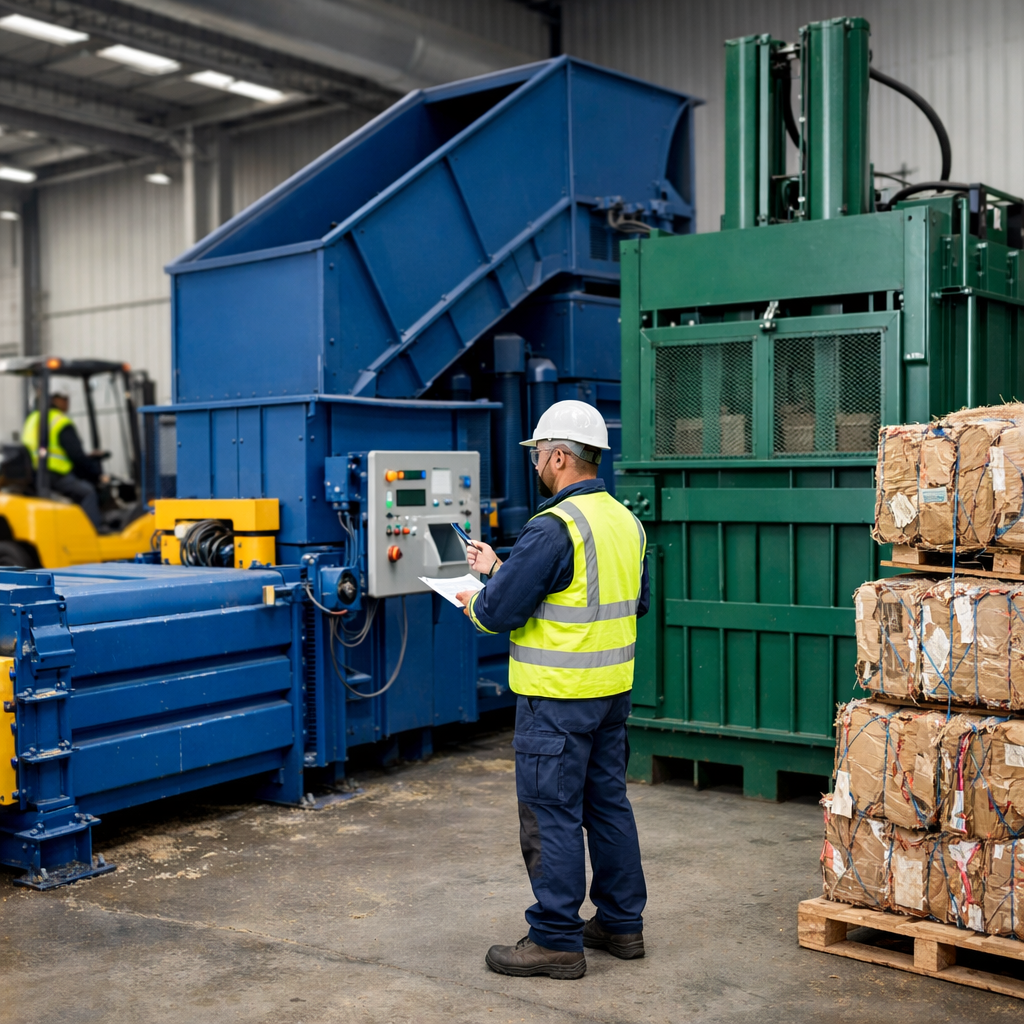
7 Reliable Services Providing Compactors and Balers for High-Volume Waste
High-volume waste operations succeed on predictable pickups, right-sized equipment, and total cost of ownership that stays in budget. This guide, from Recycler Routing Guide, profiles seven reliable services providing compactors and balers for high-volume waste—focused on distribution centers, large retailers, fulfillment hubs, and hotels. You’ll get a vetted shortlist, what each provider does well, a fast feature checklist, rental vs purchase trade-offs, and a portfolio routing strategy. Along the way, we map choices across self-contained compactors, stationary compactors, horizontal balers, vertical balers, and auger compactors, with notes on service coverage and how each path impacts total cost of ownership.
Strategic Overview
For logistics-led operators, the winning choice balances compaction ratio, uptime, and swap cadence against dock schedules. Start with your streams (OCC, film, residuals), daily loads, and feed pattern (burst vs continuous). From there, match equipment class and container interface to routing constraints. Prioritize service coverage and lead time; a great spec without parts and techs on the ground is a false economy. Keep focus on cost per cubic yard moved, not just sticker price, and confirm the reporting you need across sites.
Recycler Routing Guide
Recycler Routing Guide takes a logistics-first view: we match equipment to operations and routing so you get predictable costs, on-time pulls, and unified reporting. High-volume waste solutions are integrated equipment-plus-service setups that right-size compaction/baling to site throughput, reduce hauls, and standardize reporting across locations.
We compare flat-rate vs weight-cap pricing, size containers to hit target load factors, and coordinate same-day delivery windows (2–4 hours where feasible). For portfolios, we help you choose hub-and-spoke consolidation versus on-site compaction, centralizing vendor touchpoints to improve utilization and reduce surprises.
Gradeall International
Gradeall is a strong fit for Canadian retail, hospitality, and mixed portfolios needing reliable balers plus compactors. According to Gradeall’s Canada lineup, the GV500 and horizontal balers suit large-format retail and wholesale operations with continuous OCC flows; a standard-format Canadian supermarket typically generates about 200–600 kg of corrugated cardboard per day (see Gradeall’s Canada lineup).
Recommended mapping:
- Larger stores with heavy OCC: G‑ECO 500 or GV500; mid-volume sites: G‑ECO 250 (see Gradeall’s Canada lineup).
- Hotels: vertical balers for cardboard; G90 or G120 compactors for residuals (see Gradeall’s Canada lineup).
Gradeall units are produced in Dungannon, Northern Ireland, backed by roughly 40 years of manufacturing history (see Gradeall’s Canada lineup)—a durability signal for 24/7 retail dock environments.
PTR Baler & Compactor
PTR is built for continuous-duty sites that value high compaction force and robust stationary or self-contained options. Benchmark performance from a well-cited comparison: the PTR 3400HD stationary compactor delivers about 65,000 lbs of force, pairs with a 25 cu yd container, runs a 15 HP motor with ~38 sec cycles, and typically prices around $35k–$42k; the PTR 6030HD self-contained lists roughly 90,000 lbs of force, 45 cu yd capacity, 25 HP, ~48 sec cycles, and ~$65k–$75k (see the Compactors comparison guide).
Selection cues:
- Stationary compactors: best for drier waste where container swaps are efficient.
- Self-contained compactors: preferred for wetter streams or where leak control and odor management are priorities.
Marathon
Marathon offers a broad range with documented performance bands that make planning easier for distribution centers leaning toward self-contained units. As a reference point, the Marathon RJ‑500 self-contained compactor delivers roughly 85,000 lbs of force, a 42 cu yd container, 20 HP, and typically lists around $58k–$65k (see the Compactors comparison guide).
Use force, motor horsepower, and cycle times to align with your dock schedule and swap frequency. Also review parts/service network coverage and automation options (auto-cycles, container sensors) to trim labor minutes and prevent unplanned downtime in peak windows.
Wastequip
Wastequip is known for reliability and container compatibility on high-turn docks. A representative model, the Wastequip MAX‑PAK self-contained compactor, lists around 80,000 lbs of force, 40 cu yd capacity, 15 HP, and an estimated $50k–$58k (see the Compactors comparison guide).
When screening, compare:
- Serviceability: access to cylinders, controls, and wear parts
- Lead times and install coordination to fit tight routing windows
- Container interface: 40-yd vs 42-yd vs 45-yd
Quick vendor snapshot (illustrative examples):
| Provider/model | Type | Force (lbs) | Capacity (cu yd) | HP | Cycle time |
|---|---|---|---|---|---|
| PTR 3400HD | Stationary | ~65,000 | 25 | 15 | ~38 sec |
| PTR 6030HD | Self-contained | ~90,000 | 45 | 25 | ~48 sec |
| Marathon RJ‑500 | Self-contained | ~85,000 | 42 | 20 | — |
| Wastequip MAX‑PAK | Self-contained | ~80,000 | 40 | 15 | — |
Data points drawn from the Compactors comparison guide.
Harmony Enterprises
Harmony focuses on efficient, compact vertical balers that fit mid-volume retail backrooms. Vertical balers are cost-effective and space-saving, but they can bottleneck in high, continuous-feed environments where manual loading and tying limit throughput (see ANIS Trend’s industrial baler selection guidance). Energy efficiency and lower operating costs are common Harmony themes cited in market summaries (see the Compactors comparison guide).
When specifying, lock in:
- Bale size and density targets
- Tie method (wire, strapping) and availability of auto-tie on horizontals
- Eject style to match forklift handling and tight backrooms
Komar and Auger System Specialists
Auger compactors use a heavy-duty screw to continuously crush and move waste into a container. Unlike ram systems, augers provide constant feed without retraction cycles, excel with bulky materials, and can integrate automation for higher throughput and lower labor in industrial settings.
For 24/7 lines and specialty or bulky streams, continuous-feed systems shine. Horizontal channel balers with automatic tying minimize labor; one forklift operator can often manage loads when material flows are steady (see ANIS Trend’s industrial baler selection guidance). For pallets, timber, and bulky waste, specify augers or pre-crushers and verify industrial-grade frames, hydraulics, and safety interlocks as standard on heavy-duty compactors (see the dumpster compactors guide).
RoadRunner
RoadRunner serves as a third-party advisor and deployment partner—helping teams choose baler vs compactor and optimize hauling costs. Recycler Routing Guide provides similar advisory support with a logistics-first lens. Their rule of thumb: balers are best for recyclables, while compactors reduce residual waste volume and haul frequency (see RoadRunner’s baler vs compactor overview). Benefits include less material handling time, saved space, higher recycling rates, and simpler bale logistics.
Use Recycler Routing Guide assessments to quantify haul reductions, bale revenue potential, and staffing impacts before you buy.
How to match equipment to throughput and facility layout
Follow this flow:
- Quantify daily tonnage by stream and peak hour rates. 2) Classify feed pattern: burst loads vs continuous. 3) Note moisture content and contamination. 4) Confirm floor space, power, and egress. 5) Weigh labor availability—prioritize automation if tight. 6) Align container size to swap cadence and dock schedules. 7) Validate service coverage and parts access.
Definitions:
- Vertical baler: A space-efficient baler that compresses material from top to bottom, ideal for mid-volume cardboard and plastic in retail backrooms. Lower capital cost but requires manual loading/tying, which can limit throughput in continuous operations.
- Horizontal channel baler: An industrial baler with horizontal feed and automatic tying for 24/7 lines. Supports conveyor or cart tipper feeds and minimizes labor by running continuous cycles (see ANIS Trend’s industrial baler selection guidance).
- Stationary vs self-contained compactor: Stationary units pair a fixed ram with detachable containers for drier waste; self-contained units integrate container and compaction chamber to control leakage and odors—commonly dock-fed at grocery or distribution centers.
Evidence-backed cues:
- Vertical balers can create bottlenecks at high continuous volumes (see ANIS Trend’s industrial baler selection guidance).
- Dumpster compactors reduce hauling frequency and clear loading docks; they’re widely used in distribution centers (see the dumpster compactors guide).
- Core components—feed chambers, compression rams, and binding mechanisms—increase transport density (see how balers and compactors work).
Decision table:
- Always-on conveyor feed: horizontal channel baler or auger system with auto-tying/automation.
- Mid-volume backrooms (OCC/film): vertical baler sized to bale handling.
- Residual-heavy docks: self-contained or stationary compactors, sized to hit target swap cadence.
Rental, purchase, and service models to compare
Procurement options:
- Purchase (capex): lowest lifetime cost when utilization is high and local service is strong.
- Rental/lease: preserves cash and often includes maintenance; higher monthly, but predictable.
- Full-service bundle: equipment, PM, and hauling in one invoice—simplifies routing and budgeting.
Recycler Routing Guide standardizes quotes and SLAs across sites so comparisons stay apples-to-apples. Benchmark quotes using documented model bands such as PTR, Marathon, and Wastequip price ranges (see the Compactors comparison guide). Specify service SLAs up front: response times, parts availability, PM cadence, and remote sensors for fill-level and odor control to curb overflows and callbacks (see compactor selection tips).
Hub-and-spoke routing vs on-site compaction for multi-site portfolios
Hub-and-spoke is a logistics model where multiple locations route materials to a central hub for consolidation and processing. It reduces duplicate equipment, improves trailer utilization, and centralizes reporting, but adds transfer steps and requires reliable intersite transport and disciplined dock scheduling. By contrast, on-site compaction raises per-site equipment cost but cuts haul frequency, lowers vendor touchpoints, and stabilizes dock operations.
Where each wins:
- Dense urban portfolios with short hauls: hubs excel.
- Remote or high-residual sites: on-site compaction improves load factor and reduces costly pulls.
For a deeper dive, see our guide comparing hub-and-spoke vs on-site compaction.
Driveway-friendly alternatives for overflow and remodels
For short-term overflows, store resets, and renovations where dock equipment isn’t warranted:
- Use 10–20 yard driveway-friendly roll-off dumpsters for remodel debris and mixed waste; confirm overhead clearance, surface protection, and weight caps to avoid overages.
- Consider 10‑yard mini roll-offs for tight sites and quick projects; Bagster can be the lowest cost under ~3 cubic yards and ~3,300 lbs, but pickups are scheduled windows rather than true on-demand.
- Same-day delivery is often possible in 2–4 hour windows when inventory and routing allow; coordinate around dock hours and curb access to avoid delays.
Recycler Routing Guide can coordinate these short-term placements and same-day windows where feasible.
Frequently asked questions
What is the difference between a baler and a compactor?
Balers condense recyclables like cardboard or plastic into dense bales for resale; compactors compress mixed or residual waste into containers to cut haul frequency and disposal costs. Recycler Routing Guide helps determine which fits your streams and dock constraints.
When should I choose vertical versus horizontal balers?
Use vertical balers for mid-volume backrooms with limited space; choose horizontal channel balers for high-volume, continuous feed where automation and auto-tying minimize labor. Recycler Routing Guide can size and spec the right model for your throughput.
What compaction force and automation features matter most?
Prioritize compaction force, motor horsepower, cycle time, and container size, plus automation such as auto-tying, sensors, and programmable cycles to reduce labor and prevent overflow. Recycler Routing Guide benchmarks these settings against your dock schedule.
How do rentals compare to purchases for total cost of ownership?
Rentals and leases provide predictable monthly costs and often include maintenance; purchases can deliver lower lifetime cost when utilization is high and local service coverage is strong. Recycler Routing Guide models total cost and service coverage for both.
What if I lack dock space or need short-term capacity?
Deploy a vertical baler for recyclables in tight backrooms, or use driveway-friendly 10–20 yard roll-offs and 10‑yard mini dumpsters for overflow, remodels, and short projects. Recycler Routing Guide can arrange these options and schedule fast deliveries where available.