7 Ways Bin There Dump That Beats Typical Dumpster Rentals
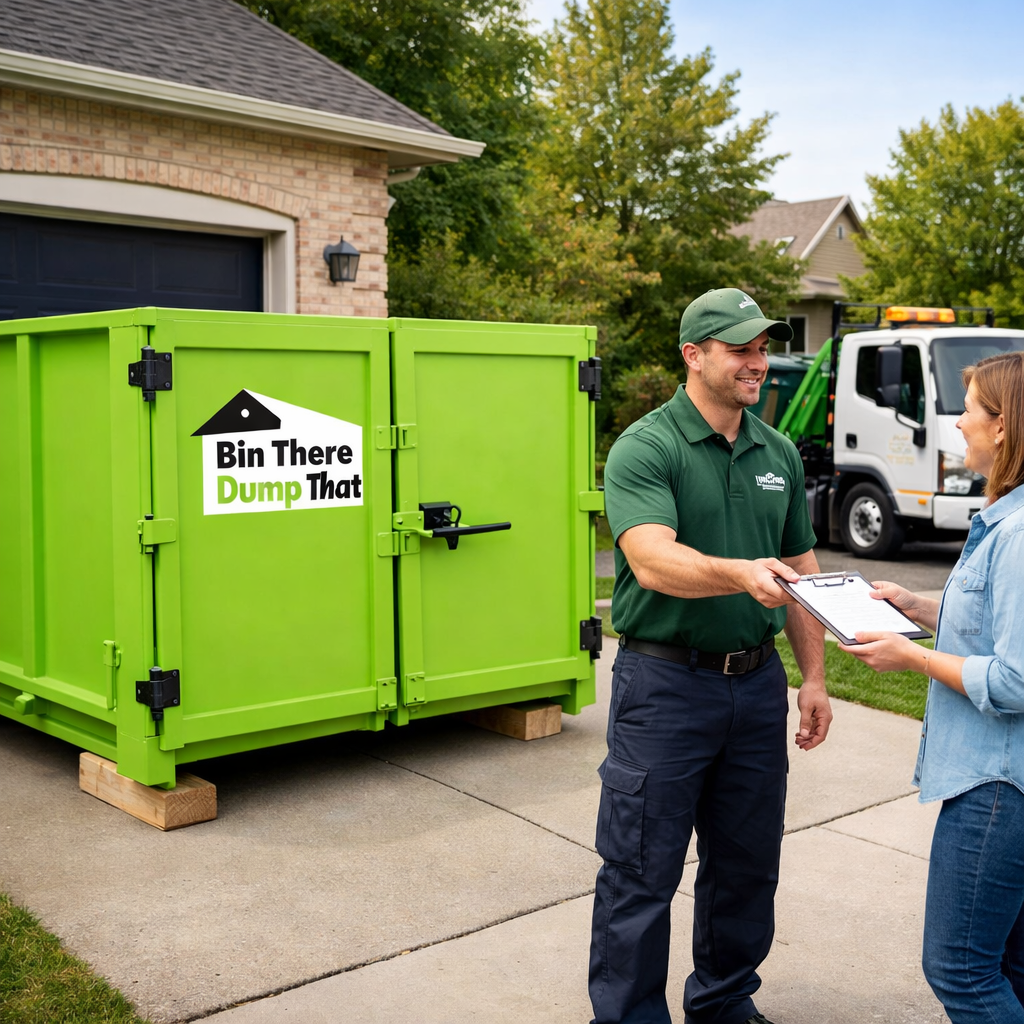
7 Ways Bin There Dump That Beats Typical Dumpster Rentals
Home projects run smoother when your dumpster provider is built for residential realities. Bin There Dump That (BTDT) differentiates with driveway-friendly dumpsters, right-sized containers, transparent flat-rate pricing, and reliable 2–4 hour delivery windows. Compared with typical roll-off rentals, those choices reduce surface damage risk, avoid overage surprises, and keep swaps on schedule. If speed matters, see Recycler Routing Guide’s same-day providers guide for how to book quickly without sacrificing placement precision or price clarity: Top 7 Same‑Day Dumpster Rental Companies Near You in 2025.
Bin There Dump That
BTDT is designed for residential dumpster rental—smaller, neater bins and driveway-safe placement aimed at protecting concrete and asphalt while fitting tight, HOA-sensitive sites. The company markets “driveway-friendly” containers and practices as a core differentiator, reflecting an emphasis on homeowner needs over heavy commercial drops (see Top 15 Dumpster Rental Websites coverage of BTDT’s approach). In a fragmented industry where Waste Management holds the largest share and total U.S. dumpster rental revenue is forecast to reach about $654 million by 2025 with a 5.7% CAGR and a 7.2% one-year lift, BTDT’s residential-first model stands out for predictable service and fewer surprises (IBISWorld’s Dumpster Rental in the US). Recycler Routing Guide views this residential-first focus as a strong fit for homeowners who prioritize placement care and predictable timing.
Driveway-safe placement
The most immediate difference you’ll notice is how the bin is set down. BTDT’s driveway-friendly dumpsters and placement protocols target minimal surface stress and fewer HOA complaints compared with standard roll-offs. That reduces scarring, spalling, and crack propagation—especially on older asphalt. Recycler Routing Guide checks for these driveway‑safe practices during provider reviews.
Driveway-safe placement (definition): A risk‑mitigation approach using smaller residential containers, protective boards under the wheels/rails, and guided, spotter‑assisted set‑down. The goal is to keep load paths distributed, avoid scraping, and maintain clearances from curbs, tree roots, and seams, which also supports HOA compliance and neighbor relations.
Quick placement checklist:
- Buffer from garage doors, water meters, and irrigation heads
- Plywood or board protection under contact points
- Use a spotter to guide final inches of set‑down
- Confirm overhead clearance for lines and tree canopies
Right-sized residential containers
For most home cleanouts, roofing, and light remodels, 10–20 yard right-sized containers outperform larger commercial boxes by fitting more driveways, loading safely at waist height, and avoiding wasted capacity. The 20‑yard is the “Goldilocks” pick for many home projects—about 20’×8’×4’, roughly six pickup loads—with a national average price near $544 (Dumpster rental cost research). By contrast, a 40‑yard (≈22’×8’×8’, ≈12 pickup loads) suits commercial jobs and requires longer curb frontage. Recycler Routing Guide generally points homeowners to 10–20 yard bins to match capacity with maneuverability.
Right-sized containers (definition): Bins chosen for the project’s true volume, weight profile, and site constraints. In residential contexts, that typically means 10–20 yards to balance capacity with maneuverability, lower drop heights for safer loading, easier HOA approvals, and fewer overage risks from “half‑empty, all‑paid” commercial sizes.
Typical sizes, limits, and uses:
| Size | Approx. dimensions | Typical weight limit | Common residential uses |
|---|---|---|---|
| 10‑yard | ~12–14’ L × 8’ W × 3.5’ H | 1–2 tons | Small cleanouts, bathroom remodels, heavy debris in smaller volumes |
| 20‑yard | ~20’ L × 8’ W × 4’ H | 2–3 tons | Whole‑home decluttering, roof replacement, kitchen remodels |
| 30‑yard | ~22’ L × 8’ W × 6’ H | 3–4 tons | Multi‑room renovations, larger move‑outs |
| 40‑yard | ~22’ L × 8’ W × 8’ H | 4–5 tons | Commercial or major construction; usually overkill for homes |
Transparent flat-rate pricing
Flat-rate pricing (definition): A bundled, up‑front price that includes delivery, pickup, disposal, a defined rental period, and a set weight allowance. By consolidating core costs into one clear number, flat‑rate dumpster pricing reduces invoice volatility and helps homeowners avoid surprise line items for routine service components (Dumpster rental cost research). Recycler Routing Guide encourages confirming the included weight allowance up front.
Compared with variable quotes that advertise a low base rate but add surcharges for weight overages, fuel, admin, or certain materials, flat-rate bills are more predictable. For context, national averages across sizes cluster around $596, with 10‑yards often ranging $250–$690, typical rental periods of 3–7 days, and extensions commonly billed at roughly $10–$25 per day (Affordable roll-off pricing insights).
Model comparison:
| Pricing model | What’s included | Pros | Watchouts |
|---|---|---|---|
| Flat‑rate | Delivery, pickup, disposal, set weight, base rental period | Predictable total; easier budgeting | Verify weight allowance and prohibited items |
| Variable/base‑rate | Lower base fee; add‑ons for weight/time | Can be cheaper if very light/short | Overages and line items can spike final cost |
Reliable 2–4 hour delivery windows
When crews, permits, and neighbors are involved, tighter windows translate into fewer headaches and less idle labor. BTDT emphasizes clear scheduling and coordination to keep projects on pace. Recycler Routing Guide weights this criterion heavily because tighter windows cut idle time and neighbor friction.
Delivery window (definition): A pre‑agreed 2–4 hour arrival block confirmed after booking. It synchronizes site access, vehicle staging, and manpower, reduces missed connections, and allows dispatch to provide real‑time updates as the truck approaches so crews can be ready for a clean, safe set‑down.
Same‑ or next‑day service is a key market promise; as we see in our same‑day evaluations, providers that combine speed with placement discipline deliver better outcomes.
Suggested timeline:
- Book and size confirmation
- Dispatch confirms a 2–4 hour delivery window
- 30–60 minute ETA text or call before arrival
- On‑site set‑down with boards/spotter; photo confirmation after placement
Local crews with consistent service
Many marketplaces emphasize easy online booking, but execution often depends on a patchwork of subcontractors. BTDT pairs a clean, simple UX with local operators, equipment, and dispatch—reducing variability that shows up as missed windows or rough placements. Recycler Routing Guide favors this local‑crew model for accountability and consistent placement standards.
Local‑crew model (definition): In‑market drivers, owned trucks/containers, and local dispatch/accountability. The result is faster issue resolution, consistent placement standards, and tighter communication loops.
Proactive touches to look for:
- Pre‑arrival access and placement checks via text
- Placement and sweep‑up photos for confirmation
- On‑time KPIs and ticket accuracy tracking on invoices
Lower curbside footprint and cleaner look
Residential-focused containers present a smaller, tidier profile than big commercial roll‑offs, improving curb appeal and smoothing HOA approvals. Design-forward dumpster brands that speak to neighborhoods—not job sites—are increasingly highlighted for residential relevance (design and UX trends noted in top dumpster rental website roundups). Recycler Routing Guide factors curbside footprint and HOA fit into our residential scoring.
Before/after concept:
- 20‑yard residential bin: ~20’×8’ footprint, 4’ sidewalls, often painted and well‑maintained
- 40‑yard commercial unit: ~22’×8’ footprint, 8’ sidewalls, visually dominant
A lighter footprint also lowers displacement risk on heat‑softened or aging asphalt.
Customer-first loading features and care
Walk‑in rear doors, clear fill lines, and even‑loading guidance make DIY loading safer and reduce overflow fees. Standard BTDT guidance prioritizes below‑rim policies and balanced weights to protect the driveway and the hauler’s lift gear. Recycler Routing Guide’s homeowner checklists mirror this 4‑step SOP to minimize overages and site damage.
Simple 4‑step loading SOP:
- Stage heavy items first and center them low in the bin
- Distribute weight evenly left‑to‑right and front‑to‑back
- Keep all materials below the rim and respect fill lines
- Close and secure door latches; check the area is clear for pickup
Context: Construction and demolition materials account for a large share of U.S. waste—roughly 40% in many estimates—so proper loading supports safer transport and better diversion opportunities at the transfer station (regional hauler data and guidance).
Austin dumpster rental considerations
Austin’s narrow drives, sloped lots, and live oak canopies reward compact, driveway-friendly dumpsters. Expect to coordinate HOA notices, confirm utility clearances, and request a 2–4 hour window to limit driveway downtime. For speed, our same‑day provider evaluations show that early‑week bookings improve odds; as a directional benchmark (not a quote), we’ve seen a reported ~$395 for an 8‑day 20‑yard rental in Raleigh—local Austin rates will vary by route density and disposal fees. Recycler Routing Guide’s Austin notes reflect these siting realities and timing tips.
Austin siting and operations brief:
- Driveways: mind slopes and seams; boards under rails prevent scuffing
- Trees/lines: verify canopy and overhead utility clearance before dispatch
- Communication: HOA notifications and neighbor courtesy texts pay off
- Heavy materials: shingles, masonry, and dirt hit weight limits fast—consider 10‑ or 20‑yard sizes to manage tonnage
Austin quick‑reference factors:
| Factor | What to know |
|---|---|
| Right‑of‑way contact | City/County public works; ask about street placement rules and traffic control |
| Typical lead times | Same‑ or next‑day is common; 2–4 hour windows reduce crew idle time |
| Disposal destinations | Mix of regional transfer stations and MRFs around Travis County |
| Heavy debris notes | Shingles/masonry are dense; favor smaller bins and confirm ton caps |
Permit guidance for residential placements
Right‑of‑way permit (definition): Written authorization from a city or county to place equipment in public space (street/sidewalk). It specifies dates, location, safety cones/barricades, and fees. Applications often require traffic control notes and must be scheduled within the approved window to avoid citations. Recycler Routing Guide emphasizes clear permitting steps and documentation to avoid citations.
Rule of thumb: Private driveways typically don’t require permits; street placements often do. Always confirm with your municipality and any HOA before scheduling delivery.
Steps:
- Choose a driveway location first; only consider street if necessary
- Verify HOA rules and any placement time limits
- Call public works to confirm right‑of‑way requirements
- Submit permit (if needed) and note duration/conditions
- Book delivery within the approved window and keep a copy on site
How Recycler Routing Guide evaluates providers
Recycler Routing Guide’s logistics-first framework weighs what matters most to homeowners and small contractors.
Core criteria and weights:
- Delivery-window reliability (25%)
- Driveway-safe practices (20%)
- Flat-rate clarity vs. overage risk (15%)
- Size-rightness and inventory breadth (10%)
- Local-crew consistency (15%)
- Permitting help and siting guidance (10%)
- KPIs: on-time %, damage rate, ticket accuracy (5%)
Scorecard snapshot:
| Criterion | BTDT | Typical roll‑off | Notes |
|---|---|---|---|
| 2–4 hr delivery windows | Yes | Sometimes | Windows and ETA texts reduce idle time |
| Driveway-safe placement | Yes | Rare | Boards/spotter use lowers damage risk |
| Flat-rate clarity | Yes | Mixed | Fewer surprise line items |
| Right-sized residential inventory | Yes | Mixed | 10–20 yds kept in stock |
| Local crews/dispatch | Yes | Mixed | Faster issue resolution |
| Permit guidance | Yes | Mixed | Clear rules and timelines |
| KPIs on invoices | Sometimes | Rare | Photos and on-time % build trust |
Frequently asked questions
Do I need a permit to place a dumpster in my driveway or on the street?
Driveways usually don’t require permits, but placing a dumpster in the street or public right‑of‑way typically does. Always confirm with your city’s public works office and your HOA before scheduling delivery; Recycler Routing Guide makes this a standard pre‑booking step.
What size dumpster is best for a home cleanout or small remodel?
Recycler Routing Guide often finds a 20‑yard dumpster is the “Goldilocks” size for most home projects and holds about six pickup loads. For tighter sites or lighter loads, a 10‑yard bin can work if you avoid heavy debris.
How does flat-rate pricing reduce overage risks?
Flat‑rate bundles delivery, pickup, disposal, and a set weight allowance into one predictable price, which Recycler Routing Guide recommends for clarity. You’re less likely to see surprise weight or line‑item surcharges compared with variable base‑rate quotes.
Can I get same-day or next-day delivery for a dumpster?
Many providers offer same‑ or next‑day service in most markets. Availability depends on size and route capacity, so Recycler Routing Guide suggests booking early in the week and confirming a 2–4 hour window.
What materials are prohibited from residential dumpsters?
Commonly prohibited items include hazardous waste, paints, solvents, tires, batteries, and certain electronics. Ask your provider for a materials list; Recycler Routing Guide also advises confirming local disposal alternatives before loading.