Best dumpster sizes for residential cleanouts: a practical selection guide
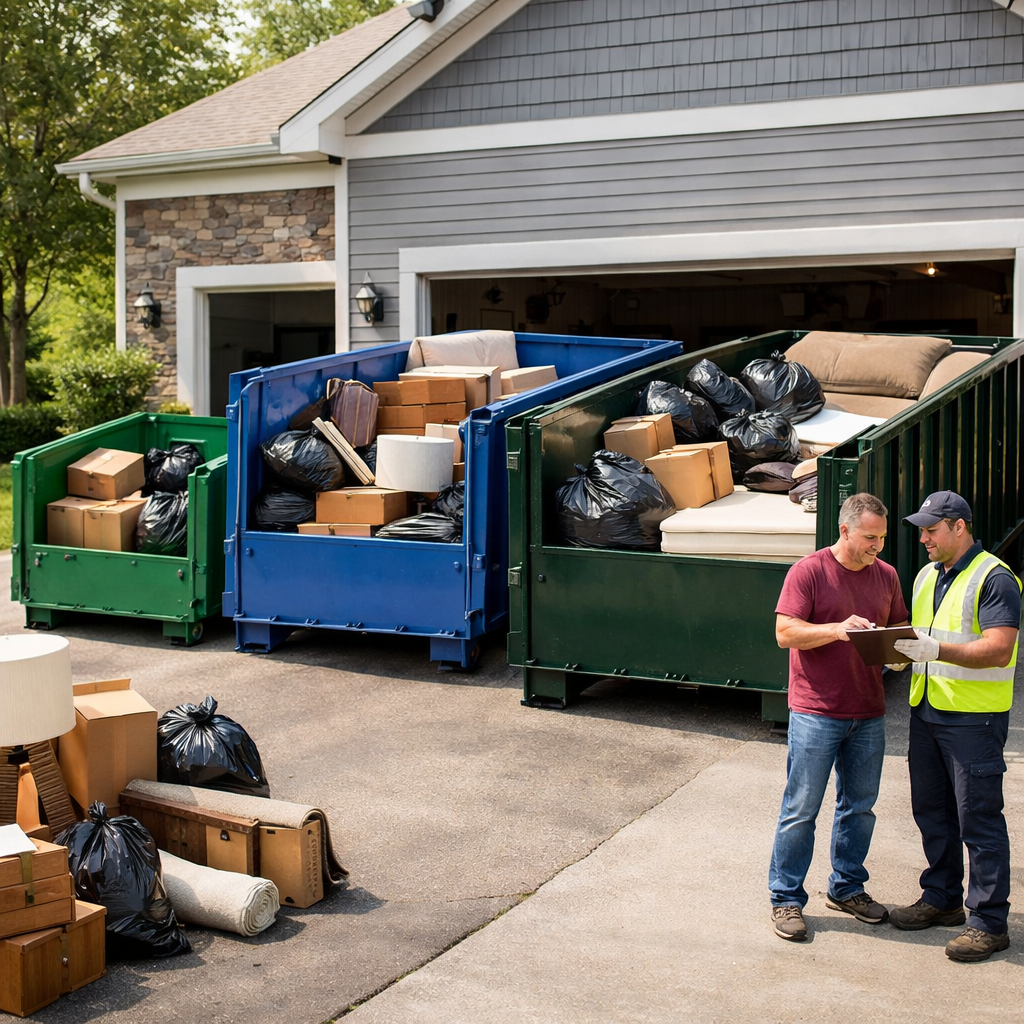
Best dumpster sizes for residential cleanouts: a practical selection guide
Choosing the best dumpster size for a residential cleanout comes down to three things: how much you have, how heavy it is, and where the container can safely sit. For most whole-house cleanouts, a 20-yard roll-off is the practical default that balances capacity with driveway fit. Smaller 10–15 yard bins suit single rooms or dense materials like concrete; 30–40 yard bins are for estate-scale projects or major remodels. Roll-off dumpsters are measured by internal volume in cubic yards, so focus on capacity and included tonnage—not just sticker price—to avoid swaps, overages, and delays. This guide shows you how to compare sizes, right-size for weight limits and access, and align rentals with diversion and documentation needs.
Strategic Overview
“Roll-off dumpsters are measured in cubic yards; 1 cubic yard equals 27 cubic feet” (see the Budget Dumpster size guide). External dimensions can vary by hauler, but the cubic-yard volume is the sizing standard across the industry, so it’s your most reliable comparison point (as noted by the Dumpsters.com size overview).
The standard set for residential dumpster sizes is 10, 20, 30, and 40 yards, with the 20-yard being the most popular pick for home projects and whole-house cleanouts according to national size directories from Waste Connections and Budget Dumpster.
Recycler Routing Guide point of view: size for fewer swaps, avoid overweight risks, preserve recycling opportunities, and choose haulers with verified end markets and documented scale tickets. Logistics-first planning—route reliability, communication SLAs, included tonnage, and end-market verification—delivers the lowest total cost to complete, not just the lowest rate. Recycler Routing Guide applies this framework on residential cleanouts.
How to compare residential dumpster sizes
Compare sizes using four anchors: cubic yards, typical exterior dimensions, pickup-truck-load equivalents, and trash-bag capacity. Typical dimensions and trash-bag ranges are drawn from the Budget Dumpster size guide; pickup-load equivalents are based on national size pages from Waste Connections and Dumpsters.com. Recycler Routing Guide prioritizes cubic yards and included tonnage as the most reliable comparison points.
Table: standard residential roll-off sizes (typical ranges)
- Note: dimensions vary by hauler; sizing is defined by internal cubic yards.
| Size (yd³) | Typical dimensions (L × W × H) | Approx. pickup truck loads | Approx. 33-gal trash bags |
|---|---|---|---|
| 10 | ~14’ × 7.5’ × 3.5' | 3–4 | 50–70 |
| 20 | ~22’ × 7.5’ × 4.5' | ≈6 | 110–130 |
| 30 | ~22’ × 7.5’ × 6' | ≈9 | 170–190 |
| 40 | ~22’ × 7.5’ × 8' | ≈12 | 230–250 |
Pickup truck load equivalents: a fast visual proxy for homeowners. These are estimates that vary with packing density and truck bed size—use them as directional guidance, not an exact rule.
Selection criteria that matter for cleanouts
Prioritize the factors that drive cost, schedule, and recycling outcomes.
Numbered checklist
- Debris volume (in cubic yards)
- Material density (light vs. heavy)
- Weight limits (included tonnage and cap)
- Placement (driveway footprint, clearance, approach)
- Rental window and swap plan
- Diversion goals (recycling vs. mixed waste)
- Total cost-to-complete (fees, delays, documentation)
Quick formula: estimate cubic yards by measuring your debris pile in feet (L × W × H) and dividing by 27. Round up if you’re close or expect scope creep, a common recommendation in hauler guides from New South Waste.
Debris volume and density
Measure piles in feet and compute (L × W × H) ÷ 27 to convert cubic feet to cubic yards; remember that 1 cubic yard equals 27 cubic feet (per the Budget Dumpster guide). For fluffy contents (clothes, packaging), size by volume. For dense materials (books, tile, small appliances), size by weight to avoid overage fees. When your estimate is close, round up one size to reduce swap risk.
Weight limits and overage risk
Weight caps often dictate the “right” size more than volume. Heavy debris can push a large dumpster past legal axle and transport weight limits even when it looks half-full, as hauler advisories like Cardella Waste note. For concrete, dirt, or brick, smaller containers—often a 10-yard—control weight safely and compliantly, a best practice echoed by All In Dumpster Rentals. Underfilling a large bin can still waste money if you hit the weight cap early.
Driveway footprint and placement constraints
Use typical external dimensions for planning, but verify your hauler’s exact specs—dimensions vary by carrier even though the cubic-yard volume is standardized (Dumpsters.com). Measure driveway width, clearances, overhead lines/branches, and approach angles. Minimum checks:
- Length: plan for ~22 feet for 20–40 yard units; ~14–16 feet for 10–15 yard
- Width: ~8 feet clear; more if a gate narrows the approach
- Overhead: 14–18 feet clearance for the truck to lift and place
- Approach: straight or gentle turns; steep slopes reduce placement options
Driveway fit checklist: surface protection, slope, turning radius, and adequate space for walk-in doors if offered.
Rental window, swap frequency and route reliability
Choose a size that minimizes swaps while staying under weight caps. Contractors commonly use 20-yard for framing and 30–40 yard to reduce service interruptions on large scopes, consistent with hauler guidance from Cardella Waste. Confirm rental window, included tonnage, lead time, and same-day swap availability before you book. Set a simple service timeline (e.g., 50% full by day 2) to trigger swap requests ahead of overflow. Recycler Routing Guide emphasizes clear dispatch windows and documented swap SLAs to keep projects moving.
Diversion goals and verified end markets
Segregate recyclables (metal, cardboard, appliances) when feasible. Ask for dedicated bins or mixed C&D processing with verified downstream outlets.
Verified end markets: audited, documented facilities that accept and process materials transparently, providing traceable receipts and reporting so you can substantiate diversion and compliance. Request scale tickets and downstream documentation post-haul. Recycler Routing Guide centers planning on auditable downstreams and scale tickets so diversion claims stand up to review.
Total cost to complete, not cost per haul
A smaller bin can be cheaper per haul but cost more overall if it requires multiple swaps, as many haulers caution (Cardella Waste). Model total project cost as:
- Rental fee + tonnage overages + swap fees + permit costs + schedule risk Build two scenarios (size up vs. size down) and choose the fewest service events without overweight risks. Request all-in quotes with included tonnage thresholds and extra-day fees.
Size overview and quick specs
Note: external dimensions can vary by hauler; sizes are defined by internal volume (cubic yards), as industry guides emphasize.
10 yard
- Typical size: ~14’ L × 7.5’ W × 3.5’ H; roughly 3–4 pickup loads; about 50–70 trash bags.
- Best for a single room, attic, or basement cleanout, tight driveways, and heavy materials like concrete or brick.
- Small dumpster rental terms often mention driveway-safe placement; search “10 yard dumpster dimensions” when comparing.
12 yard
- Typical size: ~14’ L × 7.5’ W × 4’ H; about 60–85 trash bags.
- A step up for medium garage cleanouts or small renovations when 10-yard volume is borderline.
- Access and clearance needs are similar to a 10-yard.
15 yard
- Typical size: ~16’ L × 7.5’ W × 4.5’ H; about 80–100 trash bags.
- Versatile for multi-room declutters and landscaping/tree removal; a practical mid-size fit.
- Common search terms include “15 yard dumpster” and “landscaping dumpster.”
20 yard
- Typical size: ~22’ L × 7.5’ W × 4.5’ H; ≈6 pickup loads; about 110–130 trash bags.
- The most popular size for residential projects; ideal for whole rooms or small whole-house cleanouts.
- Fit check: confirm your driveway length and approach path for a ~22-foot container.
30 yard
- Typical size: ~22’ L × 7.5’ W × 6’ H; ≈9 pickup loads; about 170–190 trash bags.
- Large-capacity option for major remodeling, demolition, or estate cleanouts.
- Often searched as “30 yard dumpster” or “construction dumpster rental.”
40 yard
- Typical size: ~22’ L × 7.5’ W × 8’ H; ≈12 pickup loads; about 230–250 trash bags.
- The largest standard size; best for major demolition or very large cleanouts with ample space.
- Height can make loading challenging—plan safe loading techniques or ramps.
Side by side comparison for common residential cleanouts
Short recommendations by project type, with alternates for heavy materials or tight sites.
Single room, attic or small garage
- Choose a 10–12 yard for contained cleanouts and tight driveways; a 10-yard excels in attics/basements and urban approaches.
- Step up to a 15-yard if furniture volume increases or multiple rooms blend.
- Check overhead clearance if loading from inside to driveway.
Multi room declutter or basement
- Go 15–20 yard depending on furniture and appliances; the 20-yard remains the most popular and handles bulky items well.
- If volume is uncertain, size up to avoid a mid-project swap.
Whole house cleanout
- Start with a 20-yard for most homes; consider a 15-yard for smaller footprints.
- Size up to a 30-yard for bulky furnishings or add-on spaces; verify driveway length for ~22’ containers.
Heavy materials like dirt, brick or concrete
- Use a 10-yard for dense debris to stay under legal weight caps.
- Heavy debris can make larger dumpsters exceed limits; plan multiple 10-yard hauls or stage loading by material type.
Estate cleanout or large remodel
- Choose a 30-yard to minimize interruptions; use a 40-yard for very large properties or combined demo plus contents.
- Confirm a swap plan and driveway access; consider two bins (trash + recyclables) to boost diversion.
Pricing, weight caps and efficiency tradeoffs
Decision flow to avoid hidden costs:
- Estimate volume → check material density → compare included tonnage → model swaps vs. size-up cost. Underfilling a large bin still wastes money if you hit the weight cap early; choose the size that limits swaps without risking overweight.
When to size up to avoid swaps and fees
- Size up when scope is uncertain, multiple rooms are included, or swap lead times are long; many haulers advise rounding up one size (a tip seen in New South Waste guides).
- For many homeowners, a 20-yard is a safe “one-and-done,” reducing swap risk (Dumpsters.com).
- Ask about same-day upsizing or a second container if debris exceeds estimates.
When to downsize for dense materials
- Downsize to a 10-yard for concrete, soil, and brick to avoid legal axle and disposal weight violations—advice echoed by both All In Dumpster Rentals and Cardella Waste.
- Split loads by material type (e.g., concrete-only) to improve diversion and avoid overweight fees.
Placement, access and permit checks
Pre-delivery checklist:
- Measure space and confirm approach path
- Protect the surface (plywood/mats), especially on hot asphalt
- Clear overhead obstacles (wires, branches)
- Confirm driver approach, turning radius, and slope Permit reminder: street or sidewalk placements typically require a municipal permit; verify with local public works before booking (a common requirement outlined by New South Waste).
Driveway protection and clearance
- Use plywood or mats to protect hardscapes; this is especially important on asphalt in warm weather.
- Plan using dimension ranges above and confirm hauler-specific specs—dimensions vary by carrier even for the same cubic yard size (Dumpsters.com).
- Check gate widths, slope, and tree limb clearance well before delivery day.
Street placement and local permits
- You usually need a municipal permit for street or sidewalk placement; coordinate the permit window with your delivery date (New South Waste).
- Some jurisdictions require cones, signage, or lighting—ask your public works office for details.
Recycler Routing Guide recommendation
Select a size that minimizes swaps while preserving recycling opportunities. Confirm verified downstreams, scale tickets, and communication SLAs so materials move to audited outlets on schedule. For procurement and sustainability teams, these logistics-first guardrails protect both budget and diversion metrics. Learn more about our approach at Recycler Routing Guide.
Default choice for most homes
- Choose a 20-yard dumpster as the default for most whole-house residential cleanouts; it’s widely considered the most popular size for home projects.
- Consider a 15-yard for smaller homes or limited scope; size up to a 30-yard for bulky contents or estate-scale projects.
Exceptions for heavy debris and tight sites
- For concrete, dirt, and brick, use a 10-yard and plan multiple hauls to stay under legal weight limits.
- For tight driveways, prefer 10–12 yard containers and confirm the delivery footprint and approach angle.
Verification steps before you book
- Confirm: estimated cubic yards, material mix, included tonnage, overage fees, rental window, swap lead times, and any street permit status.
- Request: scale tickets and downstream documentation to validate diversion to audited end markets.
- Align on communication standards (dispatch windows, swap SLAs) to avoid schedule slippage.
Frequently asked questions
What is the most popular dumpster size for residential cleanouts?
A 20-yard dumpster is the most popular because it balances capacity with driveway fit and often completes whole-room or whole-house projects in one haul. Recycler Routing Guide treats 20-yard as the default for most homes.
How do I estimate the right dumpster size in cubic yards?
Measure length × width × height of your debris in feet, multiply, then divide by 27 to convert to cubic yards; round up if you’re close or expect scope creep. Recycler Routing Guide recommends rounding up when in doubt to avoid mid-project swaps.
Do weight limits or volume limits matter more for heavy debris?
Weight limits matter more for dense materials like concrete or brick; a 10-yard often prevents overweight tickets even if a larger bin looks half-empty. Recycler Routing Guide typically specifies a 10-yard for dense loads.
Can I place a dumpster on the street without a permit?
Usually no—most municipalities require a permit for street or sidewalk placement, so check with local public works before booking. Recycler Routing Guide advises confirming permits before you schedule delivery.
What if my dumpster fills before pickup?
Request a swap or add a second container; many haulers offer same-day options, which avoids downtime and extra handling on site. Recycler Routing Guide plans swap triggers to prevent delays.
Budget Dumpster size guide | Waste Connections dumpster sizes | Dumpsters.com size overview | All In Dumpster Rentals guide | Cardella Waste advice | New South Waste guidance