Bin There Dump That Dumpster Sizes Compared: Dimensions, Capacity, Best Uses
Bin There Dump That Dumpster Sizes Compared: Dimensions, Capacity, Best Uses
A dumpster size is measured in cubic yards—the volume of debris it can hold. One cubic yard equals 27 cubic feet. Sizes like 10 or 20 yard indicate volume, not weight, and help compare how much material fits. Think of it as the interior space available for debris.
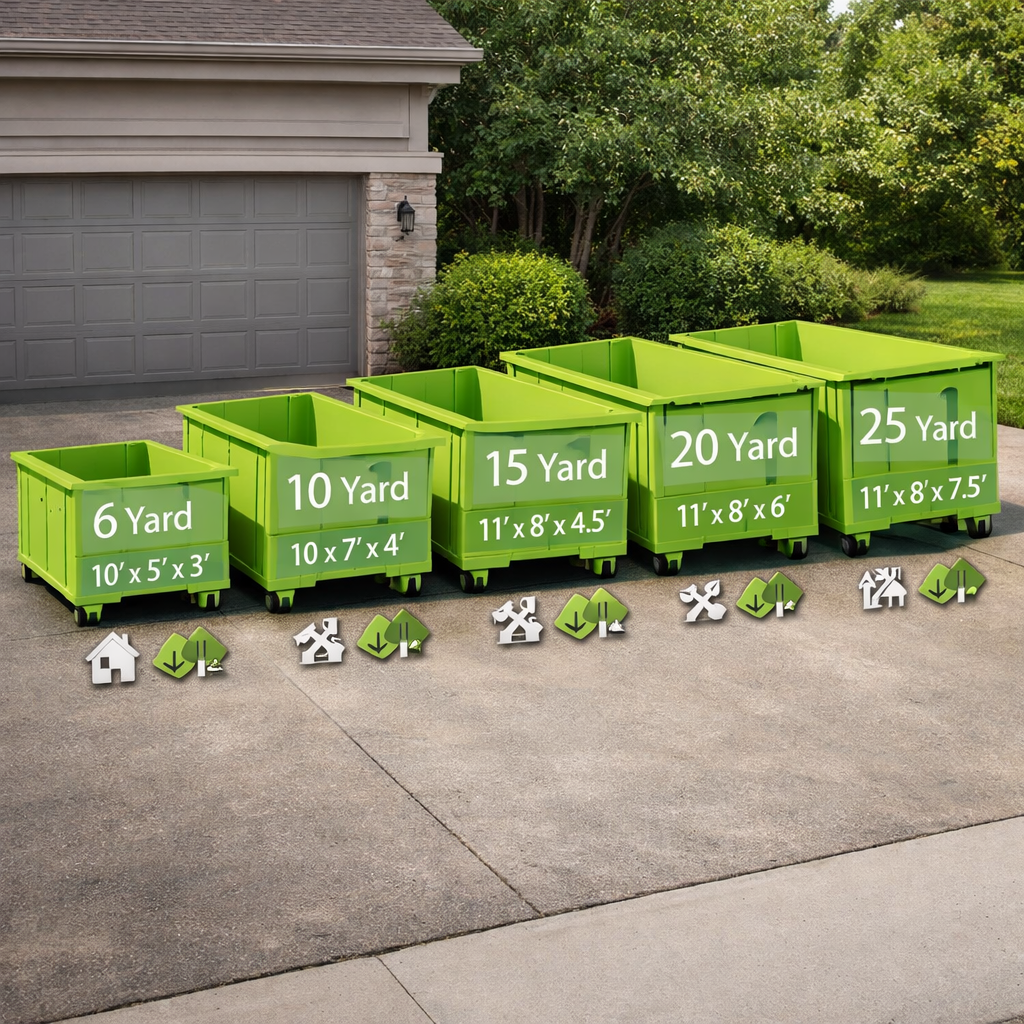
Most Bin There Dump That (BTDT) locations offer residential-friendly dumpsters from 4 to 20 cubic yards, covering small cleanups to whole-home projects according to BTDT’s size guide. See Recycler Routing Guide’s comparison below for dimensions, pickup-truck equivalents, best uses, cost-per-yard tips, Bagster vs. 10-yard decisions, and a standardized quote checklist (including flat-rate vs. overage questions) to avoid surprises (source: BTDT’s available sizes overview).
How Bin There Dump That sizes work
“Residential-friendly dumpsters” are compact roll-offs purpose-built for homes: shorter trucks, bins that fit driveways and alleys, protective boards under the wheels, and walk-in rear doors for safer loading. The design reduces property damage risk and enables placement in tight neighborhoods and narrow streets (see BTDT’s rental company comparison tips).
Typical BTDT dumpster dimensions and pickup-load equivalents:
| Size (yd³) | Typical dimensions (L × W × H) | Pickup-truck equivalent |
|---|---|---|
| 6 yd | 10’ × 5.5’ × 3' | — |
| 9 yd | 9’ × 7’ × 4' | — |
| 10 yd | 10’ × 7’ × 4' | ≈ 3–4 pickup loads |
| 12 yd | 10’ × 8’ × 4' | — |
| 14 yd | 11’ × 8’ × 4.5' | — |
| 20 yd | 11’ × 8’ × 6' | ≈ 6–8 pickup loads |
Dimensions are drawn from BTDT’s size guidance, and pickup-truck equivalents are based on BTDT’s published comparisons.
What to compare when choosing a dumpster size
Use Recycler Routing Guide’s four-factor filter to narrow your options:
- Debris type and density: roofing, concrete, dirt, and tile are dense and can hit ton caps fast.
- Total volume in cubic yards: list rooms/areas and estimate by pile size.
- Driveway space and placement constraints: measure length/width and confirm gate or alley clearance.
- Local weight allowances: what ton cap is included in the flat rate?
Flat-rate pricing is an all-in package for a set rental window and tonnage. It commonly includes delivery, pickup, roughly a 7-day rental period, a disposal allowance by weight, and driveway protection; local surcharges or restrictions can still apply, so verify specifics with your hauler (see a BTDT-branded overview at redboxplus.com).
Service features that matter on-site: BTDT’s use of wooden-board driveway protection and walk-in rear-loading doors simplifies loading and protects pavement (see BTDT’s 10 key questions guide).
4 yard
The smallest residential option suits compact, light projects—think one-car garage cleanouts or a small bathroom renovation. Typical loads include closet purges, small bathroom tile and fixtures, and light yard debris. Dense materials (tile, concrete, dirt) quickly hit weight caps; if your volume is borderline, step up to a 6 or 9–10 yard to avoid a second haul (BTDT and partner overviews note these use cases).
6 yard
At 10’ L × 5.5’ W × 3’ H, the 6-yard fits tight driveways and alleys while holding more than a 4-yard. It’s a strong pick for compact renovation scraps, small kitchen demo offcuts, or yard waste in townhome settings. Driveway boards and rear doors make loading safer on tight sites (dimensions and features per BTDT guidance).
9–10 yard
Homeowner sweet spot for typical projects. The 9-yard is about 9’ × 7’ × 4’, and the 10-yard is roughly 10’ × 7’ × 4’. A 10-yard holds about 3–4 pickup truck loads, making it ideal for basement/garage cleanouts, single-room remodels, or small roofing jobs (check your squares/weight). Upsize if you have bulky furniture or mixed heavy debris (dimensions and capacity per BTDT’s size pages and their bin-size comparison).
12–14 yard
Mid-range bins shine on multi-room decluttering and medium remodels where extra headroom prevents overflow. Dimensions are about 10’ × 8’ × 4’ for 12 yards and 11’ × 8’ × 4.5’ for 14 yards.
- Choose 12 yd when materials are moderately bulky and weight may be the limit.
- Choose 14 yd when you expect bulky items, light demolition debris, or want a safety margin to avoid overages (dimensions per BTDT’s size guide).
15–20 yard
BTDT offers up to 20-yard residential-friendly bins in many markets, giving whole-home capacity without oversized trucks. A 20-yard is roughly 11’ × 8’ × 6’ and holds about 6–8 pickup loads—great for estate cleanouts, larger renovations, or storm cleanup. Massive commercial demos may exceed this size range and require larger equipment (dimensions and capacity per BTDT sources).
Bagster vs 10 yard mini roll off
Bagster is a foldable debris bag purchased at retail and collected curbside by a crane truck. It’s best for small, light DIY jobs with flexible pickup timing. A roll-off is a steel bin delivered by a truck on a scheduled window, with higher capacity and weight tolerance and walk-in loading.
Comparison snapshot:
- Capacity: Bagster ≈ 3 yd³; 10-yard roll-off = 10 yd³. See Waste Management’s Bagster specifications for official bag capacity.
- Weight limit: Bagster up to about 3,300 lb (1.65 tons) vs. roll-off tonnage caps that vary by franchise and package—confirm your included allowance (BTDT-style flat-rate details noted here).
- Footprint: Bagster about 8’ × 4’ (low height) vs. 10-yard bin ~10’ × 7’ × 4’ (BTDT dimensions).
- Typical cost: Bagster = bag purchase + pickup fee; 10-yard = all-in flat rate (varies by market/franchise).
- Pickup reliability: 10-yard roll-offs offer scheduled delivery/pickup with 2–4 hour windows; Bagster pickup timing depends on area routes and access.
- Best use cases: Bagster for weekend DIY and light debris; 10-yard for multi-day remodels and bulkier household cleanouts.
Flat rate pricing vs overage risk
Flat-rate dumpster pricing typically includes delivery, pickup, a ~7-day rental window, a set disposal allowance (by tons), and driveway protection; extra fees may apply for out-of-area service or restricted items. Always get the inclusions in writing to prevent add-ons at pickup (BTDT-aligned overview). Recycler Routing Guide’s checklist below covers these points so nothing gets missed.
Quote checklist to avoid overages:
- What is the included weight cap (tons) and the per-ton overage rate?
- What’s the rental window and the daily extension fee?
- What items are prohibited or incur special handling fees?
Three ways to prevent surprises:
- Estimate dense materials separately (roofing, concrete, dirt, tile).
- If you’re within 10–20% of a bin’s volume, size up.
- Distribute weight evenly and keep debris below the fill line to avoid haul refusal.
Scheduling and delivery reliability
Many markets advertise same-day or within-24-hour delivery during the busy season; always confirm local availability when timelines are tight (example: a same-day service claim). BTDT’s residential-friendly approach includes wooden boards under the bin and walk-in doors for easy loading in narrow driveways. Lock a 2–4 hour delivery/pickup window and confirm placement notes (side of drive, door swing clearance) in writing to prevent misses (see BTDT’s comparison checklist).
Standardized quote request checklist
Copy/paste this Recycler Routing Guide checklist to request apples-to-apples bids:
- Project address:
- Desired size(s) to quote:
- Flat-rate inclusions (delivery, pickup, rental days, driveway protection):
- Weight allowance (tons) and per-ton overage:
- Rental window (days) and extension/day fee:
- Delivery and pickup appointment windows (2–4 hours preferred):
- Prohibited items list and any special handling fees:
- Out-of-area or fuel surcharges:
- Driveway length × width and surface type:
- Preferred placement (diagram/photo), overhead wires/trees, door swing clearance:
- Confirm wooden-board driveway protection and walk-in rear door on the specific bin.
Cost per cubic yard benchmarks
Normalize quotes to see real value: cost per cubic yard = flat-rate price ÷ dumpster size (yd³). Compare 10 vs. 12 vs. 14 yards alongside the included ton cap—an apparently cheaper bin with a low weight allowance can cost more after overages. For context, national dumpster rental price ranges by size vary widely by region and provider; use them only as directional guardrails when evaluating local BTDT quotes.
Recommended sizes by project type
- One-car garage cleanout or small bath reno: 4 yd.
- Small-to-medium cleanouts, single-room remodels: 9–10 yd; a 10 yd ≈ 3–4 pickup loads.
- Medium remodels, multi-room cleanouts: 12–14 yd.
- Whole-house cleanouts, larger renovations, disaster recovery: 15–20 yd; a 20 yd ≈ 6–8 pickup loads.
Tip: If your estimate is within 10–20% of a bin’s capacity, size up to prevent overages and second hauls.
Frequently asked questions
What sizes of residential dumpsters does Bin There Dump That offer?
Most locations offer residential-friendly dumpsters from 4 to 20 cubic yards, with mid-sizes like 9–10 yards covering typical homeowner projects. See Recycler Routing Guide’s comparison above to match a size to your project.
How much weight can each size hold before overages apply?
Weight allowances vary by franchise and flat-rate package. Recycler Routing Guide’s quote checklist helps you confirm the included ton cap and per-ton overage before booking.
Will a dumpster fit in my driveway and how much space is needed?
Yes—these bins are designed for residential driveways. Recycler Routing Guide’s placement notes (length, width, truck access, and rear-door swing) help you plan clearances.
How long is the rental window and what happens if I need extra days?
A 7-day rental window is commonly included in all-in pricing. Use Recycler Routing Guide’s checklist to capture any daily extension fee upfront.
What items are restricted or require special handling?
Prohibited items vary, but often include certain chemicals, tires, appliances with refrigerants, and hazardous waste. Recycler Routing Guide’s checklist includes a prompt to request the current restricted list and any special handling fees.
Sources used once each:
- BTDT’s available sizes overview: https://www.bintheredumpthat.com/available-dumpster-sizes-which-is-best-for-my-project/
- BTDT’s “What Size Dumpster Do I Need?” dimensions: https://www.bintheredumpthat.com/dumpster-rental-process/what-size-dumpster-do-i-need/
- BTDT’s “Comparing Dumpster Sizes” pickup-load equivalents: https://www.binthere.com/comparing-dumpster-sizes-how-to-select-the-perfect-bin-for-your-needs
- BTDT’s “10 Key Questions” on residential-friendly design: https://www.bintheredumpthat.com/how-to-compare-dumpster-rental-companies-10-key-questions/
- BTDT-branded flat-rate overview (partner site): https://www.redboxplus.com/bin-there-dump-that/
- Example same-day claim: https://cheapestdumpsterrentalservicesaustin.com/read-more/6
- BTDT blog size guidance: https://blog.bintheredumpthat.com/blog/what-size-dumpster-bin-do-i-need-for-my-project
- Waste Management’s Bagster specifications: https://www.thebagster.com
- National dumpster price ranges: https://www.angi.com/articles/how-much-does-it-cost-to-rent-dumpster.htm