Can You Mix Yard Waste and Household Junk for Spring Cleanup?
Can You Mix Yard Waste and Household Junk for Spring Cleanup?
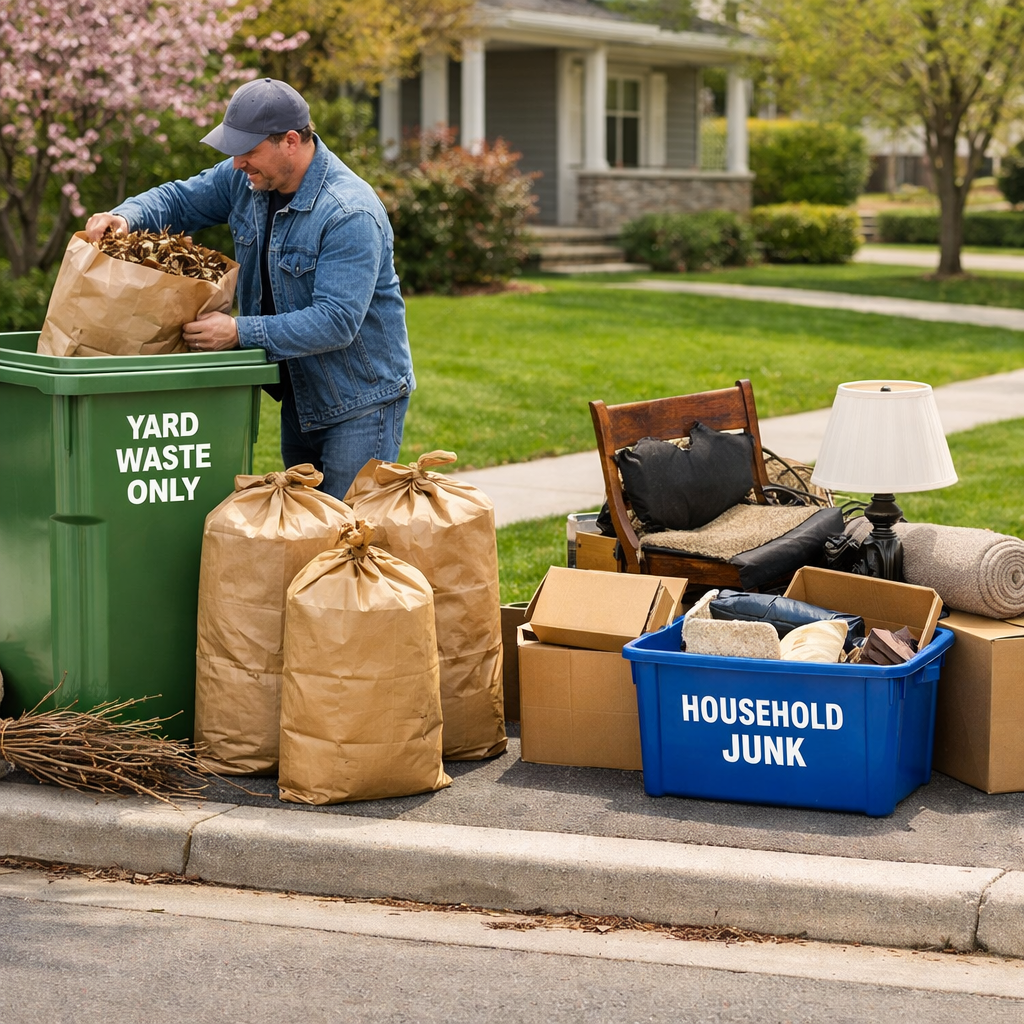
Spring cleanup is the perfect time to clear out branches, leaves, and the bulky odds and ends that have piled up. But can you mix yard waste and household junk for spring cleanup? In most communities, the answer is no. Yard debris must stay separate from household trash to keep organics streams clean, protect composting quality, and avoid rejected pickups or fines. As a logistics-first guide, Recycler Routing Guide helps property and facilities teams run compliant, diversion-focused events with clear acceptance rules, documented downstream outlets, and KPI-gated rollouts. Below, you’ll find the operational steps, equipment choices, and provider comparisons that keep your green waste collection on track—and your costs predictable.
Short answer
You generally cannot mix yard waste and household junk during spring cleanup. Most programs require separation to prevent contamination and service rejections. “Yard waste in plastic bags is not collected in many areas” (municipal clean-up guidance), and “Mixing yard debris with household trash can contaminate recyclables” (safe yard waste disposal guidance).
Consequence: when a container accepts mixed waste, mixed loads often bypass composting and go straight to landfill (spring yard cleanup tips).
Immediate fix: separate at the source and follow local rules for paper yard bags or green carts, branch bundling, and weight limits.
Why mixing yard waste and household junk is a problem
- Contamination in organics programs: Compost contamination is “the presence of non-organic materials (especially plastics and metals) in organics streams that degrades compost quality, raises processing costs, and can force loads to landfill.” Studies show organics streams can reach about 5% plastic contamination by weight when food scraps are mixed in, while yard-debris-only compost samples show roughly 0.0%–0.7% plastic by dry weight (EPA research on plastic contamination).
- Rejection triggers: Plastic bags, soil/rocks, and non-vegetative items commonly disqualify curbside yard waste; crews may leave non-compliant setouts at the curb (see the municipal clean-up guidance cited above).
- Lost diversion: Once mixed with junk, yard trimmings are often routed to landfill rather than to composting or mulching. Clean yard waste is routinely converted into mulch and soil amendments, but only if it stays uncontaminated (see sources cited above).
Know your local program rules
Most curbside yard waste programs follow similar yard debris rules even if the labels differ (paper lawn/leaf bags vs. city green carts):
- Use paper yard bags or designated green carts—never plastic bags.
- Tie branches with natural twine; typical specs are under 4 ft long, 3 in diameter, and no more than 50 lbs per bundle.
- Keep weights manageable (often ≤50 lbs per bag/bundle) and remove soil, rocks, and non-yard debris.
- Watch for seasonal special collections such as brush, tree-cycling, or pumpkin drop-offs.
Quick-reference setup (typical—not a substitute for your city’s rules):
| Accepted yard materials | Container type | Bundle specs | Weight limit | Seasonal specials (examples) |
|---|---|---|---|---|
| Leaves, grass, small trimmings | Paper yard bags or green cart | Branches tied with natural twine | ≤50 lbs | Brush/limb weeks; tree recycling |
| Small branches (pre-cut) | Green cart or bundles | ≤4 ft length; ≤3 in diameter; ends aligned | ≤50 lbs | Pumpkin composting post-holiday |
| Garden plants (no soil attached) | Paper yard bags | No plastic, wire, or metal | ≤50 lbs | Storm-debris extra pickups |
What counts as yard waste versus household junk
- Yard waste: grass clippings, leaves, plant trimmings, and small chopped branches. Avoid adding weeds that have gone to seed, diseased plants, or pesticide-treated plants if your organics program or composting best practices exclude them.
- Household junk: furniture, appliances, plastics, metals, treated/painted wood, and construction debris. Batteries, e-waste, paint, propane tanks, and tires are typically prohibited from curbside setouts and must go to special drop-offs.
The diversion opportunity is significant: many communities report yard trimmings can comprise roughly 12–20% of municipal solid waste by weight, underscoring the impact of a clean organics program (do’s and don’ts of yard waste disposal).
How to set up separation at the source
Design a simple, repeatable layout that scales across properties:
- Labeled zones
- Green zone: paper yard bags/green carts; branch-bundle station with natural twine.
- Junk zone: donation/reuse area, scrap metal pallet, and a landfill-only section.
- Hazard/E-waste: separate staging with clear signage and lockable totes.
- Step-by-step workflow
- Pre-stage paper yard bags; set a cutting/bundling area with twine and loppers.
- Post “no plastic bags,” “under 50 lbs,” and “no soil/rocks” signs near setout points.
- Assign a spotter to remove stones, dirt clods, and non-yard debris before curb setout.
- Safety and access
- Keep sidewalks, drive lanes, and fire lanes clear of piles and branches; maintain sightlines at corners and driveways.
Composting and mulching options for yard waste
- Municipal organics or home composting: A well-managed home compost bin can yield finished compost in about 3–6 months, depending on materials and turning frequency (home composting guidance).
- Mulching and grasscycling: Leave grass clippings on the lawn or use shredded leaves as mulch to return nutrients and reduce disposal needs.
- Benefits: Composting cuts landfill burden and creates a soil-building amendment. Avoid burning yard waste due to pollution and frequent local prohibitions (see safety section below).
Proper pathways for household junk and special materials
- Donation/reuse: Route clean, reusable furniture and appliances to local charities. Recycle scrap metal; drain gas/oil from mowers before metal recycling or transfer-station drop-off.
- E-waste/hazardous: Take batteries, e-waste, paint, propane tanks, and tires to designated programs; do not place curbside.
- Junk haulers: Choose services that sort, donate, and recycle—and ask for proof. Many haulers vary widely in diversion performance, with some landfilling most items; request documentation of where it all goes (diversion transparency insights). Use the Recycler Routing Guide provider comparison template to request photo verification, scale tickets, and downstream outlet listings.
Equipment and configuration choices for spring cleanup
Pick assets that fit your site and protect diversion goals while keeping to your service window:
- Hub-and-spoke: a centralized roll-off plus on-site sorting zones where teams feed streams to the hub.
- Distributed: paper bags/green carts per building with route optimization for setouts and pulls.
- Emphasize clear labeling, color-coding, and physical separation to keep yard waste clean for composting.
Cart, bag, and bundle configurations
- Use paper yard bags or city green carts for curbside yard waste; never plastic bags.
- Standardize branch bundles: natural twine; under 4 ft length; ≤3 in diameter; ≤50 lbs; pre-cut oversize limbs.
- Quick checklist
- Remove soil and rocks.
- Confirm bag/bundle weights at or below limits.
- Keep cart lids closed to prevent windblown contamination.
Roll-off and dumpster options
- For big jobs, rent a 10–20 yard spring cleanup dumpster designated “yard waste only” and confirm acceptance rules and contamination threshold in writing.
- Avoid commingling: mixed-load dumpsters often route to landfill; if yard-waste diversion is a KPI, keep a yard-waste-only container.
- Companion plan: pair a yard-waste-only roll-off with a separate bulky/mixed junk container and a sort table for donation pulls.
Site access, driveway fit, and weight limits
- Measure approach angles, turning radii, overhead clearance, and slab capacity; pre-mark set-down zones.
- Enforce weight caps (commonly 50 lbs per bag/bundle). Increase pickup frequency instead of overloading.
- Use staging mats on soft ground. Schedule around peak traffic and keep pedestrian areas clear.
Provider selection using a transparent comparison
Recycler Routing Guide recommends a side-by-side evaluation that codifies acceptance rules, documented diversion, and service reliability. The template below reflects those standards.
Provider comparison template:
| Provider | Acceptance rules match | Contamination threshold | Service window reliability | Documented diversion rate | Downstream outlets disclosed | Proof-of-weight | Pricing | Surcharge policy |
|---|---|---|---|---|---|---|---|---|
| Vendor A | ||||||||
| Vendor B |
Recycler Routing Guide favors providers offering written rules, photo verification of loads, scale tickets, and clear downstream outlet listings.
Acceptance rules and contamination thresholds
- Get written lists of accepted yard materials and explicit “no’s” (plastic bags, soil/rocks, treated wood) to mirror municipal standards.
- Require declared contamination thresholds and responses (rejection vs. landfill routing). Context: organics contamination can approach about 5% by weight when food scraps are added, per EPA research (see link above).
Delivery reliability and service windows
- Capture scheduled vs. actual timestamps for set/drop/pull and set a ≥95% on-time target.
- Include surge SLAs for brush events and storms and align with municipal seasonal collections.
Documented diversion and downstream outlets
- Require donation receipts, recycling processor tickets, and compost facility delivery records; yard waste should go to permitted composting facilities.
- Don’t rely on verbal assurances—ask for proof of diversion performance.
KPI-gated rollout for multi-site cleanups
Define success, then scale. Lock in contamination thresholds, service window targets, diversion rate goals, cost/ton, and rejected-pickup counts before launch. Use a standard playbook: site survey, equipment plan, acceptance-rules briefing, signage kit, and provider SLAs.
Pre-rollout planning and route design
- Sequence properties by access constraints and municipal pickup calendars; cluster nearby sites to reduce deadhead.
- Pre-issue labels and color-coded zones; stage paper bags and twine early to prevent last-minute plastic bag use.
On-site sorting audits and contamination metrics
- Conduct mid-event audits: spot-open random bags for plastics/rocks and weigh bundles to confirm ≤50 lbs.
- Track contamination, rejections, and diversions; flag if approaching organics contamination context levels cited above.
Post-event diversion reporting and cost per ton
- Compile scale tickets, compost/donation receipts, and landfill weights into a single report.
- Calculate diversion rate, cost/ton, missed-pickup root causes, and refresh provider scorecards and routing plans.
Seasonal surge planning and routing logistics
- Expect spring growth, fall leaf drops, and winter storm branches; plan flex assets accordingly.
- Add overflow capacity (extra paper bags, temporary carts, yard-waste roll-off) and schedule surge service windows to align with municipal special collections.
- Surge playbook: forecast volumes, pre-stage equipment, confirm SLAs, audit mid-event, and debrief for continuous improvement.
Safety considerations and prohibited materials
- Prohibited curbside items typically include batteries, e-waste, paint, propane tanks, and tires—use special drop-offs.
- Keep walkways and streets clear of debris; avoid burning yard waste due to air pollution and frequent legal restrictions (yard maintenance safety tips).
- Cap bag/bundle weights at 50 lbs and use proper lifting technique to avoid strains.
Bottom line and decision checklist
Do not mix yard waste and household junk for spring cleanup. Keep yard waste clean, properly bagged/bundled, and route it to composting through your organics program.
Seven-point checklist:
- Paper bags or green carts only; no plastic bags.
- Branches tied; <4 ft length; ≤3 in diameter; ≤50 lbs.
- Remove soil/rocks and non-yard debris.
- Separate donation/recycling from landfill junk.
- Route hazardous/e-waste to special drop-offs.
- Use a yard-waste-only roll-off for big jobs.
- Document diversion with receipts and scale tickets.
Frequently asked questions
Can I put yard waste in plastic bags?
No. Many programs will not collect yard waste in plastic; use paper lawn/leaf bags or your green cart, which is what Recycler Routing Guide recommends.
What should I do with mixed piles if I already combined materials?
Separate them before pickup: move clean yard waste into paper bags/bundles and route junk to donation, recycling, or a hauler that provides diversion documentation. Recycler Routing Guide’s separation checklist helps standardize setouts and proof-of-diversion.
Are small amounts of soil or rocks allowed in yard waste?
No. Remove dirt, stones, and other non-yard debris to avoid rejection and contamination.
How do I dispose of treated wood, painted lumber, or decking?
Keep them out of yard waste. Place in the junk stream or take to designated facilities per local rules.
What is the best option if I have more branches than my cart allows?
Tie compliant bundles or rent a yard-waste-designated roll-off. Recycler Routing Guide’s yard-waste setup guide lists typical limits to confirm before scheduling.