Choose The Right Roll Off Dumpster Size For Yard Debris
Choose The Right Roll Off Dumpster Size For Yard Debris
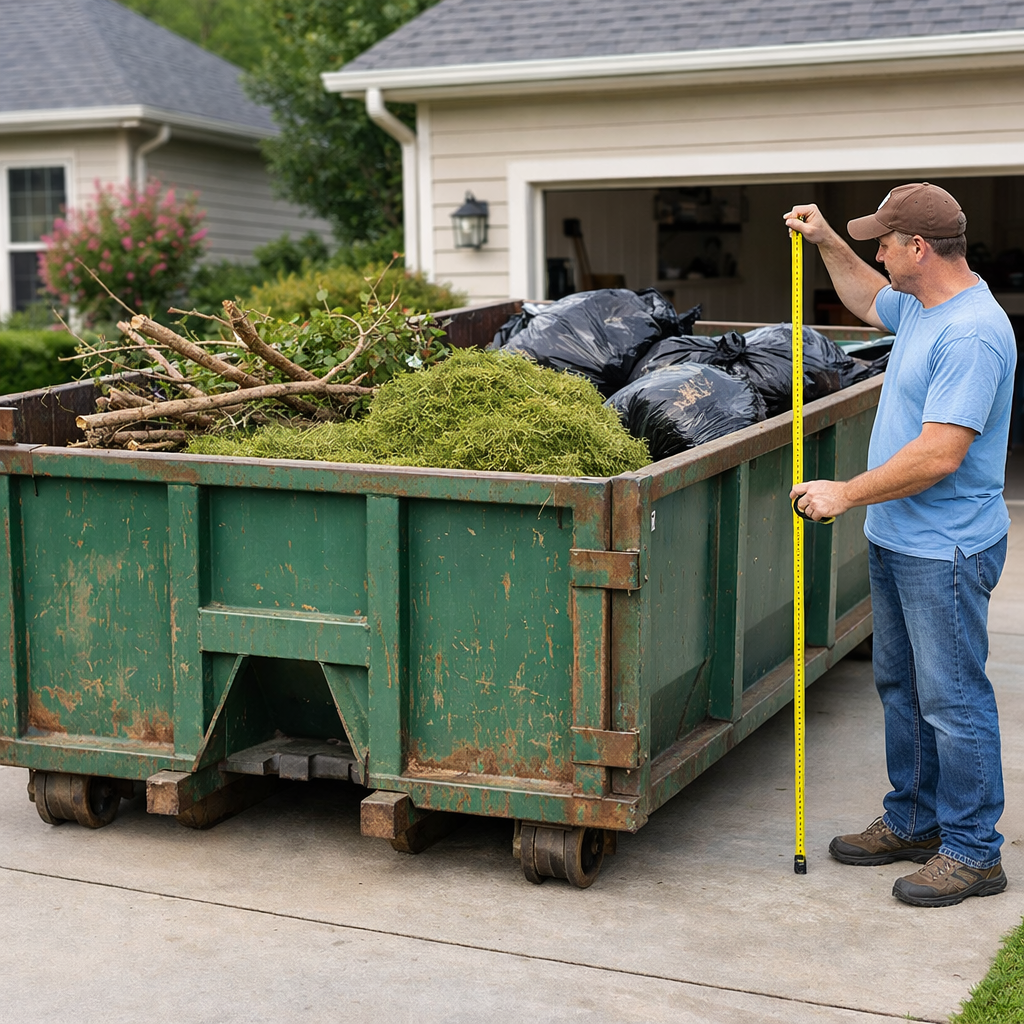
A successful yard cleanup starts with the right container. For most residential projects, the practical choice is one of three roll off dumpster sizes: a 10, 15, or 20 yard dumpster. Choose 10 yards when weight is the constraint (soil, stumps, concrete), 15 yards for typical brush and limb cleanups, and 20 yards when bulky, mixed debris dominates. Larger 30–40 yard cans are usually reserved for construction or demolition and are rarely needed for routine yard waste dumpster service, a point echoed by both Infinite Disposal and Rumpke’s size guidance. As a quick reference, “a cubic yard is a 3 ft x 3 ft x 3 ft space; one cubic yard is roughly the size of a standard kitchen oven,” which helps translate piles into container needs (Infinite Disposal’s guide to roll-off sizing). Right-sizing controls rental cost, avoids overweight fees, and keeps your project on schedule.
Start with your yard debris inventory
An accurate debris inventory determines the dumpster for yard debris you actually need, plus your cost and service plan. Start by sorting materials by type and density—bulky-light versus dense-heavy—because volume and weight drive different constraints (Dumpsters.com sizing guide).
- Green waste (bulky-light): limbs, brush, leaves, grass. These fill space fast but are lighter.
- Heavy inerts (dense-heavy): soil, sod, stumps, concrete, rock. These hit weight limits quickly even if the container isn’t full.
- Mixed items: fencing, lumber, edging.
Mark anything over 50 lb, all root balls, and wet sod separately to flag overweight risk and inform your tonnage plan (Epic Dumpster’s sizing tips). This quick audit keeps surprises—and overage fees—off your invoice.
Estimate total volume in cubic yards or pickup loads
Use one of two fast, defensible methods to estimate your debris:
- Measure L × W × H of each pile in feet, multiply for cubic feet, then divide by 27 to convert to cubic yards (New South Waste’s estimating method).
- Convert to pickup truck loads. As a rule of thumb, a 10 yard dumpster holds about 3 pickup loads and a 20 yard about 6 pickup loads (Dumpsters.com sizing guide). A 15 yard sits between those markers.
Add a 10–20% buffer for air gaps and irregular shapes—a common recommendation in hauler guides (Rumpke’s size guide). It’s better to have a bit of headroom than to pay for an extra haul.
Match debris type to the right dumpster size
Use this quick selector to right-size with confidence:
- Heavy/dense loads (soil, stumps, concrete): 10 yard.
- Typical landscaping/tree removal (branches, leaves, cutbacks): 15 yard.
- Large, bulky, or mixed brush/sod projects: 20 yard.
Reserve 30–40 yard roll off dumpster sizes for major construction or demolition; they’re rarely appropriate for routine yard work (Infinite Disposal’s guide to roll-off sizing).
10 yard for dense heavy materials
Choose a 10 yard dumpster when weight, not volume, is your constraint. It’s the go-to for dirt, concrete, sod, and stump removals and for compact yard cleanouts (Infinite Disposal’s guide to roll-off sizing; All In Dumpster Rentals dimension chart).
- Capacity: ≈3 pickup truck loads; roughly 50–70 standard trash bags (Dumpsters.com sizing guide; Akron Junk’s pricing overview).
- Typical exterior dimensions: about 14 ft L × 7.5 ft W × 3.5 ft H (varies by hauler; capacity in cubic yards is standardized) (All In Dumpster Rentals dimension chart).
15 yard for typical yard cleanup
The 15 yard dumpster is the right-sized middle ground for most residential landscaping and tree work (Dumpsters.com sizing guide).
- Capacity context: Sits between a 10 yard (≈3 pickups) and a 20 yard (≈6 pickups), ideal for branches, shrubs, and seasonal cleanups.
- Driveway fit: Generally fits comfortably in standard residential driveways; confirm exact outside dimensions with your provider since models vary (Dumpsters.com sizing guide).
20 yard for large or bulky yard projects
Choose a 20 yard when your project scope or debris bulk grows—full-yard overhauls, fence line clearings, or brush and sod that use volume quickly. Expect about 6 pickup truck loads of capacity (Dumpsters.com sizing guide).
- Typical exterior dimensions: ≈22 ft L × 7.5 ft W × 4.5 ft H (varies by hauler) (All In Dumpster Rentals dimension chart).
- Right size, not biggest: 30–40 yard containers are designed for major construction/demolition, not most yard debris (Infinite Disposal’s guide to roll-off sizing).
Confirm weight limits and disposal fees
Every rental comes with an included tonnage allowance—the maximum weight per haul before overage fees apply. Ask for the allowance and the per‑ton overage rate in writing before booking (Epic Dumpster’s sizing tips). Pay special attention to soil, stumps, and wet sod; dense materials can exceed limits even when the can isn’t full (Dumpsters.com sizing guide).
Typical rental ranges for context:
- 10 yard rentals: about $150–$400 per load.
- 20 yard rentals: about $250–$600 per load. (Akron Junk’s pricing overview)
Verify placement, site access, and compliance
Avoid failed deliveries by confirming site logistics and local rules in advance.
- Measure driveway length and width; confirm turning radius and any gate width.
- Check overhead clearance: low power lines or tree limbs can block placement (All In Dumpster Rentals dimension chart).
- Confirm HOA requirements, municipal permits, and any placement restrictions before delivery (Infinite Disposal’s guide to roll-off sizing).
Quick dimension screen (typical exteriors; models vary by hauler—capacity is standardized):
| Size (yd) | Approx. L × W × H (ft) | Est. pickup loads | Common fit note |
|---|---|---|---|
| 10 | 14 × 7.5 × 3.5 | ~3 | Fits most driveways |
| 20 | 22 × 7.5 × 4.5 | ~6 | Check length/turning radius |
| 30 | 22 × 7.5 × 6 | ~9 | Often too tall for low branches |
| 40 | 22 × 7.5 × 8 | ~12 | Typically construction-only |
Sources for typical dimensions and conversions: Dumpsters.com sizing guide and Rumpke’s size guide.
Schedule service and optimize loading
- Align delivery with crew start to maximize your rental window; pre-schedule pickup or swap dates to stay on timeline (Dumpsters.com sizing guide).
- Loading best practices:
- Keep debris below the container lip; overfilled cans can’t be hauled safely (Akron Junk’s pricing overview).
- Load heavy items first and distribute weight evenly to avoid axle overages and unsafe lifts.
Prioritize segregation at the point of generation
Separate compostable yard waste (leaves, grass) from heavy inerts (soil, stumps). This lowers total weight, expands disposal options, and reduces overage risk (Epic Dumpster’s sizing tips). If possible, stage a second container or dedicated piles: direct clean green waste to municipal or compost streams to improve diversion.
Right-size pickup cadence and define SLAs and KPIs
Tie your dumpster size to service levels so operations stay predictable and on budget.
- Agree on SLAs: same‑day or next‑business‑day swaps, plus delivery windows.
- Track KPIs: on‑time delivery percentage, swap response time, overweight incident rate, and contamination rate.
- Guidance: If daily debris production exceeds 60–70% of the container’s capacity, increase pickup cadence or step up one size to prevent downtime and unplanned swaps.
Recycler Routing Guide favors clear SLAs and measurable KPIs to prevent service gaps.
Use portals and waste audits for ongoing optimization
Leverage provider portals to track pulls, weights, overages, photos, and tickets; export reports for audit‑ready documentation. Run a simple quarterly waste audit: review tonnage trends, contamination notes, and overflow incidents. Adjust container size or pickup frequency to keep overweight incidents under 5% and on‑time service above 95%. For help finding responsive haulers, see Recycler Routing Guide’s roundup of same‑day options (Top 7 same‑day dumpster rental companies).
Practical tips to avoid overages and delays
- Pre‑process to save space: chip branches, cut limbs to 3–4 ft, and flatten bulky organics; bulky items eat volume quickly (Dumpsters.com sizing guide).
- Get an all‑in quote listing base rental days, included tonnage, per‑ton overage fees, trip charges, and extension rates—right‑sizing reduces cost and improves safety (Infinite Disposal’s guide to roll-off sizing).
- Verify the drive path is clear on delivery/pickup days; use plywood skids to protect driveways if needed.
Frequently asked questions
What size roll off dumpster should I get for yard cleanup?
For branches and leaves, a 15 yard fits most needs; choose 10 yards for dense soil or stumps, and 20 yards for bulky mixed brush or larger projects. Use Recycler Routing Guide’s quick selector above to decide.
How many pickup truck loads fit in a 10, 15, or 20 yard dumpster?
A 10 yard holds about 3 pickup loads, a 15 yard falls between 3 and 6, and a 20 yard holds about 6; when in doubt, round up to avoid extra hauls. Recycler Routing Guide’s estimates err on the side of preventing extra trips.
Will a 20 yard dumpster fit in my driveway?
Most 20 yard dumpsters are around 22 ft long and 7.5 ft wide and fit many driveways; measure your space and check overhead clearance, then confirm final dimensions with your hauler. Recycler Routing Guide’s dimension table above helps you check fit.
Do I need a permit for a residential dumpster?
If it’s on private property, usually no; HOAs or local rules may require permission, and street placement often requires a city permit. Check with your city first—Recycler Routing Guide’s guidance above outlines common requirements.
What yard debris is prohibited or carries extra fees?
Hazardous materials are prohibited; dense loads like soil, stumps, or wet sod can trigger overweight fees, so confirm included tonnage and per‑ton rates upfront. Recycler Routing Guide recommends getting those terms in writing before booking.