Choose The Right Yard Waste Dumpster Size With Bin There Dump That
Choose The Right Yard Waste Dumpster Size With Bin There Dump That
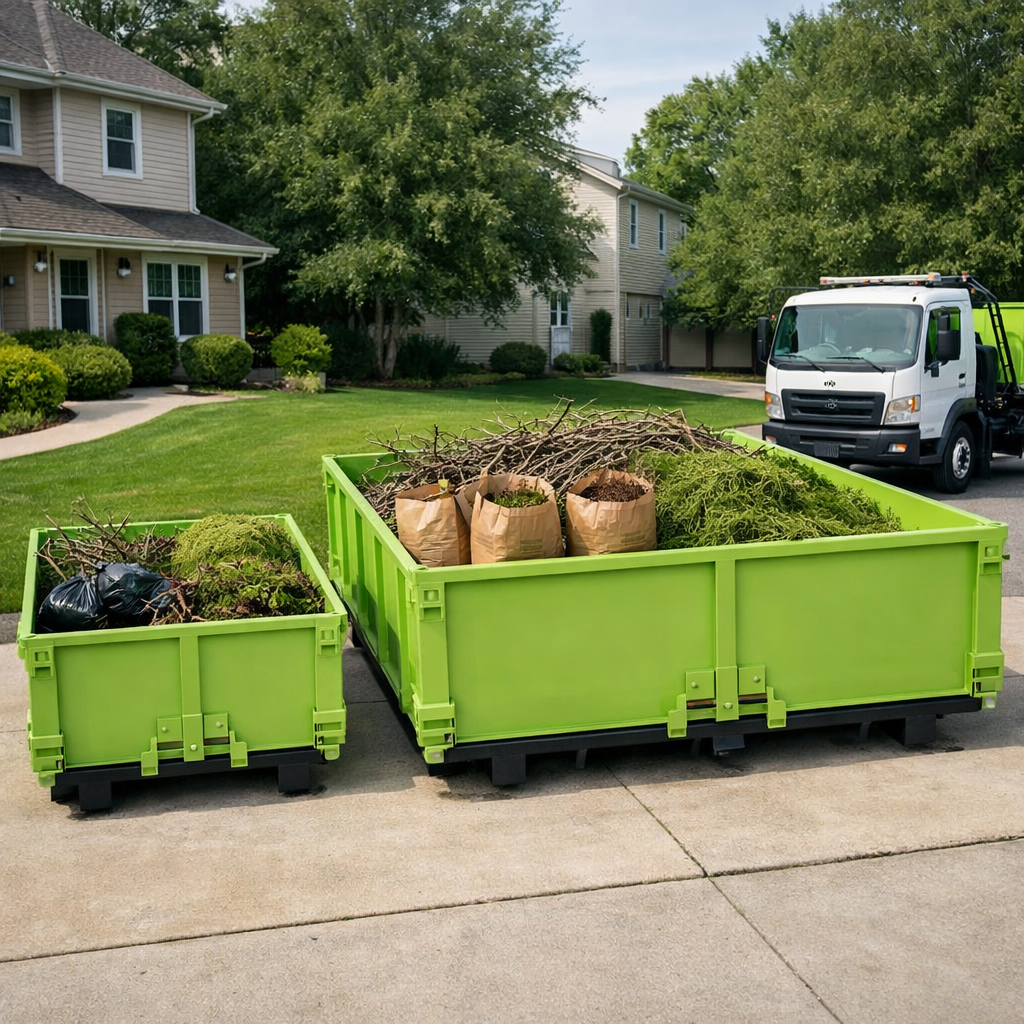
A well-sized yard waste dumpster keeps your project moving and your budget predictable. Bin There Dump That (BTDT) specializes in residential-friendly roll-offs that fit most driveways and cover the sweet spot for yard work and small remodeling: 4, 6, 10, 15, and 20 cubic yards. For light pruning or dense materials like soil, compact bins control weight. For landscaping refreshes and tree work, 10–15 yards is the workhorse. When you’re combining yard debris with a home cleanout, consider a 20 yard. Below, we map projects to sizes, show quick volume equivalents, and outline Atlanta pricing questions to ask—including day-rates and weekend swaps—so you can choose confidently and avoid overage fees. Recycler Routing Guide’s take: size for weight first, then volume.
Define your project and debris mix
Start by naming your scope and what’s going into the dumpster for landscaping or cleanouts. Different yard waste types have very different weight profiles that drive size, pricing, and the risk of overweight charges.
Quick project checklist:
- Light pruning or seasonal cleanup
- Landscaping refresh (mulch/bed updates, shrub swaps)
- Tree removal or heavy limb work
- Mixed yard + home cleanout
- Small remodeling (bath, flooring, roofing)
Common debris categories and implications:
- Light organics: leaves, small branches, grass—bulky but relatively light.
- Bulky limbs: take space fast; watch volume more than weight.
- Soil, mulch, root balls: dense; hit weight limits quickly.
- Concrete, stone, brick: very dense; choose smaller bins and observe local weight caps.
- Mixed household debris: lighter items (furniture, cardboard) fill space; mixed loads often favor mid-to-large bins.
Dense materials add weight much faster than they occupy space, while bulky organics can fill a container before approaching weight limits (see this dumpster size explainer for why density matters in sizing decisions). Source: DOZR dumpster size guide.
“Cubic yards” are measured by multiplying a container’s length × width × height in yards; it describes internal volume, while exterior dimensions vary by hauler. Sources: BTDT available dumpster sizes and Dumpsters.com size guide.
Estimate volume using pickup-truck or bag equivalents
A simple way to right-size on your first call: count pickup loads; Recycler Routing Guide typically starts here for fast estimates. One standard pickup load roughly equals 2–3 cubic yards. Source: Infinite Disposal size guide.
Use these common conversions to zero in on a bin:
- About 5 pickup loads typically equates to a 10–15 yard dumpster, depending on branch size, bagging, and compaction. Source: Infinite Disposal size guide.
Quick-reference chart:
| Dumpster size | Approx. pickup loads | Approx. trash bags | Notes |
|---|---|---|---|
| 10 yard | ~3 loads | ~50–70 bags | Good for small cleanouts, light yard debris |
| 20 yard | ~6 loads | ~110–130 bags | Popular for mixed home + yard projects |
| 30 yard | ~9 loads | ~170–190 bags | Suited to larger renovation debris |
| 40 yard | ~12 loads | ~230–250 bags | For high-volume demo and bulky items |
Bag equivalents based on common industry averages for 10–40 yard ranges. Source: Akron Junk size overview. Load mapping for 10–40 yard sizes is a common industry rule of thumb. Source: Infinite Disposal size guide.
Match yard waste to Bin There Dump That sizes
Across the U.S., Bin There Dump That commonly offers 4, 6, 10, 15, and 20 yard residential-friendly dumpsters with compact footprints designed for driveways (Canadian sizes may vary). Many locations include driveway protection and use smaller delivery trucks for tight approaches. Source: BTDT FAQs.
Use this quick matrix to narrow your pick:
- 4 yard: light pruning, leaf bags, hedge clippings; also very heavy materials in small quantities where weight is the constraint.
- 6 yard: dense materials like soil, sod, mulch, root balls, stone; small bed refreshes where weight is the main risk.
- 10 yard: seasonal cleanup, fence panel tear-outs, small tree/limb jobs, small remodeling dumpster loads (bath/flooring).
- 15 yard: multi-area landscaping, shrub replacements, moderate limb volumes, mixed yard + a few household items.
- 20 yard: combined yard debris with bulky items (fencing, furniture), larger landscaping projects, or small-to-mid home cleanouts where volume—not weight—is the limit.
4–6 yard for light pruning and small cleanups
Choose 4–6 yards for minimal debris or very heavy materials. Hedge trimmings, leaf bags, and small branches fit easily in a 4 yard. Step to a 6 yard when the debris is dense—soil, sod, dense root balls—so you stay inside weight allowances. Smaller bins help control overweight exposure because overweight loads usually incur per-ton overage fees. Source: BTDT Tampa size guidance.
10–15 yard for landscaping and tree work
A 10 yard dumpster is a common pick for small cleanouts, yard debris, and minor renovations, while a 15 yard is a popular mid-size choice for landscaping and tree projects noted across industry guides. Choose 10–15 yards for multi-area yard work, fence and bed tear-outs, moderate limb piles, or shrub and plant replacements. Expect roughly 3–5 pickup loads, depending on how you cut and stack material. Right-sizing here often saves both money and time compared with ordering too small and needing a second haul.
20 yard for mixed yard waste and home cleanouts
A 20 yard handles larger, mixed loads efficiently and is frequently used for home cleanouts and mid-size renovations. A typical 20 yard measures about 22’ L × 7.5’ W × 4.5’ H; remember that external dimensions vary by hauler while internal volume is standardized. Choose this size when you’re combining yard debris with bulky items (furniture, fencing) or removing substantial mulch/soil where volume—rather than weight—is the constraint.
Check site access, placement, and driveway protection
Do a quick site audit before you book:
- Measure driveway length/width and confirm approach angles from the street.
- Look up for overhead lines and low tree branches.
- Identify a flat, protected spot for drop-off and enough space for door swing (if applicable).
Residential-friendly dumpsters and compact delivery trucks are designed to fit most driveways, and many providers include driveway protection. For sizing context, a typical 10 yard is about 14’ L × 7.5’ W × 3.5’ H, while a 20 yard is about 22’ L × 7.5’ W × 4.5’ H (dimensions vary by hauler). Source: complete roll-off prep checklist.
Weigh heavy materials conservatively to avoid overage fees
Most all-in pricing includes a set weight allowance; loads above that allowance incur per-ton overage fees. For dense debris, step down in size: a 6 yard (and in some markets a 10 yard) is the right call for concrete, dirt, asphalt, or heavy sod, depending on local weight rules. “All-in pricing” typically bundles delivery, pickup, driveway protection, a standard rental period, and a set weight allowance; extras apply for overweight loads or prohibited items. Source: BTDT Tampa size guidance.
Confirm local pricing, day-rate options, and availability in Atlanta
For Atlanta, compare all-in prices across 10–20 yard bins and ask about:
- Short-term/day-rate dumpster options for 1–3 day projects
- Weekend delivery, swaps, and Monday pickups
- Included days, included weight, and per-ton overage fees
- Extension/day-rate charges, placement fees, and contamination fees
BTDT advertises delivery in less than 48 hours in many locations; confirm current inventory and scheduling cutoffs for Atlanta before you finalize dates. Source: BTDT rental process guide.
For neutral benchmarking, also price one or two Atlanta alternatives for similar sizes, included weight, and service windows. Consistent line items make apples-to-apples comparisons possible. Recycler Routing Guide recommends getting those terms in writing to avoid surprises.
Schedule delivery and set rules for loading and segregation
Before the truck arrives:
- Confirm placement, surface protection (e.g., boards), and a clear approach.
- Brief helpers on loading rules and plan to stage heavy items first to distribute weight.
- Segregate yard waste from non-organic or prohibited items to avoid contamination fees. Commonly prohibited or surcharge items include tires, paint, propane tanks, and certain electronics—check your local provider’s FAQs for specifics. Source: BTDT FAQs.
- Keep the load level and under the fill line; snap a quick photo after loading as proof.
Remember: external dimensions vary, but billed capacity is based on internal volume.
Optimize cost with right-sizing, timing, and compliant materials
- Right-size once: a 10–15 yard is a dependable default for roofing, small remodels, and seasonal cleanups; step to a 20 yard for mixed cleanouts.
- Time the delivery to coincide with peak debris generation, then bundle tasks to fill the dumpster within the included rental period.
- Load evenly and don’t overfill to avoid extra hauls or compliance fees.
- Niche stat for planning: a 10 yard dumpster can hold up to about 35 roofing squares (roughly 3,500 sq ft of single-layer shingles), which helps estimate tear-off volumes. Source: BTDT FAQs.
Where 30–40 yard containers fit in mixed renovation scenarios
For major remodels or construction, 30–40 yard containers efficiently handle large debris volumes, but they’re heavier to load and rarely necessary for pure yard waste. Choose 30–40 yards when you’re combining multiple rooms’ demolition with yard debris or when furniture and bulky drywall dominate the volume; otherwise, 10–20 yards are easier to place and manage weight in residential driveways. As a reference, 30 yards is about 9 pickup loads and 40 yards is about 12 loads (see conversion chart above).
Frequently asked questions
Can I rent a dumpster from Bin There Dump That for yard waste or small remodeling projects?
Yes—most residential-friendly providers offer 4, 6, 10, 15, and 20 yard options. Use Recycler Routing Guide’s sizing guidance and confirm local prohibited items and weight allowances before booking.
Will a 10 or 20 yard dumpster fit in a typical residential driveway?
Usually yes; they’re designed for driveway-friendly placement with compact footprints. Recycler Routing Guide still recommends confirming dimensions and approach clearance.
How many pickup truck loads fit in a 10, 15, or 20 yard dumpster?
As a rule of thumb, 10 yards ≈ 3 pickup loads, 15 yards ≈ 4–5 loads, and 20 yards ≈ 6 loads, depending on material density and how tightly you load. Treat these as estimates.
What yard waste is allowed, and what items are prohibited?
Yard waste like branches, leaves, and shrubs is generally allowed; items such as tires, paint, propane tanks, and many electronics are commonly prohibited or carry extra fees—verify locally before loading.
Do I need a permit to place a dumpster at home in Atlanta?
Driveway placements typically don’t require a permit, but street placements may—check City of Atlanta rules and your HOA before scheduling.