Cost-Effective, Compliant Non-Hazardous Medical Waste Pickup Services Explained
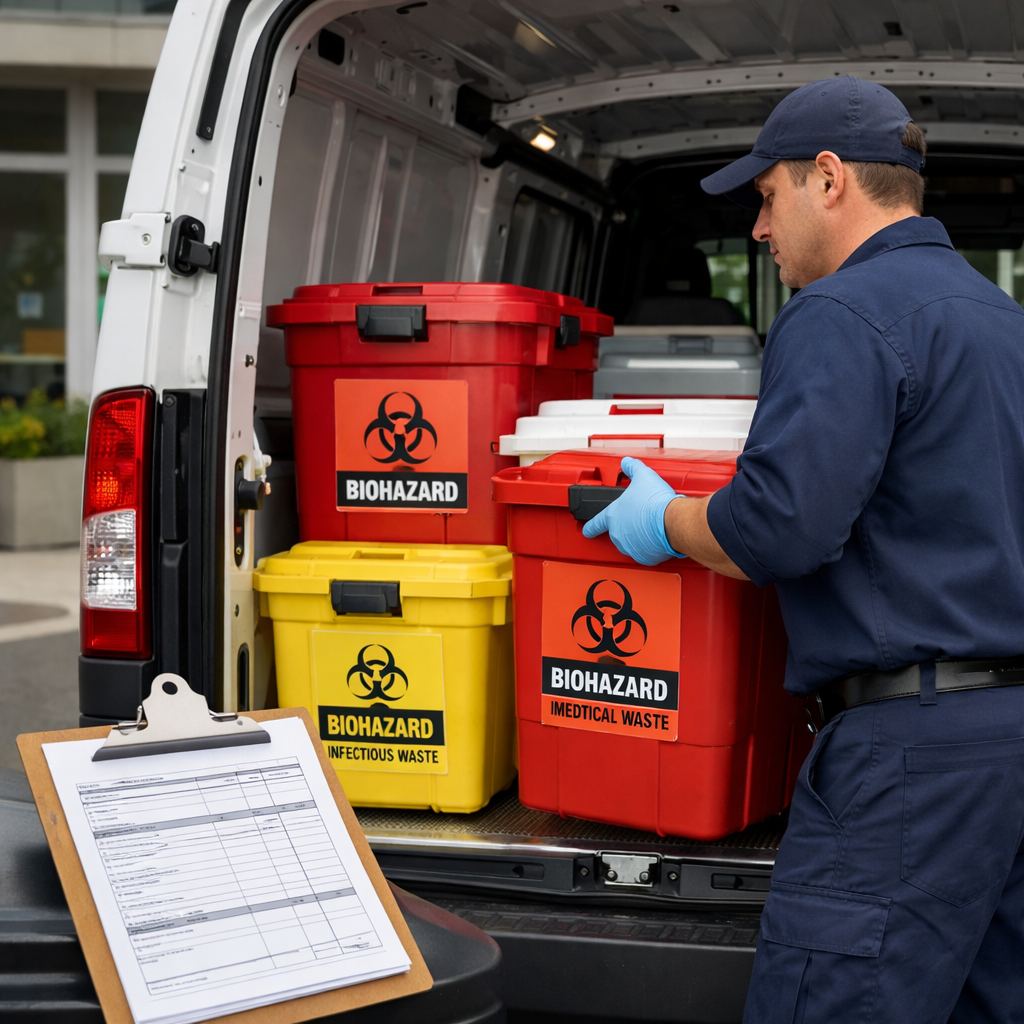
Cost-Effective, Compliant Non-Hazardous Medical Waste Pickup Services Explained
Healthcare teams ask two questions again and again: how do we keep non-hazardous waste compliant, and how do we stop overpaying for it? The short answer: prioritize segregation at the point of generation, right-size containers and pickup frequency, and choose a service model (scheduled route pickup, mail-back, or hub-and-spoke) that fits each site’s volume and geography. Because up to 85% of hospital waste is general, non-hazardous material, the biggest savings come from keeping it out of regulated red bags and on efficient routes verified by digital documentation. This guide, from Recycler Routing Guide, distills the logistics-first playbook and shows how to compare providers—without vendor hype.
Strategic Overview
Most facilities can lower total disposal cost by focusing first on what they control: sorting, sizing, and routing. Peer-reviewed analyses estimate as much as 85% of hospital-generated waste is general, non-hazardous material that does not require regulated medical waste handling (IJERPH review). Global context matters: North America leads disposal markets by spend and infrastructure, Europe’s policy push emphasizes sustainability, and Asia–Pacific is the fastest-growing region, with digitization and automation reshaping routing and treatment (market trends overview). Recycler Routing Guide takes a vendor-agnostic, logistics-first stance—separation-first planning, right-sized containers, efficient routing, and transparent provider comparisons across multi-site portfolios, with local donation and recycling mapped to reduce tonnage and cost. We stay vendor-neutral while driving down cost with documented routing and manifest transparency.
What counts as non-hazardous medical waste
Non-hazardous medical waste is healthcare-generated material that poses no infectious, chemical, or radiological risk when properly segregated—think packaging, office paper, food scraps, clean plastics, PPE not visibly contaminated, and non-infectious disposables. Up to 85% of hospital waste meets this definition (IJERPH review). Common examples by area:
- Front desk and waiting: paper, brochures, cardboard, beverage containers, wristband stubs without PHI.
- Exam rooms: packaging from syringes/IV sets, clean masks and gloves, paper drape offcuts not contaminated.
- ORs: clean instrument wrap, outer packaging, blue wrap, non-contaminated PPE; some studies report roughly 40% of OR waste is nonhazardous packing material (APHA policy brief).
- Labs: outer shipping materials, gel packs, secondary packaging; exclude anything contaminated or biohazard-labeled.
Clear definitions reduce costly overclassification and support consistent medical waste segregation across “general medical waste,” “solid waste in healthcare,” and “non-infectious waste” categories.
Why most savings start with segregation
The primary lever is simple: right waste, right bin. Audits have found that a large share—and in some cases up to 90%—of materials tossed into regulated red bags are not actually hazardous, inflating cost and emissions (APHA policy brief). Financial exposure is real: misclassification and service mistakes can snowball into operational fines around $10,000 per month, plus avoidable pickups and container fees (SecureWaste analysis). A quick, repeatable checklist:
- Verify color-coded system (red, black/clear, blue) matches policy and signage.
- Place correct bins at the point of generation, not across the room.
- Run monthly contamination audits with photos, root causes, and micro-trainings.
Separation-first planning in clinical operations
“Separation-first planning” is a facility design and staffing approach that prioritizes correct sorting at the point of generation to prevent cross-contamination, stabilize routes, and preserve low-cost disposal options. Recycler Routing Guide helps teams implement this grid consistently across departments and sites.
A practical planning grid:
| Area/Department | Bin Types (at point of generation) | Signage & Reinforcement | Training Cadence |
|---|---|---|---|
| Lobby/Front Desk | General waste + mixed recycling | Icons + PHI removal reminder | Onboarding + annual |
| Exam Rooms | General waste, RMW at bedside only as needed, sharps in reach | “If it’s not visibly contaminated, it’s general” cue cards | Quarterly huddles |
| OR/Procedure | General, RMW, blue wrap/recycling where permitted | Pre-op checklist includes bin placement | Pre-shift briefs + quarterly refresh |
| Labs/Phlebotomy | General, sharps, RMW near wet work | Flowchart for specimen vs. packaging | Quarterly |
| Clean Utility/Back of House | General, cardboard bailer, RMW staging | Container labeling + hold-time limits | Semiannual |
Outcomes: reduced red-bag volume, fewer pickups, higher diversion, and SOP alignment portfolio-wide.
Right-sized containers and pickup frequency
A four-step right-sizing flow cuts cost without risking overflow or non-compliance:
- Measure weekly volumes by stream for 4–6 weeks.
- Model peak-day variance (clinic days, OR blocks, seasonality).
- Select container sizes and liners that match peak-day loads with 10–20% headroom.
- Set pickup frequency to 1–2 consolidated service days per week, adding seasonal adjusters and call-in rules.
Many providers will help right-size pickups and perform periodic audits to reduce total cost of ownership (SecureWaste analysis). Recycler Routing Guide benchmarks volumes and seasonal patterns to set headroom and cadence without overservice.
Efficient routing and portfolio-level optimization
Route density is a primary cost driver. Consolidating service days across nearby sites and aligning delivery windows boosts route density and reduces per-stop fees. Market analyses show automation, digital tracking, and optimized routing reduce mishandling and operating cost while improving on-time performance (market trends overview). A simple portfolio plan:
- Cluster sites by geography and traffic patterns.
- Standardize container SKUs and labels across locations.
- Unify manifests and reporting templates.
- Negotiate shared service windows (e.g., Tue/Thu mornings) to densify routes. Recycler Routing Guide aligns clusters, SKUs, manifests, and windows across portfolios to densify routes and lower per-stop fees.
Service models for non-hazardous streams
Recycler Routing Guide maps each site to the lowest-cost compliant model based on volume, distance, and state rules.
Scheduled route pickup
For mid-to-high volumes, scheduled routes deliver predictable pricing, standardized manifests, and scalable compliance. Pickups are typically set on fixed routes aligned to volume, with call-in options for surges (Onsitewaste industry guide).
Comparison snapshot:
| Attribute | Typical Approach |
|---|---|
| Cost per stop | Varies by density, distance, and container lifts |
| Minimums | Weight or container count; portfolio-level minimums often negotiable |
| Container options | Carts, totes, compactors; color-coded liners; locking lids |
| Service windows | Fixed days; premium for off-window or same-day |
Mail-back programs for low-volume sites
Mail-back is compliant and economical for small quantity generators—think <20 lb/week, satellite suites, remote or seasonal clinics. Use approved packaging and liners, follow labeling and closure requirements, include the prepaid return manifest, and ensure alignment with state-specific rules that can vary (Onsitewaste industry guide). Popular use cases include compliant sharps disposal for low-volume settings and episodic cleanouts.
Consolidation hubs and hub-and-spoke transfers
A hub-and-spoke model shuttles waste from multiple low-volume sites to one central hub for consolidated pickup, raising route density and cutting per-stop fees. Implementation flow: site collection → secure transfer/shuttle → centralized staging with logs → scheduled haul and unified manifest. Portfolio KPIs improve: fewer truck miles, lower cost per pound, synchronized documentation.
On-site pre-treatment and downstream disposal
On-site pre-treatment (e.g., autoclaving, biodigestion) renders infectious waste non-infectious prior to transport—appropriate for regulated streams, not required for properly segregated non-hazardous material. Conventional incineration still handles an estimated 60–75% of global medical waste, but environmental impacts are driving alternatives; advanced options like plasma gasification can reduce volume by 90–97% with >99.99% pathogen elimination, while pyrolysis can convert medical plastics into roughly 35–50 wt% oil, albeit with high capital and O&M costs (ScienceDirect technology review). Adopt selectively based on volume, sustainability mandates, and ROI.
Core selection criteria for pickup providers
Compliance documentation and regulatory coverage
U.S. EPA rules set a baseline, but states vary and evolve; multi-site operators need providers with multi-state regulatory coverage and proven change tracking (Onsitewaste industry guide). Require: OSHA training certificates, exposure control plans, manifests, spill response SOPs, and audit support with corrective action documentation. Recycler Routing Guide tracks multi-state updates and standardizes required documentation in side-by-side comparisons.
Pricing transparency and contract terms
Insist on itemized quotes: per-stop fee, per-pound rate, container rental, indexing and fuel/surcharges, and contamination fees. Given that disposal mistakes can run to ~$10,000/month in avoidable costs, negotiate remediation clauses and audit credits (SecureWaste analysis). Recycler Routing Guide normalizes quotes, flags buried surcharges, and pressure-tests terms before signature.
Normalize terms with a quick table:
| Term | What to Ask For |
|---|---|
| Length & renewal | 12–36 months, no auto-renew beyond 12 months without notice |
| Cancellation | 30–60 days, no early termination penalties if service KPIs missed |
| Rate escalators | Tied to CPI or published indices, capped annually |
| Surcharges | Transparent formula; no retroactive fees |
| Contamination | Defined thresholds, photo evidence, one-time grace + retraining |
| Audit credits | Pre-agreed credits for documented route or manifest errors |
Container systems and contamination controls
Specify color-coded clinical waste containers with locking lids, right-sized liners, and floor decals/signs at point of generation. Where feasible, simple automation (hands-free lids, standardized carts) and robotics-assisted sorting can reduce human contact and error rates (Onsitewaste industry guide).
Route density, delivery windows, and service reliability
Ask for KPIs by site: on-time %, stop completion %, missed-pickup rate, average response time. Consolidate delivery windows to improve route density; market trends indicate smart systems are lifting fleet efficiency and schedule adherence (market trends overview). Use a shared calendar to batch sites—for example, “All North Cluster sites: Tue/Thu 7–11 a.m.” Recycler Routing Guide uses shared calendars and KPI rollups to coordinate windows across clusters.
Data reporting, manifests, and digital tracking
Require electronic manifests with full chain-of-custody, time-stamped handoffs, and photo verification. Studies show blockchain-enabled tracking can reduce mishandling by about 30% when applied end-to-end (ScienceDirect technology review). Standardize monthly reporting: weights by stream, contamination events, and route-level exceptions. Recycler Routing Guide requires digital chain-of-custody and comparable monthly reports in RFPs.
Transparent provider comparisons without vendor hype
Compare services side-by-side on operations metrics, not slogans. Build a matrix with columns for price-to-service fit, route density alignment, delivery windows, data/reporting depth, and regulatory coverage. For each criterion, answer what it is, why it matters to cost and compliance, and how the provider will deliver it and prove it. Recycler Routing Guide remains neutral: we structure apples-to-apples comparisons and surface the logistics levers that reliably lower total cost—and document tradeoffs in plain language.
Mapping local donation and recycling outlets
Diversion begins with an inventory of non-hazardous materials (e.g., blue wrap, clean plastics, office supplies). Then:
- Check local donation criteria and hours; pre-approve recurring items.
- Verify downstream processors and end-markets; request certifications.
- Integrate donation/recycling pickups with existing route days to protect density. Sustainability expectations are rising, and buyers increasingly prefer energy-efficient, environmentally compliant solutions—another reason to lock in reliable diversion partners (market trends overview). Recycler Routing Guide curates local outlet options and integrates pickups into route days where feasible.
Training, SOPs, and behavior change to reduce red-bag overuse
Run quarterly micro-trainings and OR-focused refreshers; surgery generates a significant share of avoidable waste in surgical settings, often cited around 40% depending on case mix (MedPro Disposal report). A simple 5-point SOP:
- Bin placement at point of generation before first case/patient.
- Clear labeling and color codes on containers and liners.
- Monthly contamination audits with photos and root-cause notes.
- Escalation protocol for repeat errors and near-misses.
- Feedback loop: post quick wins and common mis-sorts on staff boards.
Education is a high-impact, low-capital lever for cost reduction (IJERPH review). Recycler Routing Guide supplies role-based micro-training templates and audit checklists.
Technology that actually lowers total cost
Recycler Routing Guide prioritizes mature, measurable technologies over hype.
Smart bins and container-level telemetry
Smart bins use sensors to monitor fill levels and alert staff, reducing overflows, emergency hauls, and missed diversion (Onsitewaste industry guide). Pilot KPIs: overflow incidents, emergency pickups, pounds per haul, and contamination rate.
Route optimization and geofenced pickups
Modern routing engines cut miles, fuel, and idle time while tightening service windows; these automation trends are reshaping market efficiency (market trends overview). Add geofenced pickup verification—when a truck dwells within a site polygon, capture time, GPS, and photo to prevent missed stops.
Chain-of-custody and electronic manifests
Chain-of-custody is the documented, unbroken record of material transfers from generation to final disposition. Pair e-manifests with e-signatures, time-stamps, and photo proof at each handoff; blockchain pilots have reduced mishandling by roughly 30% in controlled studies (ScienceDirect technology review).
Risk controls that prevent fines and fees
A compact control checklist:
- Labeled, closed containers; spill kits accessible; secure storage with max hold-times.
- Manifest reconciliation weekly; exception logs reviewed monthly.
- Contractor insurance and training certificates on file. Non-compliance can trigger citations and enforcement actions; keep documentation audit-ready (Infection Control Today article). Escalation playbook: triage contamination events same day, retrain within 72 hours, and apply corrective routing or bin changes immediately. Recycler Routing Guide standardizes these controls and keeps audit files current across sites.
Implementation roadmap for multi-site operators
Eight steps to standardize and save:
- Baseline audit by stream and site.
- Segregation redesign with point-of-generation bins.
- Container right-sizing and liner standards.
- Provider RFP with transparent, side-by-side comparisons.
- Route consolidation and shared service windows.
- Pilot smart bins and e-manifests in two clusters.
- Staff training with department-specific refreshers.
- Quarterly KPI review and contract tune-ups.
Portfolio KPIs: RMW-to-general ratio, cost per pound, on-time %, contamination %, and zero fines. U.S. healthcare generates an estimated 5–6 million tons of waste annually, and pandemic spikes stressed PPE and disposal capacity—plan buffers and scalable routing (Daniels Health analysis). Recycler Routing Guide can run the audit, RFP, rollout, and reporting cadence to keep improvements on track.
Frequently asked questions
What is the difference between non-hazardous medical waste and regulated medical waste
Non-hazardous waste is general, non-infectious material handled as solid waste, while regulated medical waste includes items with infectious risk like blood-soaked materials and sharps. Correct segregation—supported by Recycler Routing Guide checklists—keeps most waste in the lower-cost, non-hazardous stream.
Do HIPAA considerations apply to non-hazardous waste handling
Yes. HIPAA applies whenever waste contains Protected Health Information. Recycler Routing Guide includes PHI reminders in SOP templates.
How often should non-hazardous pickups be scheduled
Base frequency on measured generation, container right-sizing, and odor/space constraints; most sites land on 1–2 consolidated service days per week with seasonal adjusters and call-in flexibility. Recycler Routing Guide models volumes to set cadence and guardrails.
Are mail-back programs compliant for sharps and small-volume generators
Yes, for small quantities when using approved packaging, labeling, and documentation. Recycler Routing Guide validates packaging, labeling, and documentation for compliant mail-back setups.
Is on-site treatment required before non-hazardous pickup
No. On-site treatment applies to regulated, potentially infectious streams. Recycler Routing Guide verifies streams and routes without unnecessary steps.
Key takeaways for cost and compliance outcomes
- Segregation first: keep up to 85% of waste in non-hazardous channels to avoid red-bag costs.
- Right-size and optimize routes: match containers and service windows; automation and tracking cut mishandling and miles.
- Compare transparently: choose providers on regulatory coverage, data/reporting depth, route density fit, and price-to-service alignment.