Driveway-Friendly Dumpster Rentals: Find the Right Size Near You
Driveway-Friendly Dumpster Rentals: Find the Right Size Near You
A driveway-friendly residential dumpster makes cleanouts and remodels simpler—no trips to the dump, no curbside bottlenecks, and predictable costs when you choose the right size. This Recycler Routing Guide article helps you quickly match a 10–20 yard residential roll-off to your driveway and debris, compare flat-rate pricing with weight caps, and lock in reliable 2–4 hour windows (including same-day when available). You’ll find an easy way to estimate volume using pickup-loads and trash-bag equivalents, what to expect for driveway clearance and surface protection, and when a Bagster or mini 12 yard dumpster is the smarter driveway-safe dumpster for a tight spot. Get the checklist, avoid overage fees, and finish your weekend project on time.
Overview and when a driveway-friendly dumpster makes sense
A driveway-friendly dumpster is a residential roll-off or mini dumpster sized to fit a single parking space and placed on protected pavement without damaging surfaces. Standard dumpster sizes range from 10–40 cubic yards, and most 10–20 yard roll-offs fit standard driveways when properly placed, according to widely used dumpster sizes and dimensions guidance from industry providers. See typical ranges in this dumpster sizes and dimensions overview from Dumpsters.com (10–40 yd³, with 10–20 yd³ common for homes) for context.
As one practical rule of thumb captures it: “Dumpsters are measured in cubic yards; 1 cubic yard equals 27 cubic feet, roughly the size of a washing machine,” notes this guide to choosing the right dumpster size from MIP Rentals.
Set expectations: 10–15 yd³ suits small cleanouts and heavy debris in limited volumes; 20 yd³ is the residential workhorse; and 30–40 yd³ is best for major renovations or commercial-scale work. Your decision should center on driveway fit, debris type, and cost control—especially caps that align with your materials. Secondary benefits include shorter haul distances, faster turnaround, and straightforward driveway placement for a dumpster for driveway use.
Step 1: Define your project scope and debris types
Start by listing the spaces you’ll tackle (garage, bathroom, kitchen, roof, yard) and the material categories you’ll load (drywall, flooring, roofing, lumber, furniture, concrete/brick, dirt, yard waste).
Decision rule: heavy materials (concrete, brick, dirt) concentrate weight fast and often require smaller bins, typically 10–20 yards, to stay under disposal limits. Light and bulky items (furniture, siding, drywall) benefit from more volume—often 20–40 yards—without hitting weight caps early.
Flag prohibited items early so you can plan alternatives: paints and solvents, chemicals, oils, batteries, tires, and certain appliances are commonly banned in residential dumpsters. Your hauler’s acceptable materials list will govern what can go inside.
Step 2: Estimate volume using simple yard and pickup-load equivalents
Visualize your debris in cubic yards before you book. One cubic yard equals 27 cubic feet—about a washing machine’s volume—so mentally stack “appliances” to approximate your pile.
Pickup-truck equivalency is even faster. Waste Connections’ dumpster sizes guide notes the rough mapping of dumpster sizes to pickup loads:
- 10 yd ≈ 3 pickup loads
- 20 yd ≈ 6
- 30 yd ≈ 9
- 40 yd ≈ 12
Trash-bag approximations (contractor bags) are also useful: 10 yd ≈ 50–70 bags; 20 yd ≈ 110–130; 40 yd ≈ 200–240, per common size charts.
Dumpster sizes at a glance (approximate):
- 10 yd: ~3 pickup loads; ~50–70 bags
- 15 yd: ~4–5 pickup loads; ~80–100 bags
- 20 yd: ~6 pickup loads; ~110–130 bags
- 30 yd: ~9 pickup loads; ~160–180 bags
- 40 yd: ~12 pickup loads; ~200–240 bags
Simple 3-step estimation flow:
- Measure L × W × H of your debris pile(s) in feet.
- Convert to cubic yards: (L × W × H) ÷ 27.
- Map to the nearest size in the chart. If you’re between sizes, consider the heavier debris rule and weight caps before upsizing.
Step 3: Match size to materials and weight caps
Haulers pay landfills by the ton, and most residential rentals include a weight cap. Exceed it and you’ll see per-ton overage fees. For driveway-friendly picks, ask for clear caps by size—many 10–20 yd quotes include 1–3 tons—so you can set a realistic loading plan.
Quick size-to-use guide:
- 10 yd: small bath demo; concrete/brick/dirt; shed tear-down; roofing patch.
- 15 yd: garage cleanout; single-room remodel; flooring/carpet removal; light yard debris.
- 20 yd: kitchen remodel; 20–30 square roofing jobs; multi-room cleanouts; real estate turns.
- 30–40 yd: whole-home renovations; large siding projects; bulky, lighter materials in volume.
Keep heavy debris in 10–20 yd bins; reserve 20–40 yd for light, bulky loads to balance volume and tonnage.
10 yard roll-off for tight driveways and heavy debris
Typical footprint is about 12’ L × 8’ W × 3.5’ H, which fits most driveways with modest clearance. Capacity is roughly 3 pickup loads or 50–70 bags. It’s the go-to for concrete, brick, dirt, asphalt, and small bathroom remodels where landfill weight limits narrow your options. Smaller footprint simplifies placement on short driveways and, with pads, reduces surface risk.
15 yard roll-off for garage cleanouts and small remodels
Choose a 15 yd when a 10 yd feels too tight but 20 yd is more than you need. It’s a versatile pick for garage cleanouts, one-room remodels, carpet/flooring pull-outs, and light yard waste. Compare the footprint against a 10 yd for fit and the capacity buffer versus a 20 yd for peace of mind. Most residential driveways accommodate 10–20 yd bins comfortably with proper clearance and protection.
20 yard roll-off as the residential workhorse
The 20-yard dumpster is the most popular size for home projects thanks to its balance of volume and driveway fit, as noted in Budget Dumpster’s dumpster sizes overview. Expect around 22’ L × 8’ W × 4’ H, with capacity of ~6 pickup loads or ~110–130 bags. Ideal for kitchen remodels, mid-size roofing, and multi-room cleanouts, it still fits many standard driveways with proper approach clearance.
When to choose Bagster or a mini 12 yard dumpster
Mini 12 yd dumpsters are built for tight residential placement, typically around 11’ × 7.5’ with low sides and advertised as driveway-safe—great for short driveways and alleys, per this explainer on 12 cubic yard dumpsters from Junk King. Bagster (≤3 yd) is usually cheapest for small, light loads, but a mini 12 yd wins when you need roll-off-style scheduling certainty and more capacity. Consider local roll-offs for same-day feasibility; soft-sided pickups can vary by route. Recycler Routing Guide helps you compare these options in your ZIP so you pick the right fit.
Quick comparison:
- Bagster (≤3 yd): light junk, smallest footprint, lowest cost for tiny loads, pickup timing can be variable.
- Mini 12 yd: tight driveways, small remodels, driveway-safe footprint, predictable windows.
- 15–20 yd: most residential jobs, best cost per cubic yard when volume >5–6 pickup loads.
When larger than 20 yard is warranted
Step up to 30–40 yd when you face whole-home renovations, bulky siding, or high-volume light debris. Typical dimensions:
- 30 yd ≈ 22’ L × 8’ W × 6’ H (~9 pickup loads)
- 40 yd ≈ 22’ L × 8’ W × 8’ H (~12 pickup loads) They share width, but length/height and site approach dictate feasibility. A 30 yd may require a two-car driveway or curb placement and sometimes a permit; check your city’s dumpster size guide for placement rules and permit needs.
Step 4: Verify driveway fit and clearances before you book
Prevent turnaways by validating space, approach, and overhead before dispatch.
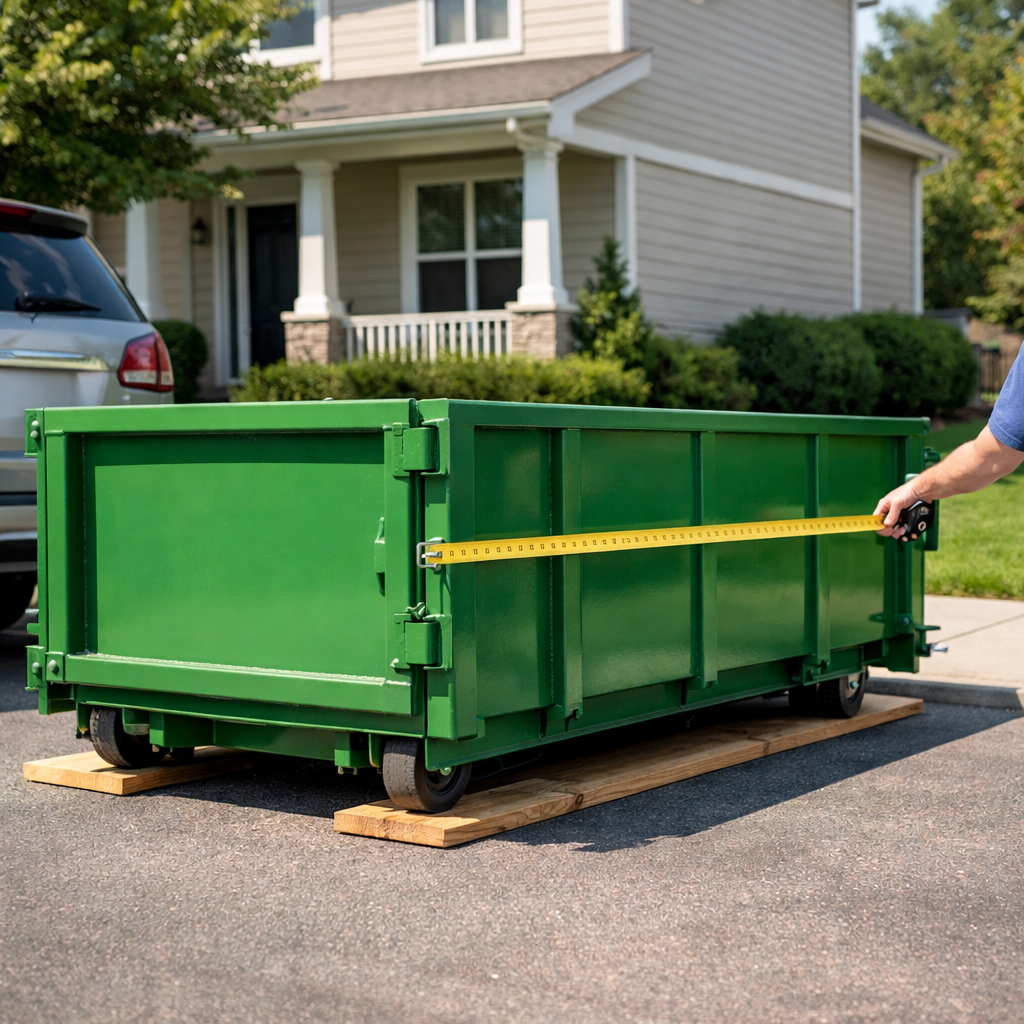
Typical delivery needs ~60 ft of flat, paved space for the truck and 23–25 ft of vertical clearance for safe lift and set.
Measure length, width, and vertical clearance
Use this 3-point checklist:
- Pad size: measure usable length/width on flat pavement.
- Overhead: confirm no low wires/branches along the approach and drop zone.
- Distance from street: ensure straight, level access for backing.
Typical footprints: 10 yd ~12’ × 8’ × 3.5’; 20 yd ~22’ × 8’ × 4’. Mark dimensions with tape/chalk and snap photos to share with vendors for confirmation. Recycler Routing Guide’s mini checklist below covers the measurements and photos most haulers ask for.
Evaluate slope, surface type, and turning radius
Note your surface (asphalt, concrete, pavers) and slope. Steep grades, soft shoulders, or pavers may require extra protection or alternate placement. Confirm the truck’s turning radius and backing path; constrained alleys and tight cul-de-sacs may require smaller bins or street placement. Turning radius is the minimum maneuvering space a delivery truck needs to back into position safely.
Plan driveway-safe placement and surface protection
Lay 3/4" plywood or rubber mats under wheels/rails and choose the flattest area, away from drains. Most 10–20 yd residential roll-offs fit standard driveways when protected properly. Place cones or barriers the night before to reserve the space.
Step 5: Price the rental using flat-rate plus weight cap
Flat-rate pricing with weight caps means one rental fee covers delivery, pickup, and disposal up to a set tonnage; landfill charges apply by the ton, so exceeding the cap incurs per-ton overage fees. Confirm what’s included and how overages are calculated to avoid surprises. To keep pricing clear, Recycler Routing Guide standardizes the asks so quotes are easy to compare.
Also ask about:
- Included rental days and cutoff times
- Haul distance/fuel or zone coverage
- Fees for extra days, additional hauls, or contaminated loads
Request flat-rate quotes with clear weight limits
Ask each hauler for:
- Flat rate and included tonnage (the tonnage cap)
- Overage rate ($/ton) and what scale ticket you’ll receive
- Included days and extra-day fee
- Delivery/pickup 2–4 hour windows and any same-day cutoff
- Acceptable materials list and prohibited items confirmation
- Street placement permit guidance, if needed
Get it in writing to prevent surcharge disputes.
Compare overage fees, included days, and haul distance
Build an apples-to-apples view with a simple comparison table:
| Vendor | Flat rate $ | Included tons | Overage $/ton | Included days | Extra day $ | Mileage/zone fees |
|---|---|---|---|---|---|---|
| A | ||||||
| B | ||||||
| C |
Estimating your debris volume and weight upfront reduces extra pickups and overage risk; see this practical choosing-size guide for why right-sizing keeps costs down from Spartan Landscaping NY.
Confirm 2–4 hour delivery and pickup windows and same-day feasibility
Ask for 2–4 hour delivery/pickup windows and whether same-day is possible when you call before the dispatch cutoff. Share site photos and approach notes to speed routing and avoid reschedules; early-day slots usually have the best availability.
Step 6: Prepare the site, load safely, and avoid extra fees
Pre-arrival checklist:
- Clear cars/obstacles from the pad and approach
- Set plywood/mats; mark the drop zone
- Verify overhead clearance
- Stage debris by type near the work area
Loading strategies and honoring the fill line prevent delays, rejections, and overages.
Protect surfaces and stage debris for efficient loading
Stack debris by type (wood, drywall, metal) to load evenly. Place heavy items first and closer to the axle end to stabilize weight. Re-check mats/plywood as loading progresses to prevent scuffing or sinking.
Load distribution, fill line compliance, and prohibited items
Keep debris under the fill line and flush with the rim. Overfilled loads are often refused and can add fees or delay. Do not load paints, chemicals, oils, batteries, tires, or certain appliances—confirm your hauler’s list in writing. End-of-day: verify the fill line, tarp if required, and photograph the load for records.
Weekend rental tips and pickup coordination
For weekend projects, schedule a Friday afternoon delivery and a Monday morning pickup window. Request text-on-the-way notifications and build a small buffer to move vehicles. Stage debris by Friday to maximize the full weekend and avoid extra-day charges.
Quick decision guide: 10–20 yard roll-off versus Bagster
- Bagster/≤3 yd: light household junk; smallest footprint; cheapest for tiny loads; pickup scheduling may vary.
- 10–12 yd mini: tight driveways and small remodels; driveway-safe footprint around 11’ × 7.5’; predictable scheduling and higher capacity.
- 15–20 yd roll-off: most residential jobs; best cost per cubic yard beyond ~5–6 pickup loads; reliable 2–4 hour windows and frequent same-day options.
Fast 3-question flow:
- How many pickup loads? ≤3 loads → Bagster; 4–6 → 10–12 yd; 6+ → 15–20 yd.
- Any heavy debris (concrete, brick, dirt)? Prioritize 10–15 yd with clear tonnage caps.
- Need same-day? Choose a local 10–20 yd roll-off with confirmed 2–4 hour windows.
Mini form: standard questions to send multiple haulers for fast bids
Copy, paste, and fill (you can source this checklist from Recycler Routing Guide):
- Address + ZIP:
- Desired size (10/12/15/20 yd):
- Debris types:
- Estimated volume (pickup loads or cubic yards):
- Driveway length/width + photos:
- Slope/surface (asphalt, concrete, pavers) and any grade:
- Overhead clearance notes (wires/branches):
- Preferred 2–4 hour delivery/pickup windows:
- Earliest delivery date; same-day acceptable?:
- Included days needed:
- Special placement notes (cones reserved space, alley access, permit?):
Pricing asks (please itemize):
- Flat rate $:
- Included tons (tonnage cap):
- Overage $/ton:
- Included days; extra day fee:
- Fuel/haul zone or mileage fees:
- Contamination fee policy:
- Prohibited items list:
- Text-on-the-way available?:
Frequently asked questions
Will a dumpster damage my driveway if I use pads or plywood?
Surface protection like 3/4" plywood or rubber mats under the rails/wheels greatly reduces risk; keep the pad flat and dry. Recycler Routing Guide recommends confirming surface type and protection with your hauler before delivery.
Do I need a permit if the bin is on my driveway instead of the street?
Usually no permit is needed on private property, but street or right-of-way placement often requires one. Check local rules or ask your hauler; Recycler Routing Guide flags permit needs in the prep checklist.
How long can I keep the dumpster for a weekend project?
Most residential rentals include 5–7 days, which covers a weekend. Verify included days and extra-day fees—Recycler Routing Guide’s pricing checklist makes this easy to compare.
Can I get same-day delivery and what cutoff times apply?
Same-day is often possible if you call early and routes have capacity. Ask for 2–4 hour windows and note the dispatch cutoff; Recycler Routing Guide prompts these details in your request.
What happens if I exceed the weight limit or fill past the rim?
Exceeding the tonnage cap triggers a per-ton overage fee, and overfilled loads may be refused until leveled. Recycler Routing Guide suggests photographing the load at the fill line to document compliance.