Dumpster Rental Contracts: Common Hidden Fees and How to Avoid
Dumpster Rental Contracts: Common Hidden Fees and How to Avoid
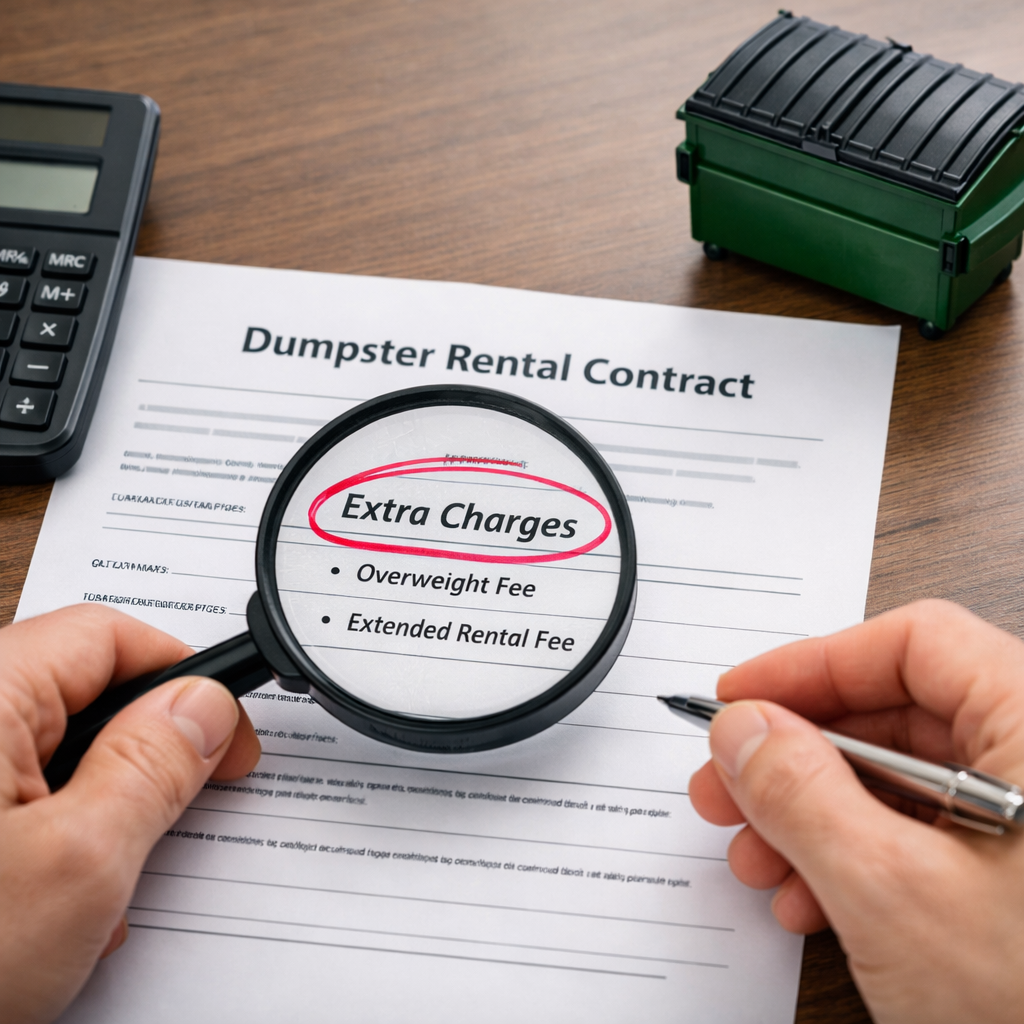
A clean, upfront price is the difference between a smooth weekend cleanup and a surprise-heavy invoice. Hidden dumpster fees in rental contracts often stem from weight overages, access issues, or unbundled disposal charges. The fix is simple: get a written, itemized flat-rate quote with a defined weight cap, confirm overage and extension rates, and plan placement and access before delivery. Below, we break down how pricing really works, the surcharges most homeowners miss, and a step-by-step playbook to avoid them. With Recycler Routing Guide’s logistics-first approach—2–4 hour windows, driveway-safe placement, and clear tonnage limits—you can finish the job without paying for preventable extras.
How dumpster pricing works
Flat-rate bundles delivery, pickup, disposal, and a weight allowance into one upfront price. Variable pricing separates these charges and often looks cheaper until after pickup—when add-ons appear based on tonnage and local fees, as outlined in what affects dumpster rental costs by Dumpsters.com.
“Tipping fees (dump fees) are landfill charges based on waste weight and vary by location; confirm whether they’re bundled in your price or billed separately” per this dumpster rental cost guide.
Comparison: flat-rate vs. variable pricing
| Pricing model | What’s included | Common extras that trigger | Pros for homeowners | Watch-outs |
|---|---|---|---|---|
| Flat-rate with weight cap | Delivery, pickup, disposal up to weight allowance, basic rental days | Overage fees if you exceed the weight allowance; extra-day/extension fees; prohibited-item handling; fuel surcharge; environmental fees | Easy to budget; fewer line items; predictable if you know your debris type | Know your weight allowance and per-ton overage rate; confirm whether tipping fees are bundled |
| Variable pricing | Base fee for container plus separate disposal/tipping fees by actual weight | Tipping fees billed separately by ton; fuel surcharges; administrative or environmental fees; per-pickup minimums | Can save if your debris is very light | Final bill arrives after disposal; risk of higher total cost, especially with mixed or dense debris |
Note key terms you’ll see: weight allowance (weight cap), overage fees, tipping fees, fuel surcharge, and environmental fees.
Hidden fees most homeowners miss
These can occur under both flat-rate and variable models if terms aren’t crystal clear:
- Weight/overage charges ($50–$250 per ton): Billed when total load exceeds your cap; amounts vary by market (per Dumpsters.com).
- Overfilled/above-the-rim fees: Debris stacked above the fill line can trigger an overloading assessment and extra trip fees. Overweight loads can occur even when debris sits below the rim but exceeds the weight limit (per Dumpsters.com).
- Extra-day/extension fees: Daily charges if you keep the container beyond the included rental period.
- Trip or dry-run fees: Charged when the driver can’t access the site or pickup is blocked (Windsor Sanitation).
- Unbundled tipping fees: Disposal costs vary by location; if not bundled, expect a separate line item that tracks actual tonnage (Ivans Site Services).
- Prohibited-item handling: Surcharges or failed pickups for items that require special processing.
- Fuel surcharges: A variable fee that can change with fuel prices (Ivans Site Services).
- Permit/placement fines: Municipal or HOA-related costs for right-of-way or street placement.
- Blockage/relocation fees: Additional charges if the container needs to be moved on site or the path is obstructed.
- Damage fees: Surface or property damage attributed to placement or movement of the container.
Red flags in quotes:
- Vague, lump-sum price with no line-item detail
- No written weight cap or per-ton overage rate
- Unclear rental days or extension fees
- Hidden fuel or “administrative” line items
- No written prohibited-items list
Step 1: Get a written, itemized flat-rate quote
Before delivery, request a complete written quote that lists delivery, pickup, included rental period, weight limit, whether disposal/tipping fees are bundled, taxes, and every potential surcharge (Windsor Sanitation). Prioritize flat-rate dumpster pricing with a defined weight cap for residential jobs; variable pricing separates charges and can inflate the final bill after pickup. If you’re comparing vendors, use Recycler Routing Guide’s checklist below to request and compare multiple dumpster rental quotes.
Checklist—ask in writing:
- Per-ton overage rate
- Daily extension rate and what counts as a billable day
- Trip/dry-run fee and common triggers
- Fuel surcharge policy (flat or indexed to fuel prices)
- Complete list of prohibited items and any special handling fees
Step 2: Confirm weight caps and overage rates
A weight cap (tonnage limit) is the maximum included disposal weight in your flat-rate price; if your load exceeds it, you’ll be charged a per-ton overage. An overfilled load has debris above the fill line; an overweight load can sit below the rim but still exceed the cap—both can trigger charges (Dumpsters.com). Insist on the explicit per-ton rate in writing; weight overages commonly range from about $50 to $250 per ton (Dumpsters.com). Dense materials—concrete, dirt, roofing shingles, tile, and brick—reach limits quickly; ask about separating heavy debris into a smaller, dedicated container if offered (Windsor Sanitation).
Step 3: Right-size your container for debris type
Pick size through a simple flow: estimate debris volume, identify heavy vs. light materials, then select a dumpster that fits both space and tonnage. Choosing correctly upfront avoids extra hauls and higher fees, as emphasized in these tips to avoid dumpster rental overage fees.
Examples that save money:
- Light, bulky debris (furniture, shelving, cardboard): 10–15 yard roll-off usually offers the best price-per-yard and easy loading.
- Dense materials (tile, brick, dirt, shingles): Smaller yardage or a separate heavy-material container helps control tonnage.
- Recycler Routing Guide POV: For garage cleanouts or single-room remodels, a 15-yard dumpster often balances capacity with driveway fit.
Step 4: Verify prohibited items and special handling
Ask for the provider’s restricted-items list before booking. Commonly banned or surcharged: hazardous waste, paints and solvents, tires, batteries, propane cylinders, appliances (especially refrigerators), electronics, and mattresses (see common dumpster rental mistakes). Placing prohibited items can trigger disposal surcharges or a failed-trip fee—defined as a charge when the hauler must return because the load or access doesn’t meet requirements.
Step 5: Plan driveway-safe placement and access
Pre-drop checklist (Frontier Waste recommendations):
- Clearance: about 23 feet of overhead height and 10.5 feet of width
- Approach: roughly 60 feet of straight-line space for safe placement
- Keep the zone clear: no parked cars, low branches, or locked gates
- Mark the spot and confirm gate codes if applicable
Blockage can trigger trip/dry-run or relocation fees; keep access open and surfaces stable (Frontier Waste; EasyWM). Request driveway protection (boards or skids), confirm the driver’s approach path, and take time-stamped photos at drop-off to document the surface condition.
Step 6: Set delivery and pickup windows with buffers
Confirm how many days are included and the daily cost to extend before booking (EasyWM). Check for extension fees if you keep the dumpster beyond the agreed rental period (Windsor Sanitation). Aim for reliable 2–4 hour delivery/pickup windows, schedule a 1–2 day buffer before project deadlines, and ask about weekend/holiday policies. Clarify how last-minute changes are billed and whether early pickup reduces any fees.
Step 7: Protect against weather weight and contamination
Rainwater adds avoidable tonnage—cover the dumpster with a tight tarp, especially overnight; one gallon of water adds roughly 8 pounds (Oaks Dumpster). Keep lids/tarps secured, avoid mixing yard waste with mud-heavy debris after storms, and don’t load saturated soil that pushes you over the weight cap. In this context, contamination means mixing prohibited or incompatible materials that trigger special handling or landfill rejection, potentially causing fees.
Step 8: Check permits, HOA rules, and street placement
Verify whether a right-of-way permit is required for street, sidewalk, or municipal property placement; fees vary by city (Ivans Site Services). Review HOA rules on visible placements, time limits, and operating hours—noncompliance can bring citations or forced relocations.
Quick steps:
- Call your city permitting office and confirm required time windows
- Print and display the permit if required
- Get HOA approval in writing
- Notify neighbors to keep driveways and curbs accessible
Bagster vs mini dumpster for small, light loads
- Bagster (≤3 cubic yards, light debris): Good for phased weekend cleanups and tight spaces; keep loads light to avoid overage risk; watch pickup access and prohibited-item limits.
- Mini dumpster (10–15 yards): Better for garage resets or single-room remodels; flat-rate with weight caps simplifies budgeting; typically stronger price-per-yard and fewer trips.
For either option, confirm access to avoid trip/dry-run fees, and verify whether tipping fees are bundled for mini dumpsters (Windsor Sanitation; Ivans Site Services).
Final pre-delivery checklist and negotiation levers
| What to confirm | Your notes |
|---|---|
| Included rental days | |
| Delivery/pickup windows | |
| Weight cap (tons) | |
| Per-ton overage rate | |
| Are tipping fees bundled? | |
| Extension fee per day | |
| Trip/dry-run fee | |
| Fuel surcharge policy | |
| Prohibited items list | |
| Permit/HOA status | |
| Driveway protection plan | |
| Photos at drop-off/pickup |
Negotiation levers:
- Lock in the explicit overage-per-ton rate and a written statement of what’s included in landfill/tipping fees (Ivans Site Services).
- Request time-stamped photos at drop-off/pickup and compare quotes from at least two transparent local providers (Windsor Sanitation).
- Disclose heavy or mixed debris up front so the provider can right-size or supply a specialized dumpster—this reduces overweight and prohibited-item fees.
Frequently asked questions
What fees are usually included in flat-rate pricing?
Flat-rate typically includes delivery, pickup, disposal up to a defined weight cap, and basic rental days. Recycler Routing Guide recommends confirming overage, extension, trip/dry-run, fuel, and prohibited-item handling fees in writing.
How do I estimate debris weight to avoid overage charges?
List materials by type and flag dense items like concrete, dirt, and shingles, then choose a size with a suitable weight cap. Recycler Routing Guide suggests stepping up one size or splitting heavy debris to avoid $50–$250/ton overages.
Do I need to be home for delivery and pickup?
You don’t have to be home, but being present helps verify driveway-safe placement, access, and photos. If you can’t be there, Recycler Routing Guide advises marking the spot clearly and keeping the area unobstructed.
What causes trip or dry-run fees and how can I prevent them?
Blocked driveways, low branches, locked gates, or street parking can force the driver to return. Prevent fees by keeping the zone clear, meeting space/height requirements, and sharing gate codes—best practices we stress at Recycler Routing Guide.
When is a Bagster more cost-effective than a 10–15 yard dumpster?
For ≤3 cubic yards of light debris and tight spaces, Bagster pickup can beat a mini dumpster. For garage cleanouts or single-room remodels, Recycler Routing Guide generally sees a 10–15 yard roll-off deliver better price-per-yard and weight-cap flexibility.