Protect Your Driveway During Yard Cleanup: Best Dumpster Sizes Explained
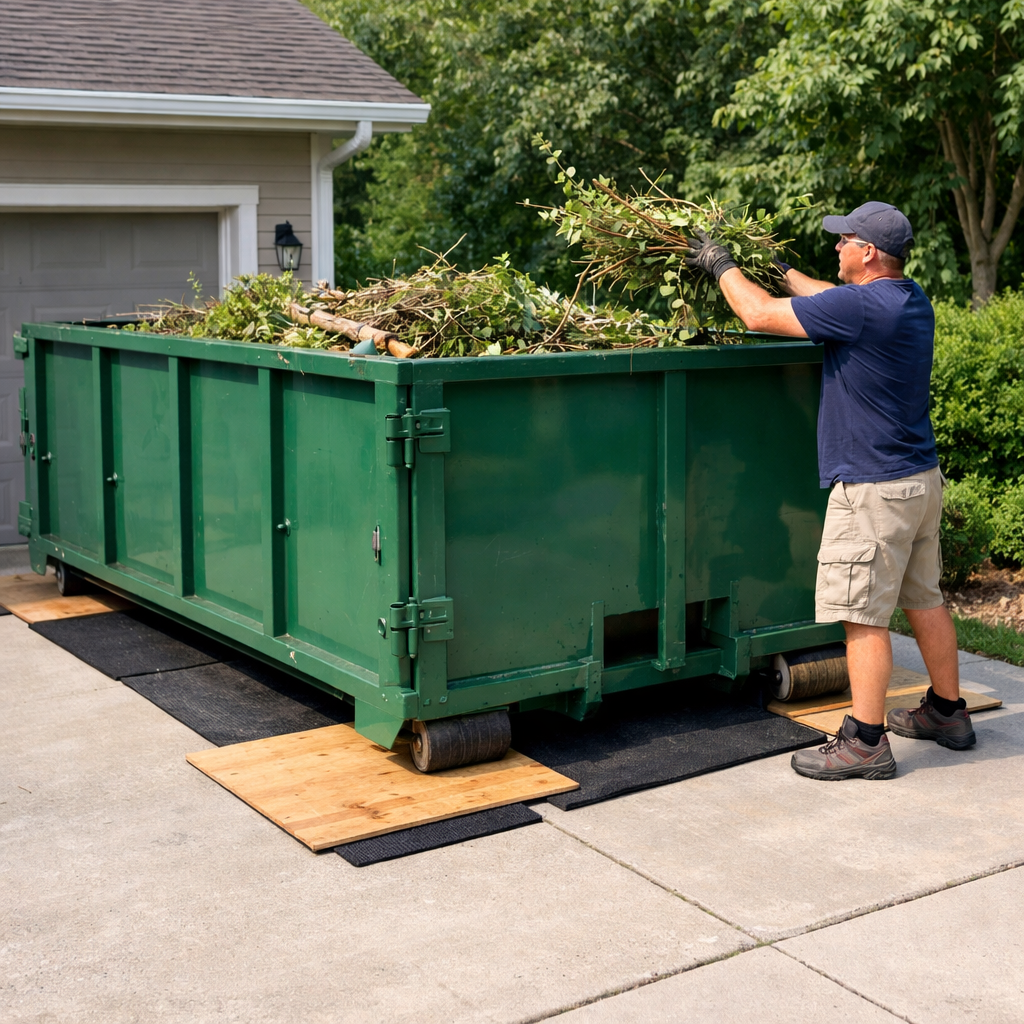
Protect Your Driveway During Yard Cleanup: Best Dumpster Sizes Explained
A driveway-safe dumpster for yard waste is absolutely available—and with the right size, placement, and protection, it won’t scar your pavement. The key is matching container size to both volume and weight, then preparing the set-down area to spread load and avoid drag. This guide from Recycler Routing Guide walks you through sizing, driveway protection, and swap planning so your cleanup runs on time, under budget, and without asphalt gouges or concrete cracks. We’ll also show how route optimization, verifiable outlets, and KPI-driven operations keep costs predictable while maximizing diversion.
The logistics-first way to keep your driveway safe
Driveway safety starts with logistics, not just hardware. Choose a size that fits your debris by weight (not only volume), place it on a clean, level, shaded spot, and schedule swaps before you hit hauling limits. That protects your slab, keeps routes efficient, and avoids overweight fees or re-dispatch delays. As Recycler Routing Guide defines it: “Driveway-safe dumpster: A container delivered with protective measures (rubber rollers, wood pads, careful placement) to reduce scrapes, indentations, and cracking on asphalt or concrete during loading and hauling” (see the Govavia driveway-protection guide: No Scrapes, No Drama).
Recycler Routing Guide’s logistics-first, diversion-focused approach prioritizes:
- Sizing-by-weight to protect pavement.
- Driveway protection (pads/rollers), precise placement, and straight truck approach.
- Route optimization and pre-set swap cadence to avoid overloads.
- Verified outlets for compost/mulch or C&D recovery to reduce disposal cost and risk.
How to size a dumpster for yard waste without damaging pavement
Scope drives size. Estimating early prevents overflow, overloaded trucks, and unnecessary rental days (see the HaulBros guidance on landscaping scope and size matching: yard cleanup sizing). For quick translation, many buyers use pickup-truck equivalents. A practical rule of thumb: 10 yard ≈ 3 loads; 15 yard ≈ 4–5; 20 yard ≈ 6; 30 yard ≈ 9, aligned with common roll-off dimensions and capacities (see the Dumpsters.com size guide: what size do I need?).
Use the comparison below to right-size by debris type and weight:
| Size | Typical exterior dimensions (L×W×H) | Pickup-truck equivalents | Best yard-waste uses | Weight notes |
|---|---|---|---|---|
| 10 yd | ~12–14’ × 7.5–8’ × ~3.5' | ≈ 3 | Soil, sod, rock, concrete fragments | Safest for heavy materials; keep loads even and plan early swaps |
| 15 yd | ~16’ × 7.5–8’ × ~4.5' | ≈ 4–5 | Mixed landscaping, shrubs, small stumps | Balanced capacity and driveway fit; use pads/rollers |
| 20 yd | ~22’ × 7.5–8’ × ~4.5' | ≈ 6 | Branch-heavy, bulky but light debris | Avoid dense materials to the brim; swap if weight rises |
| 30 yd | ~22’ × 7.5–8’ × ~6' | ≈ 9 | Large cleanups with airy debris | Only if space allows; weight can escalate quickly |
Step 1: Assess debris type and volume in cubic yards or truckloads
A cubic yard equals 27 cubic feet; it’s the standard measure for roll-off capacity (see Waste Connections: dumpster sizes). Walk the site and estimate total volume, then translate into pickup-truck loads to sanity-check size: about 3 loads for 10 yd, 4–5 for 15 yd, 6 for 20 yd, and 9 for 30 yd. Light, fluffy yard waste like leaves or branches can fill taller bins without breaching weight limits; full landscaping that includes stone, sod, or soil needs careful weight control and usually smaller containers with more frequent swaps.
Step 2: Match weight limits to material types before you book
Heavy materials drive the choice. Dense debris often requires downsizing—10 yards is typically safer for concrete, dirt, or rock to stay under truck weight limits (as supported by common provider guidance and sizing policies). Use this quick map:
- Heavy yard materials → 10 yd: soil, sod, rocks, masonry, root balls with dirt.
- Mixed debris → 15 yd: branches, shrubs, bagged leaves, light dirt mix.
- Bulky/light → 20 yd: branch-heavy trims, pallets, clean wood, brush piles.
- Large but light → 30 yd: major pruning, storm debris that’s primarily airy.
Risk callout: Filling a large bin with heavy masonry can exceed legal haul weights, trigger fees, and increase pavement stress from concentrated loads (see Cardella’s weight-limit guidance: choosing the right size).
Step 3: Confirm driveway fit, placement area, and truck access
Measure your space and approach path:
- Typical roll-off footprints to check clearance: 10 yd ≈ 12–14’ L; 15 yd ≈ 16’ L; 20 yd ≈ 22’ L; width ~7.5–8’; heights roughly 3.5–4.5’ by size.
- Confirm a straight-line truck approach with 60+ feet of access and overhead clearance (tree limbs, wires).
- Choose the flattest, level area to reduce point loads and drag.
- If any portion encroaches on public right-of-way, a municipal permit is often required; rules vary by city.
Step 4: Prepare the surface with cleaning and load-spreading pads
Simple prep avoids most damage:
- Sweep and clear grit before delivery so rollers and rails don’t grind debris into the surface.
- Place plywood or wood pads under all contact points to spread weight and prevent scratches/indentations.
- Request rubber wheels/rollers and choose a shaded or cooler spot to reduce heat-softened asphalt risk (see Junk Rescue’s practical tips: protect your driveway).
Step 5: Load evenly, stay below fill lines, and schedule timely swaps
- Load front-to-back and side-to-side to keep weight uniform; never exceed fill lines.
- If debris gets heavier mid-project, trigger an on-demand swap instead of squeezing in extra weight.
- Keep lids/doors latched and material below the top rail to avoid shifting and surface scarring during pickup.
Field checklist (use onsite):
- Estimate cubic yards and pickup-loads.
- Pick size by weight class (heavy vs. bulky).
- Verify driveway space, straight approach, and overhead clearance.
- Prep: sweep, set pads/plywood, request rubber rollers.
- Load evenly and below fill line.
- Swap early for heavy phases (don’t risk overweight).
Best dumpster sizes for yard cleanup
For most residential landscaping and tree work, a 15-yard is the balanced pick; 20-yard is the popular all-purpose option for bulky but lighter debris, while 10-yard is the safer choice for dense materials. Larger 30–40 yard units belong on sites with ample space and carefully managed weights (see All-In Dumpster Rentals’ sizing guide: right size for any project).
Quick chooser:
| Size | Dimensions (L×W×H) | Pickup-loads | Best for | Driveway notes |
|---|---|---|---|---|
| 10 yd | ~12–14’ × 7.5–8’ × ~3.5' | ≈ 3 | Soil, sod, concrete fragments, rock | Use pads/rollers; plan early swaps |
| 15 yd | ~16’ × 7.5–8’ × ~4.5' | ≈ 4–5 | Mixed yard debris, shrubs, small stumps | Balanced fit; shaded placement recommended |
| 20 yd | ~22’ × 7.5–8’ × ~4.5' | ≈ 6 | Branch-heavy, bulky but light loads | Avoid dense materials to the brim |
| 30–40 yd | ~22–22+’ × 7.5–8’ × ~6–8' | 9–12+ | Large, light debris phases | Requires ample space; confirm access and weight plan |
10 yard for heavy soil, sod, or concrete fragments
A 10-yard (about 12–14’×7.5–8’×3.5’) holds roughly three pickup loads and is ideal for dense debris like soil, sod, rock, and masonry. Lower sidewalls aid safe loading and natural weight control. Load evenly and plan early swaps to avoid overweight risks.
15 yard for balanced capacity and driveway fit
At ~16’×7.5’×4.5’ and 4–5 pickup loads, the 15-yard fits most driveways while handling mixed landscaping and tree removal. Use wood pads and rubber rollers, and favor shaded placement to minimize asphalt impressions in warm weather.
20 yard for medium landscaping and branch-heavy loads
A 20-yard (about 22’×7.5’×4.5’; ≈ 6 loads) is a popular residential size for bulky, airy debris. Keep dense materials limited and schedule a swap if weight creeps up.
30–40 yard only when space allows and weight is manageable
With ≈ 9+ pickup loads, these larger containers suit large cleanups with light material. Confirm double-wide access or off-driveway placement and avoid filling with heavy debris; multiple smaller swaps are often safer for pavement and hauling limits.
Driveway-safe equipment and placement criteria
Driveway-safe service means a careful set-down using property-protection measures that prevent scrapes and marks. Require wood pads/plywood under rails, rubber rollers when available, and a level, shaded location aligned to the truck’s straight approach to limit drag and point loads.
Rubber rollers, wood pads, and lowboy options
- Specify rubber wheels/rollers and wood pads under all contact points to spread weight and reduce abrasion.
- Consider lowboy configurations (shorter sidewalls) for dense materials—they naturally limit load height and help keep weights compliant, often paired with a 10-yard.
- Include on your order: rubber rollers, pad placement, spotter-guided set-down, and a no-scrape delivery standard.
Heat, slope, and subgrade considerations for asphalt and concrete
Avoid hot, sun-exposed asphalt where softening can invite impressions; choose shaded or cooler areas. Skip steep slopes that concentrate pressure or risk container movement. If the slab is thin or shows prior cracking, downsize to 10–15 yards and increase swap frequency.
Route optimization and swap planning to control costs and risk
Heavy-material phases benefit from smaller bins and more frequent swaps to stay under legal weights and reduce pavement stress. Align delivery/pickup windows with site access so the truck can approach straight, minimizing repositioning and drag. A simple flow: estimate weight → pick smaller bin → set a swap threshold (e.g., 70% full for heavy debris) → confirm same-day swap capacity with dispatch. Recycler Routing Guide emphasizes pre-set thresholds and same-day capacity checks to keep schedules predictable.
Verify downstream outlets and accepted yard materials for diversion
Confirm accepted materials (branches, leaves, stumps, sod) and contamination thresholds before delivery. Ask providers to verify downstream outlets—compost/mulch and C&D facilities—and share outlet names and distances to optimize routing and fees. Recycler Routing Guide prioritizes verified outlets to reduce cost and risk. Use this acceptance matrix as a starting point (provider rules vary):
| Yard material | Typically allowed | Notes |
|---|---|---|
| Branches, brush, leaves | Yes | Keep free of plastic bags and trash |
| Grass clippings | Often | Some outlets limit volumes; avoid contamination |
| Stumps/logs | Sometimes | Size/diameter limits common; may require special handling |
| Soil/sod | Sometimes | Weight limits apply; may be routed to C&D or clean fill |
| Rocks, concrete | Sometimes | Usually as inert C&D; strict weight control required |
| Mixed trash, plastics | No | Contamination can void yard-waste pricing |
KPI-gated rollout checklist for multi-site operators
Standardize performance and scale only when targets are met.
| KPI | Target | If underperforming, do this |
|---|---|---|
| On-time delivery rate | ≥ 95% | Tighten windows, stagger routes, pre-stage pads |
| Swap turnaround | Same day / <24 hrs | Add swap slots; pre-authorize on-demand swaps |
| Overweight incidence | < 2% of hauls | Downsize bin; set 70% fill swap rule for heavy phases |
| Driveway incident rate | 0 per 100 drops | Enforce pads/rollers; require spotter; adjust placement |
| Diversion rate | Project goal (e.g., 60%+) | Verify outlets; filter accepted materials; train crews |
| Cost per ton | Within budget | Optimize route distances; rebalance sizes/swap cadence |
Gate scale-up to new sites only after consecutive periods meeting targets.
Transparent provider comparison factors to request in bids
Request hard data on:
- Delivery window performance, swap response times, and driver training.
- Property-protection standards (pads/rollers) and no-scrape delivery methods.
- Verified outlet lists and accepted materials by stream.
- Insurance (COI, endorsements) and clear fee schedules (overage, daily, contamination).
Side-by-side checklist:
| Factor | What to request |
|---|---|
| Dimensions & weight limits by size | Spec sheet with legal haul weights |
| Driveway protection | Pads, rubber rollers, spotter-led set-down, photo logs |
| Route plan & truck type | Approach path, clearance needs, backup plan |
| Swap SLAs | Same-day thresholds and cut-off times |
| Accepted materials | Yard waste vs. inert vs. MSW matrix |
| Fees | Overage, daily/overage days, relocation, contamination |
| Outlets | Facility names, distances, diversion methods |
| Insurance | COI with endorsements; property-damage procedures |
Permits, insurance, and liability basics for residential placement
If any portion of the dumpster sits on public right-of-way (street or sidewalk), a permit is commonly required; driveway-only placements may not need one, but local rules differ. Require a certificate of insurance, endorsements, and written property-protection procedures. Clarify who supplies pads and who photographs the driveway before and after delivery; keep those photos with the work order.
Frequently asked questions
Can I get a driveway-safe dumpster for yard waste?
Yes. Recycler Routing Guide recommends requesting wood pads and rubber rollers, choosing the right size, and using a clean, level, shaded spot to prevent scrapes or indentations.
What size dumpster fits a standard residential driveway?
Most single-car driveways can fit 10–20 yard roll-offs. Recycler Routing Guide suggests a 15 yard for balance, a 10 yard for heavy soil or concrete, and a 20 yard for branch-heavy loads if access allows.
How do I prevent dents or cracks in asphalt during hot weather?
Clean the surface, lay plywood under contact points, and place the dumpster in a shaded, level area. Load evenly and schedule swaps before it gets too heavy.
When should I choose a 10 yard instead of a 20 yard?
Choose a 10 yard for dense materials like soil, sod, rocks, or concrete fragments to stay within weight limits and protect your driveway; use a 20 yard for lighter, bulky debris.
Do I need a permit if the dumpster overhangs the sidewalk or street?
Often, yes—public right-of-way placements typically require a permit. For strictly on-driveway placements, permits may not be needed; check local rules before delivery.
For more ways to keep projects on schedule with same-day options and verified outlets, see Recycler Routing Guide’s roundup of providers: Top same-day dumpster rental companies.