Room Too Cluttered? Rent a Small Bin Today Without Overpaying
Room Too Cluttered? Rent a Small Bin Today Without Overpaying
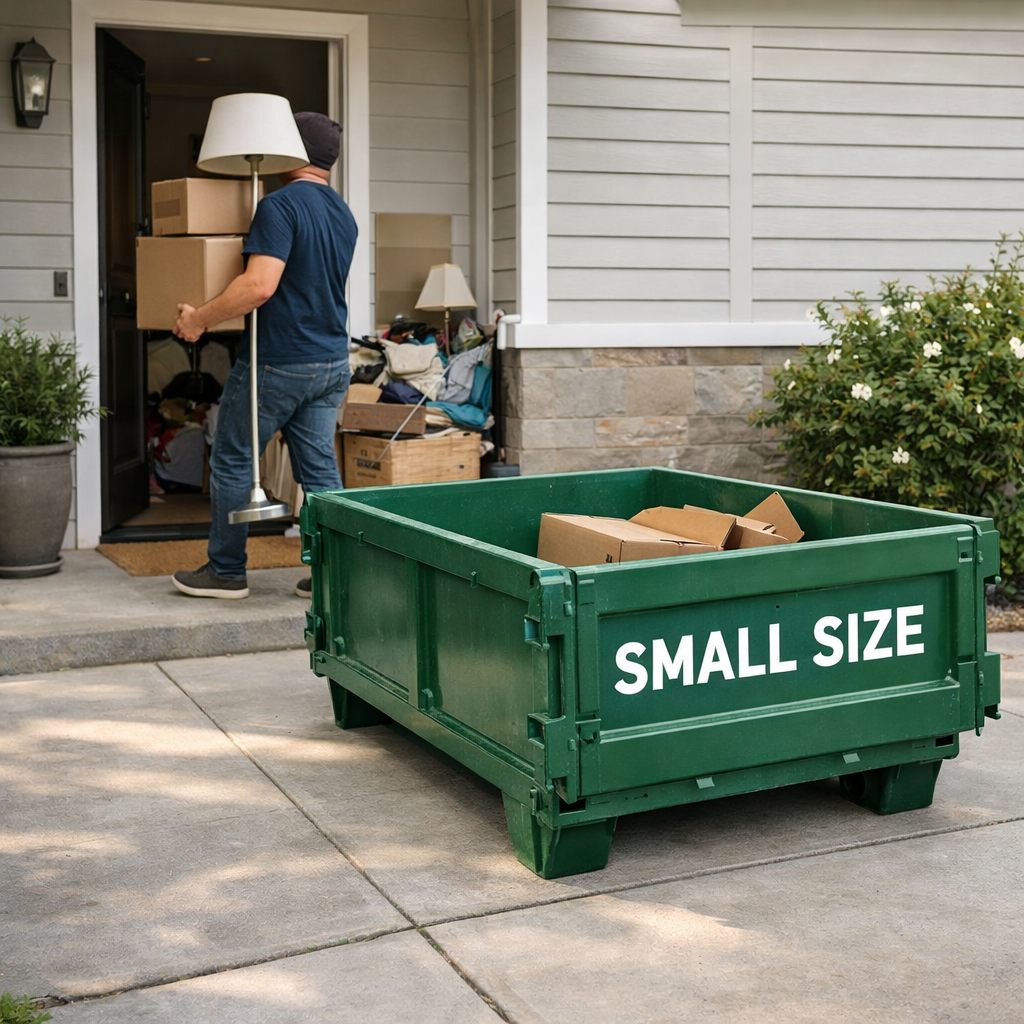
A one-room cleanout shouldn’t cost whole-house money. If you’re asking where to rent a bin for one-room-at-a-time cleanouts, start with a local mini roll-off dumpster in the 10–15 yard range, book a tight delivery/pickup window, and demand an itemized quote with the included weight cap. For lighter, flexible loads (like boxes and soft goods), a Bagster can work. If you want labor included for a few bulky pieces, compare one-off junk removal. Below, you’ll find fast booking options, sizing guidance for bedrooms, offices, and small kitchens, and a simple workflow from Recycler Routing Guide that keeps you under caps and out of fee territory. A national survey confirms the pain points: too much clutter, not enough room, and hotspots like kitchen counters and junk drawers are what derail tidiness, not a lack of storage (national clutter survey via PR Newswire).
Quick answer on where to rent a small bin
Three quick ways to rent a small bin today:
- Local roll-off haulers: Ask for a 10- or 15-yard mini roll-off dumpster with a 3–5 day rental window and driveway delivery. Same-day/next-day is common.
- Retail bag-style services: A Bagster is good for light debris and tight spaces, with scheduled pickup once loaded.
- Regional marketplaces or local waste firms’ online booking: Check same-day/next-day availability; many offer instant pricing by ZIP.
Instant quote checklist (ask for everything in writing):
- Service area by ZIP and exact size (10- or 15-yard)
- Included rental days
- Included weight cap and overage fee per ton
- Delivery/pickup fees, plus any fuel or environmental surcharges and taxes
- Permitted materials and contamination fees; Saturday service if needed
Recycler Routing Guide’s one-page quote template helps you collect these fields quickly.
Definition: A mini roll-off dumpster is a compact, driveway-friendly container—typically 10–15 cubic yards—used for small projects and cleanouts. It includes a set rental window and a weight cap, trading long-term capacity for lower price and easier placement.
When a small bin makes sense for one-room cleanouts
Choose a small bin when you’re doing time-bound, room-specific purges: a closet overhaul, bathroom cabinet edit, or an office paper clear-out ahead of a move. Pre-plan by picking target zones, scheduling short sessions, and confirming what materials are accepted.
Shrink the load before you rent:
- Use micro-decluttering: 10–15 minute bursts on one drawer or shelf at a time help you build momentum and reduce volume (Better Homes & Gardens on micro-decluttering; The Spruce’s method).
- Try a one-song sprint or “toss 10” challenge to create quick wins (pro organizers’ advice).
- Quote-worthy insight from professional organizers: slow, customized processes beat viral hacks—the real fix is fewer items and better routines (same source above).
Right-sizing the bin for single-room volumes
For most one-room cleanouts:
- Choose a 10-yard dumpster for bedroom/office/small kitchen purges with mostly boxes, bags, and a few small items.
- Step up to a 15-yard for larger closets, a couple of small furniture pieces, or mixed light renovation debris. The 15-yard is the flexible middle ground if you’re unsure.
Simple estimator (typical outputs and weight ranges vary by market and materials):
| Room/scenario | Typical output | Suggested size | Typical weight range |
|---|---|---|---|
| Bedroom closet purge | 8–20 kitchen bags (13-gal), shoes, misc. | 10-yard | 150–300 lb |
| Home office papers | 8–15 banker’s boxes + 1 chair | 10-yard | 300–700 lb |
| Small kitchen/pantry edit | 12–25 bags + small appliances | 10-yard | 250–600 lb |
| Large closet + 1–2 small dressers | 15–30 bags + small furniture | 15-yard | 400–900 lb |
| Light bathroom refresh (no masonry) | Vanity, shelving, packaging | 15-yard | 600–1,000 lb |
Tips to minimize unused capacity and avoid overages:
- Micro-decluttering in 10–15 minute increments lowers total volume (BHG; The Spruce).
- Pack with straight-edged, stackable boxes instead of round baskets to maximize bin yield (organizer tips).
How to get transparent, itemized pricing
Ask for an itemized quote you can compare line-by-line:
- Base rate, delivery, pickup, included rental days
- Weight cap (lbs/tons) and overage fee per additional ton
- Fuel/environmental surcharges, taxes, and any permit or contamination charges
- Saturday drop/pick availability and any minimum charges
Recycler Routing Guide’s itemized quote template helps you collect the same fields from every hauler.
Definition: Weight cap is the maximum included tonnage in your rental price. Disposal is billed by weight at facilities; if you exceed the cap, you’ll be charged an overage fee per ton. This is the most common cost swing in small rentals. For a deeper walkthrough, see our weekend dumpster rental guide on scheduling, caps, and fees (Recycler Routing Guide weekend rental how-to).
Avoiding common fees and penalties
- Pre-sort keep/donate/recycle/trash before the bin arrives to cut tonnage and prevent contamination (micro-decluttering method; stackable-box tips).
- Load below the rim, distribute weight evenly, and keep prohibited items out to avoid contamination fees.
- Stage items near the garage or curb to shorten loading time and ensure clear pickup access.
- Use rectangular, stackable containers to pack dense, stable loads that use space efficiently (organizer tips).
Scheduling and access for on-time service
- Choose tight delivery/pickup windows; confirm same-day/next-day options and ask for the provider’s on-time pickup rate.
- Request photo proof-of-service on drop and pickup to verify timing and placement.
- Placement checklist: 10–12 feet of width, 30–40 feet of approach, 14 feet of vertical clearance; protect pavers with plywood; arrange HOA permissions or city permits if needed.
- On delivery day, set a 15-minute timer per loading cycle to maintain momentum (micro-session tactic).
Reuse, donation, and recycling to cut volume
- Keep a standing donation bag or bin visible during sessions to capture reusables (micro-decluttering method).
- Quick wins by area: clear expired/unused fridge items (good for your health and wallet), then tackle laundry detergents/lint and bathroom products for routine ease (overlooked spots guide).
- Definition: Diversion rate is the percentage of materials kept out of disposal via donation or recycling. For one-room cleanouts, targeted diversion can drop disposal volume significantly, letting you rent a smaller bin and avoid weight overages.
Bin options for small loads compared
| Option | Typical capacity | Included weight cap | Access needs | Relative cost per cubic yard | Best fit |
|---|---|---|---|---|---|
| Mini roll-off dumpster (10–15 yd) | 10–15 yd³ | Commonly 1–2 tons included | Driveway delivery; needs clear approach and 14 ft overhead | Lowest | Mixed boxes + small furniture over a day/weekend |
| Bagster | ~3 yd³ | Lower cap; light debris only | Street/driveway with truck reach; tight spaces OK | Low–moderate (best for very light loads) | Light household junk with flexible pickup |
| Junk removal | Varies by truck volume | Weight limits apply | Curbside/inside service; labor included | Highest (labor included) | Bulky single items or no-lift households |
Providers and fee structures vary by market; confirm local minimums, surcharges, service areas, and included weight in writing. For a deeper side-by-side, see our mini dumpster vs Bagster guide (Recycler Routing Guide small-load comparison).
Mini roll-off dumpsters versus Bagster
Choose a driveway mini roll-off (10–15 yards) when you need higher capacity, predictable scheduling windows, and an included weight cap suitable for mixed boxes and small furniture. Bagster fits tight spaces and light debris but has lower weight thresholds and requires accessible placement for pickup. Confirm the included weight and pickup lead times for both.
Junk removal versus DIY bin rental
Junk removal is fast and hands-off—labor included at a premium price—great for a few bulky pieces or when lifting isn’t feasible. A DIY bin typically delivers the lowest cost per cubic yard when you can stage items and self-load over a day or weekend. Rule of thumb: if you can stage everything via micro-decluttering and load in under 2 hours, the DIY bin usually wins on cost.
Municipal bulky pickup for light items
City bulky pickup is ideal for ultra-light loads or a single bulky item, but expect limits on item counts, dimensions, and pickup frequency (often monthly or quarterly). Verify accepted items and schedules, then use a small bin for the remainder so you don’t wait through multiple cycles.
Simple workflow for a one-room purge
- Pre-sort, measure, book, stage, load, confirm pickup, and finalize donation drop-offs.
- Timing tips: 10–15 minute micro sessions per zone; use a one-song sprint to finish lingering piles.
Pre-sort with micro-decluttering
- Set 15-minute timers and tackle one drawer or shelf at a time (micro-decluttering trend).
- Use “toss 10” and one-song challenges to jumpstart momentum (pro organizers’ advice).
- Keep/donate/recycle/trash bins visible and a dedicated donation bag handy (step-by-step method).
- Reminder from organizers: you don’t need more bins—you need less stuff (smart packing tips).
Measure and estimate volume
- Count 13-gallon bags or banker’s boxes, then convert to cubic yards.
- Measure closets/shelves and any furniture footprint; note heavy items separately.
- Use straight-edged boxes to create dense, stackable loads (organizer tips).
Quick conversions (approximate):
- 13-gallon bags: ~16 bags ≈ 1 cubic yard
- 30-gallon bags: ~7 bags ≈ 1 cubic yard
- Banker’s boxes (standard): ~22–24 boxes ≈ 1 cubic yard
Definition: A cubic yard is 3 ft x 3 ft x 3 ft of volume. Dumpster sizes (10–20 yards) reflect approximate capacity; converting bags/boxes to cubic yards helps you choose the smallest bin that fits.
Book, stage, load, and confirm pickup
- Booking: request itemized pricing, a tight delivery window, included weight cap, and photos on drop/pickup. If you need speed, compare same-day providers (Recycler Routing Guide same-day options).
- Staging: pre-stack by category near the door/garage; protect driveway with plywood; ensure 14 ft vertical clearance and 30–40 ft line-of-sight approach.
- Loading: distribute weight, keep below the rim, and exclude prohibited items. Schedule pickup before the rental window ends to avoid extension fees and request photo proof-of-service at removal.
Safety and compliance for small bins
- Prohibited items typically include liquids, paints/solvents, batteries, electronics, tires, appliances with refrigerants, and hazardous waste. Use local household hazardous waste (HHW) and e-waste drop-offs.
- Check driveway load limits and HOA rules; street placement may require a city permit—confirm with your hauler.
- Safety checklist: wear gloves and closed-toe shoes, lift with your legs, keep children/pets away, and maintain clear paths to the bin.
Frequently asked questions
What size bin is best for a bedroom, office, or small kitchen cleanout?
Most one-room purges fit a 10-yard mini roll-off; step up to a 15-yard for small furniture or mixed materials. Use Recycler Routing Guide’s estimator table above to confirm and avoid overbuying.
How much weight is typical for a one-room purge and what happens if I exceed it?
Light household junk is usually under common 1–2 ton caps for small bins. If you exceed the included tonnage, you’ll pay an overage fee per extra ton as listed in your quote; see Recycler Routing Guide’s weekend rental guide for examples.
Can a small bin fit in my driveway or alley and do I need a permit?
Mini roll-offs are designed for driveways; confirm 10–12 ft width, 30–40 ft approach, and 14 ft overhead clearance. Driveway placement rarely needs a permit; Recycler Routing Guide’s placement checklist above covers exceptions like street permits.
What items are prohibited and how do I handle electronics or paints?
Most haulers prohibit liquids, paints/solvents, batteries, electronics, tires, and hazardous waste. Use local HHW or e-waste drop-offs to avoid contamination fees; Recycler Routing Guide’s checklist includes common drop-off categories.
How long should I keep the bin and can I get same-day delivery or pickup?
A 3–5 day rental window is common for one-room projects. Many providers can do same-day or next-day service—use Recycler Routing Guide’s itemized quote checklist when you call.
Looking for a ready-made checklist and local drop-offs? See our stress-free home cleaning bin rental checklist (Recycler Routing Guide bin + recycling checklist).